
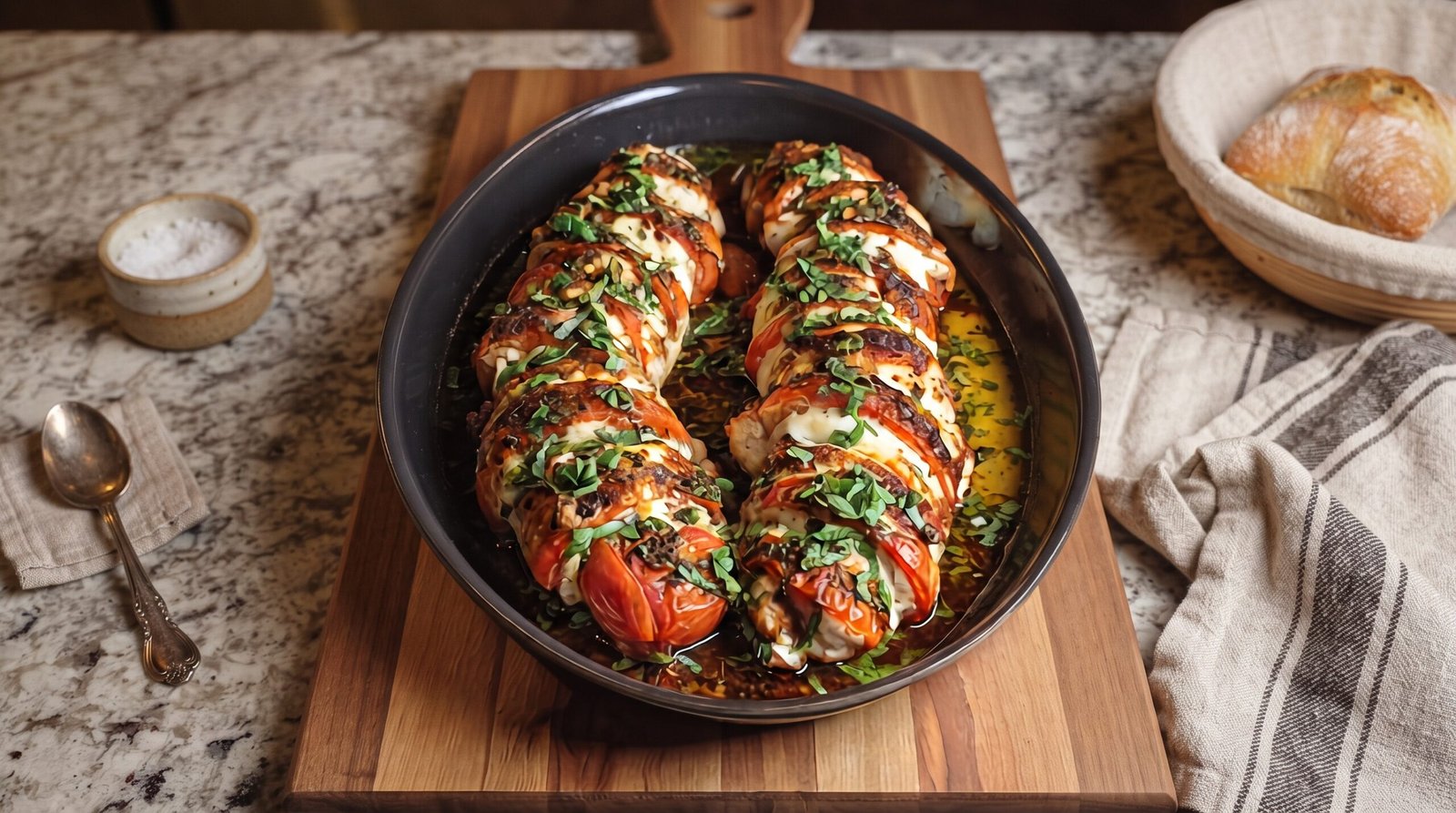
I used to dread coming home after a long shift because the thought of standing over a stove for an hour felt impossible. I wanted something that tasted like I spent all day prepping but could actually come together quickly. This Caprese stuffed chicken breast was the answer I was looking for. It combines juicy white meat with the bright, acidic sweetness of tomatoes and the creamy, mild melt of fresh mozzarella. When the cheese bubbles over the sides and the herbs get just a bit crispy in the heat, it transforms a simple cut of meat into a centerpiece.
I often find that chicken breasts can turn dry and flavorless if they are cooked without a plan. By stuffing them with aromatics and cheese, you keep the moisture inside the meat while creating a pocket of flavor that stays protected during the roasting process. This recipe gives you a reliable way to get a balanced dinner on the table without needing complicated techniques. Whether you are cooking for your family or just making a nice meal for yourself, this dish provides a straightforward approach to a classic flavor profile.
Why This Recipe Works
This dish works because it relies on the interaction between fat, acidity, and heat. The chicken breast acts as a blank canvas, which is helpful, but it also means it needs help to stay succulent. By slicing a pocket into the thickest part of the meat and filling it with fresh mozzarella and sliced plum tomatoes, you introduce internal moisture. As the oven heats the chicken, the cheese melts into the fibers of the meat, which helps maintain a tender texture that you just do not get from plain roasted breasts. The tomatoes release a bit of their juices as they soften, which mingles with the olive oil and garlic, creating a natural sauce at the bottom of your baking dish.
The herbs play a crucial role here as well. I use basil and a touch of oregano, which are classic Mediterranean pairings. Fresh basil can wilt quickly, so I often wait to add a portion of it until the very end to keep that bright, peppery note. The garlic adds a savory depth that balances the mildness of the mozzarella. Because the ingredients are layered in a specific way, you get a bite of cheese, meat, and herb all at once. The assembly is straightforward and does not require complex folding or tying with string, which makes it an approachable option for a weeknight.
Finally, the cooking method itself is forgiving. By baking the chicken in a slightly tight vessel, the juices stay trapped around the meat rather than evaporating into the oven. This ensures that the bottom of the chicken remains soft and flavorful. You do not need to baste the meat, which keeps the oven door closed and the temperature steady throughout the cooking time. The visual appeal of the sliced tomatoes and melted cheese against the golden-brown edges of the chicken also makes for a presentation that feels elevated without extra effort.
Ingredient Notes
The Main Components
The foundation of this meal is the chicken. I prefer using boneless, skinless breasts that are roughly uniform in size. This ensures they reach the safe internal temperature of 165 degrees Fahrenheit at the same time. If you have breasts of wildly different sizes, you might end up with one that is overcooked and dry while the other remains undercooked. For the cheese, stick with fresh mozzarella balls, often called bocconcini, or a large log of fresh mozzarella sliced into rounds. Avoid the pre-shredded bags of mozzarella because they contain anti-caking agents that prevent a smooth melt.
Aromatics and Produce
Tomatoes provide the necessary acid. I find that firm plum tomatoes or Roma tomatoes work best because they contain fewer seeds and less water than large beefsteak varieties. You want them to hold their shape while they bake so they do not turn into a watery mess. For the garlic, fresh cloves are non-negotiable. I like to mince them finely so the flavor distributes throughout the filling. Fresh basil leaves are the finishing touch, and while dried herbs can be used in a pinch, fresh is significantly better here for that aromatic punch.
| Ingredient | Amount | Notes |
|---|---|---|
| Chicken breasts | 4 pieces | About 6-8 ounces each |
| Fresh mozzarella | 8 ounces | Sliced into thin rounds |
| Plum tomatoes | 3 medium | Sliced into thin rounds |
| Garlic | 3 cloves | Minced finely |
| Olive oil | 2 tablespoons | Extra virgin works best |
| Dried oregano | 1 teaspoon | Adds earthy undertones |
| Fresh basil | 1/2 cup | Roughly chopped for topping |
| Kosher salt | 1 teaspoon | Adjust to your preference |
| Black pepper | 1/2 teaspoon | Freshly cracked |
Substitutions and Additions
If you do not have fresh mozzarella, a mild provolone will also melt well, though the flavor will be a bit sharper. For the tomatoes, you can swap them for sun-dried tomatoes if you want a more intense, chewy texture, but reduce the amount by half as they are much more potent. If you want to add a bit of a kick, a pinch of red pepper flakes inside the pocket before adding the cheese creates a nice contrast to the creaminess. Some people enjoy a drizzle of balsamic glaze over the finished dish, which adds a complex sweetness that cuts through the fat of the cheese perfectly.
The Recipe
- Prep time: 15 minutes
- Cook time: 25 minutes
- Total time: 40 minutes
- Servings: 4
- Difficulty: Easy
Equipment:
– Sharp chef knife
– Small baking dish
– Meat thermometer
– Cutting board
– Spoon
Step-by-Step Instructions
Step 1: Prep the Chicken
Start by heating your oven to 400 degrees Fahrenheit. While the oven heats up, pat the chicken breasts dry with paper towels. Removing excess surface moisture is essential because it allows the seasoning to adhere better and helps the chicken sear properly rather than steaming. Place each chicken breast on a clean cutting board. Using a sharp knife, carefully cut a horizontal pocket into the thickest part of the breast. Be very careful not to cut all the way through the other side. You want a deep opening that can hold your fillings securely.
Step 2: Season and Stuff
Rub each piece of chicken with a little bit of olive oil on all sides. Season the outside and the inside of the pocket with kosher salt, black pepper, and the dried oregano. Now, tuck your sliced tomatoes and fresh mozzarella into the pockets. I like to alternate them like a sandwich inside the meat. Aim to fill the pocket fairly full, but do not force it to the point where the chicken tears. If you have extra mozzarella, you can place a slice right on top of the opening to help seal the pocket shut while the cheese melts.
Step 3: Arrange in the Dish
Lightly grease your baking dish with a small drizzle of olive oil. Place the stuffed chicken breasts into the dish, ensuring they are not overcrowded. You want enough space for the hot air to circulate around each piece. Scatter the minced garlic around the chicken breasts and drizzle the remaining olive oil over the top of the meat. This will help the chicken develop a nice golden color while baking. The garlic will soften in the oil, infusing the bottom of the dish with fragrance as the chicken cooks.
Step 4: Bake until Done
Place the dish in the center of the preheated oven. Bake for 25 minutes. At the 20-minute mark, check the internal temperature of the thickest part of the chicken using a meat thermometer. You are looking for a reading of 165 degrees Fahrenheit. The juices should run clear, and the cheese should be bubbling and slightly browned on the edges. If the chicken is not quite there, give it another 3 to 5 minutes. Resist the urge to keep checking, as every time you open the door, the temperature drops, which adds time to the process.
Step 5: Finishing Touches
Once the chicken hits 165 degrees Fahrenheit, carefully remove the dish from the oven. The chicken will look slightly golden and the tomato and mozzarella mixture will have softened into the meat. Let the chicken rest in the baking dish for at least 5 minutes before serving. This rest period is crucial because it allows the juices to redistribute throughout the meat, keeping each bite moist. Finally, sprinkle the fresh, chopped basil over the top. The residual heat from the chicken will release the oils in the basil, filling your kitchen with a wonderful scent.
Mistakes I Made (So You Don't Have To)
Overstuffing the Pockets
Early on, I tried to pack as much cheese as I possibly could into the chicken. The result was a mess because the cheese spilled out completely, leaving the chicken dry inside and creating a burnt crust of cheese on the bottom of the dish. I learned that you only need a moderate amount of cheese and tomatoes to get the right flavor. If the pocket looks like it might rip, stop adding filling. It is better to have a neat, well-cooked piece of meat than a fountain of molten cheese.
Cutting the Pocket Too Deep
I once cut right through the bottom of the chicken breast while trying to make a big pocket. The stuffing fell out, and the chicken started to fall apart. You need to use a gentle, steady hand when slicing. If you are not confident with a knife, use a small paring knife instead of a large chef knife, as it gives you more control. If you do accidentally cut through, you can use a toothpick to pin the underside closed, but it is much easier to just be slow and deliberate with that first incision.
Ignoring the Resting Time
I used to be so hungry that I would carve into the chicken the second it came out of the oven. This is a mistake because all the hot, flavorful juices run out onto the cutting board instead of staying in the meat. This leaves the chicken feeling stringy and dry. Letting it sit for 5 minutes is a small wait that makes a massive difference in the final quality of the meal. It gives the proteins a chance to firm up, making the meat easier to slice and much more pleasant to eat.
Choosing the Wrong Size Breasts
One time, I bought chicken breasts that were very uneven, with one side being paper-thin and the other being very thick. The thin side overcooked and turned rubbery while I waited for the thick side to reach 165 degrees Fahrenheit. Now, I try to pick breasts that are similar in thickness, or I use a meat mallet to gently pound the thicker end to even it out before I start. This ensures that the entire batch cooks evenly and finishes at the same time, saving you from having to choose between dry or undercooked meat.
Variations and Tips
Try Different Herbs
While basil is the standard choice for Caprese, you can experiment with other fresh herbs. Fresh parsley mixed with a little bit of thyme provides a more earthy, savory profile that works well if you want something less sweet than the basil-tomato combination. Just be careful with woody herbs like rosemary, as they can be quite intense; if you use them, mince them very finely so they do not overpower the delicate flavor of the mozzarella.
The Make-Ahead Strategy
If you have a busy day coming up, you can prep the chicken breasts and stuff them in the morning. Keep them in the baking dish, cover it tightly with plastic wrap, and store it in the refrigerator until you are ready to bake. When it is time to cook, remove the dish from the fridge and let it sit on the counter for 15 minutes to take the chill off before putting it in the oven. This ensures that the chicken does not drop your oven temperature too drastically, keeping your cook times consistent.
Adding a Texture Contrast
If you find the texture too soft, you can add a thin layer of breadcrumbs mixed with parmesan cheese to the top of the chicken in the last 5 minutes of cooking. This provides a light, savory crust that adds a bit of crunch to the dish. Simply mix a tablespoon of breadcrumbs with a teaspoon of grated parmesan and sprinkle it over the melted mozzarella once the chicken is nearly done. It adds a nice layer of complexity without changing the character of the recipe.
Using an Air Fryer
You can definitely make this in an air fryer if you prefer to save oven space or keep the house cool. Set your air fryer to 375 degrees Fahrenheit and cook for about 18 to 20 minutes. Air fryers are smaller and circulate heat faster, so keep an eye on the cheese to ensure it does not brown too quickly. Start checking the internal temperature at the 15-minute mark to make sure you do not pass that 165-degree target, as air fryers can be aggressive.
Storage and Reheating
If you have leftovers, they should be refrigerated within two hours of cooking. Store the chicken in an airtight container in the refrigerator. It will stay good for up to three days. Because this dish contains fresh mozzarella and tomatoes, the quality will decline after the third day, so try to finish it sooner rather than later. Avoid freezing this dish if possible. The tomatoes and the fresh mozzarella do not hold up well to the freezing and thawing process, as the moisture will cause them to break down and become watery or mushy when reheated.
To reheat, the best method is the oven or a toaster oven to ensure the chicken stays warm throughout without drying out. Place the chicken in a baking dish with a tiny splash of water or broth to create a little steam. Cover the dish with foil and heat at 350 degrees Fahrenheit until the chicken reaches an internal temperature of 165 degrees Fahrenheit. This usually takes about 10 to 15 minutes. Using the microwave is possible, but it tends to make the chicken rubbery and the cheese tough, so it should be a last resort.
Frequently Asked Questions
Can I use chicken thighs instead of breasts?
Yes, you can use boneless, skinless chicken thighs. They are actually more forgiving because they have a higher fat content and are harder to overcook. You will need to adjust the cooking time, as they usually take a bit longer to reach 165 degrees Fahrenheit. Keep an eye on them starting around 25 minutes. The process for stuffing them remains the same, though you may need to secure them with a toothpick if the shape is irregular.
What should I serve with this chicken?
Since this is a classic flavor profile, it pairs wonderfully with simple sides. A side of roasted asparagus or steamed green beans tossed with lemon juice works well. If you want something more filling, a simple pasta tossed with garlic and olive oil or a piece of crusty sourdough bread to soak up the juices from the pan is excellent. You want something that does not compete with the bold flavors of the basil and tomato.
Is it safe to leave the chicken out at room temperature?
No, never leave raw or cooked chicken out at room temperature for more than two hours. Bacteria can grow rapidly in the danger zone, which is between 40 and 140 degrees Fahrenheit. Always refrigerate your leftovers promptly. If you are prepping the chicken ahead of time, keep it in the refrigerator until the exact moment you are ready to put it into the oven. Food safety is the top priority in any home kitchen.
Why is my cheese running out of the chicken?
This usually happens if you overfill the pocket or if the chicken breast is too thin. As the cheese melts, it takes up space and if there is nowhere for it to go, it will leak out. Try to keep the filling contained by not over-stuffing. You can also place the mozzarella rounds in the center of the tomato slices, which creates a bit of a barrier and helps keep the cheese inside the meat during the initial melting phase.
Can I skip the garlic?
You can skip the garlic if you are not a fan, but it provides a necessary savory base that rounds out the sweetness of the tomatoes. If you find raw garlic too strong but still want the flavor, you can swap it for a pinch of garlic powder. Sprinkle the powder inside the pocket along with the salt and pepper before adding the cheese. It provides a more subtle, consistent flavor that is less pungent than fresh, minced garlic.
Final Thoughts
Making this stuffed chicken breast feels like a win every time. It is one of those meals that looks impressive but is actually quite simple to put together once you have the steps down. The combination of fresh tomatoes, creamy cheese, and herbs is a classic for a reason, and having that in a warm, tender piece of chicken makes for a satisfying meal.
I hope this becomes a staple in your kitchen, just like it is in mine. It is adaptable, reliable, and always hits the spot on a busy evening. Give it a try this week, and you will see how easy it is to bring a little bit of flavor to your table without a lot of fuss.