
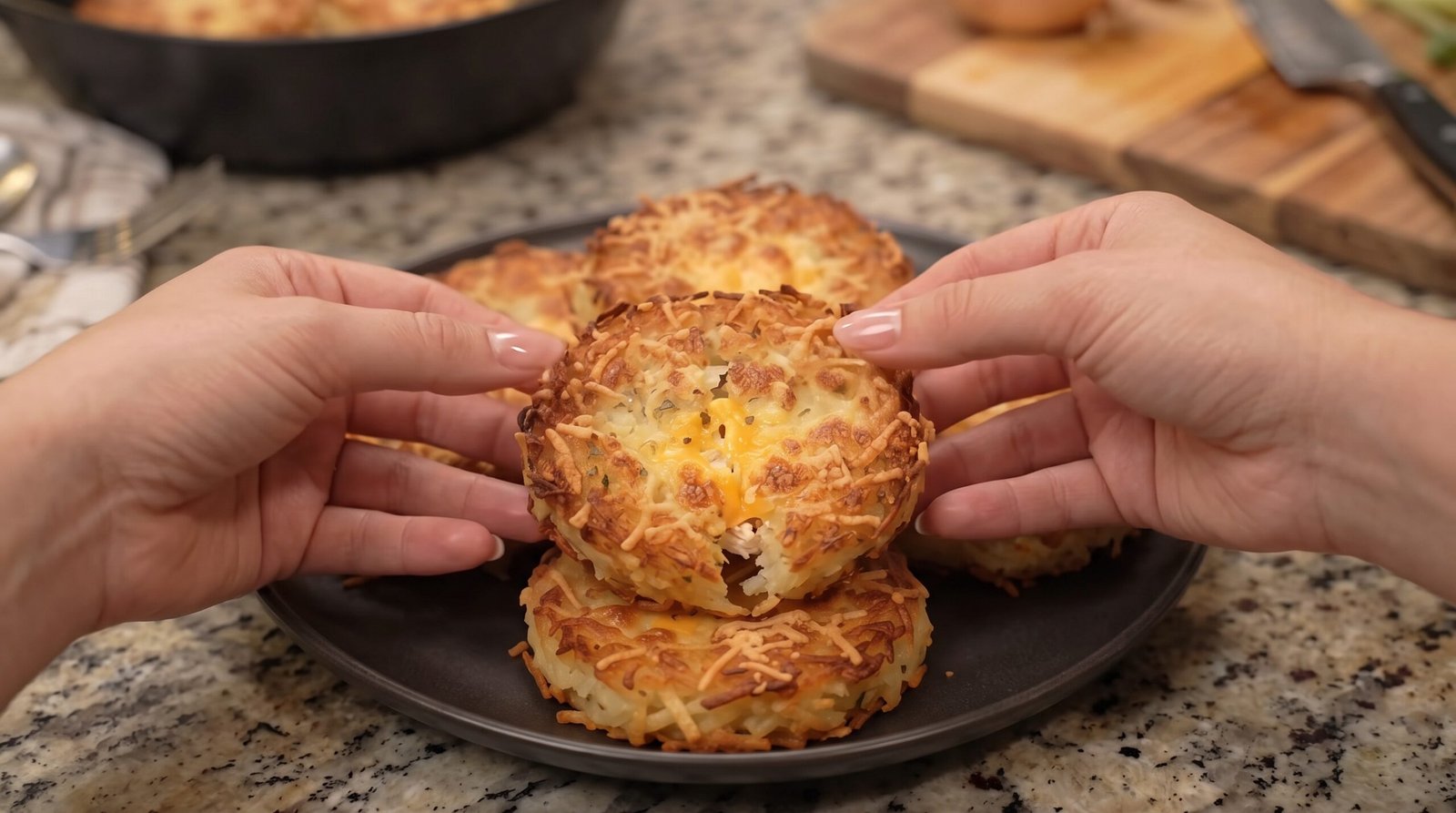
I often find myself staring at the fridge on a Tuesday evening with nothing but a few frozen potatoes and a cooked chicken breast left over from the weekend. It is the classic dilemma of wanting something substantial without spending an hour chopping vegetables or waiting for a long bake. That is when I turn to these savory handheld cakes. They use simple ingredients that most people keep on hand, and they provide a satisfying, salty, and warm meal that feels much more intentional than a plain sandwich.
These potato cakes are not just about convenience. They offer a great balance of textures, with a crust that turns golden brown and firm in the pan, holding together a soft center of shredded potato, melted cheddar, and tender chicken. Whether you need a quick dinner or a hearty afternoon snack, these little patties bring a bit of comfort to the table without much fuss.
Why This Recipe Works
The main reason I reach for this recipe so often is the reliable texture. When you work with shredded potatoes, the key is removing as much moisture as you can before they hit the heat. By patting the potatoes dry after they thaw or grating them fresh, you ensure that the starches can bind properly with the egg. This creates a crisp exterior that acts as a shell for the melted cheese and chicken inside. If the potatoes are too wet, you end up with a soggy mess that falls apart when you flip it.
Flavor-wise, this dish relies on the natural saltiness of the cheese and the savory quality of the chicken. Because potatoes are a neutral base, they soak up the flavors of whatever herbs you add. I usually reach for dried parsley or chives, but even a little garlic powder makes a big difference. The ratio of potato to chicken is important. Too much meat makes the patty heavy and prone to breaking. Keeping the chicken shredded into small bits allows it to distribute evenly, so every bite has a bit of filling.
The ease of preparation is another benefit. You are not dealing with complex sauces or long marination times. Everything comes together in one bowl. The cooking process is also quick. Since the potatoes are shredded finely, they soften through within a few minutes of frying. This is a very predictable recipe, which is helpful when you are tired and do not want to worry about potential disasters in the kitchen. It is a straightforward meal that delivers consistent results every time I make it.
Ingredient Notes
The Base Ingredients
The foundation of these cakes is the potato. I suggest using a standard starchy potato like a Russet. They grate easily and hold their shape well once cooked. If you are using frozen shredded potatoes, make sure they are fully thawed and squeezed dry in a clean kitchen towel. Any excess water left in the bag will prevent the cakes from getting that firm, golden edge.
For the chicken, you want something already cooked so you can assemble these quickly. A rotisserie chicken is ideal because the meat is already tender and flavorful. If you are cooking the chicken yourself, poach or bake it until it reaches an internal temperature of 165 degrees Fahrenheit. Shred the meat into very small strands rather than large chunks. Large pieces of chicken create weak points in the potato cake, causing it to tear when you try to lift it from the skillet.
Binding and Flavor
To hold everything together, you need a large egg and a bit of flour. The egg acts as the primary glue. If you are worried about the mixture being too loose, start with half the egg and add more only if needed, though one large egg usually covers about two cups of potato mixture perfectly. The flour helps absorb any lingering moisture and gives the exterior a bit more structure.
The cheese should be something that melts well, like sharp cheddar. I prefer grating it from a block myself because pre-shredded cheese is coated in potato starch or cellulose to keep it from clumping in the bag. That coating can sometimes interfere with the melt and prevent the cheese from bonding to the potato mixture. A sharp flavor cuts through the starchiness of the potato, so do not go too mild with your cheese choice if you want a bold final taste.
| Ingredient | Amount | Notes |
|---|---|---|
| Russet potatoes | 3 cups | Grated and squeezed of all liquid |
| Cooked chicken | 1 cup | Shredded into small, thin pieces |
| Sharp cheddar cheese | 1 cup | Grated by hand from a block |
| Egg | 1 large | Whisked lightly before adding |
| All-purpose flour | 3 tablespoons | Helps bind the mixture together |
| Dried parsley | 1 teaspoon | Adds a mild herbal flavor |
| Salt | 1/2 teaspoon | Adjust based on cheese saltiness |
| Black pepper | 1/4 teaspoon | Freshly cracked is best |
| Vegetable oil | 3 tablespoons | For frying in the skillet |
The Recipe
- Prep Time: 15 minutes
- Cook Time: 12 minutes
- Total Time: 27 minutes
- Servings: 4 cakes
- Difficulty: Easy
Equipment needed:
– Large mixing bowl
– Grater or food processor
– Clean kitchen towel
– Non-stick skillet
– Spatula
– Meat thermometer
Step-by-Step Instructions
Step 1: Prepare the Potatoes
Begin by grating your potatoes. If you are using a hand grater, use the larger holes to get long, thick strands. Once grated, place the potatoes into a clean kitchen towel. This is a crucial step. Wrap the towel tightly around the potatoes and twist it over the sink, squeezing with all your strength. You will be surprised by how much liquid comes out. Keep squeezing until no more moisture drips out.
If you skip this step, the cakes will steam instead of fry, resulting in a mushy texture. Once dry, place the potato shreds into a large mixing bowl. They should feel slightly sticky but not wet to the touch. If you are using frozen hash browns, perform the exact same squeezing process after they have reached room temperature.
Step 2: Combine the Filling
Add your shredded chicken to the bowl with the potatoes. It is vital that the chicken is shredded quite finely so it integrates into the potato nest. Add the flour, dried parsley, salt, and pepper. Toss these ingredients gently with your hands or a fork to distribute them evenly throughout the potato shreds.
Next, pour in the beaten egg and add the grated cheddar cheese. Mix everything together until the egg coats all the shreds and the cheese is dispersed. The mixture should hold together when you squeeze a small amount of it in your palm. If it feels too crumbly or loose, let it sit for a minute so the flour can hydrate.
Step 3: Heat the Skillet
Place your non-stick skillet over medium heat. Add the oil and wait for it to shimmer. You want the oil to be hot enough that it sizzles the moment the potato mixture touches it, but not so hot that it starts to smoke or darken immediately. If the oil is not hot enough, the potatoes will absorb it and become greasy.
Test the oil by dropping a tiny pinch of the potato mixture into the pan. If it bubbles and makes a distinct sound, you are ready to go. Medium heat is the sweet spot for this recipe. It allows the center of the cake to heat through and the cheese to melt while the exterior turns a deep, golden brown color without burning.
Step 4: Shape and Cook
Using your hands, form the mixture into four equal-sized patties. Press them firmly together, compacting the shreds so there are no loose edges. Carefully place them into the hot skillet. Use your spatula to press down on the tops slightly to flatten them into a disk shape, about an inch thick.
Cook the first side for about 5 to 6 minutes without moving them. It is tempting to peek or shake the pan, but leave them alone. This undisturbed time is what creates that firm, golden crust. You should see the edges beginning to turn brown as the heat works its way up the sides of the cake.
Step 5: Flip and Finish
Once the bottom is deep golden brown and the edges look set, carefully slide your spatula all the way under the patty. Flip it in one swift motion. The second side will usually cook a bit faster, needing only 4 to 5 minutes to reach the same level of color.
While the second side cooks, monitor the heat. If it looks like it is darkening too quickly, turn the flame down slightly. Use your meat thermometer to check the center of a cake, ensuring it reaches an internal temperature of 165 degrees Fahrenheit to ensure the egg and chicken are fully heated. Once finished, transfer the cakes to a paper towel-lined plate to drain any excess oil for a minute before serving.
Mistakes I Made (So You Don't Have To)
Not Squeezing Enough Liquid
Early on, I underestimated how much water is trapped inside a potato. I would pat them with a paper towel and think it was enough. The result was a soft, falling-apart heap in the pan that never formed a crust. Always use a cloth towel for better pressure. Squeezing until you think you are done, then squeezing again, is the secret to a professional texture.
Overcrowding the Skillet
I once tried to cook all four patties at once in a smaller pan. Because they were touching, they created steam. Instead of frying, they turned into a soggy block. The cakes need room for air to circulate and for the oil to maintain its heat. If you have a small skillet, cook them in two batches. It is worth the extra few minutes of wait time.
Using Large Chunks of Chicken
Thinking bigger pieces meant more filling, I used larger cubes of chicken. The potato shreds could not hold the heavy meat, and the patties crumbled every time I tried to flip them. Shredding the chicken into thin, fibrous pieces allows it to weave in with the potatoes, creating a structural web that keeps the patty together during the flip.
Flipping Too Soon
The most common mistake is impatience. If you try to flip before the bottom has developed a firm crust, the patty will break into pieces in the pan. I have learned to wait until I see the edges turning a dark brown. That color is your indicator that the starch has done its job and created a strong bond. If you have to fight the patty to get the spatula under it, it is not ready to flip yet.
Variations and Tips
Adding Green Onion
If you want a bit of a bite, thinly slice some green onions and mix them into the raw potato mixture. The sharp, oniony flavor complements the mild potato and the salty cheddar very well. Just make sure the pieces are thin so they do not interrupt the structural integrity of the cake.
Using Different Cheeses
While sharp cheddar is my standard, you can swap it for Gruyere if you want a nuttier, more sophisticated flavor. Mozzarella works if you want a long, stringy cheese pull, but it lacks the flavor punch of cheddar. I find that mixing a little parmesan with the cheddar gives a very crisp, salty finish to the crust that is quite pleasant.
Make-Ahead Strategy
You can prepare the potato mixture ahead of time, but do not add the salt until right before you cook. Salt draws moisture out of potatoes, even after they have been shredded. If you salt them hours in advance, you will end up with a bowl of liquid. Keep the mixture covered in the fridge for up to two hours, and add the salt just as you are heating the oil.
Using a Different Protein
This works great with leftover pork or even smoked turkey. As long as the meat is fully cooked and shredded into thin pieces, it will behave exactly like the chicken. Avoid using meats that are too fatty, like sausage, because the extra grease can make the potato cake feel heavy and greasy rather than crisp.
Storage and Reheating
If you find yourself with leftovers, store them in an airtight container in the refrigerator within two hours of cooking. They will stay good for up to three days. I do not recommend freezing this dish, as the moisture from the potatoes will cause the texture to become mushy and grainy once thawed.
To reheat, the microwave is not your friend. It will turn the crust soft and damp. Instead, pop the cold cakes into a toaster oven or a skillet over medium-low heat for a few minutes. This restores that crispy outer shell. Ensure the internal temperature reaches 165 degrees Fahrenheit before you eat them. If you are heating them in a skillet, cover the pan with a lid for the first minute to help the heat reach the center without burning the outside, then remove the lid to crisp the bottom back up.
Frequently Asked Questions
Can I bake these instead of frying them?
You can bake them at 400 degrees Fahrenheit on a parchment-lined sheet pan. Brush them with a little oil before putting them in the oven. Bake for about 20 to 25 minutes, flipping them halfway through. They will not be as uniform in color as the fried version, but they do get quite crunchy and are a good option if you want to avoid standing over the stove.
Do I have to use eggs?
The egg is necessary to bind the shredded potatoes and flour together. Without it, the mixture will not have the structure to hold its shape in the pan, and the cheddar will likely leak out and burn on the skillet surface. If you have an egg allergy, you would need a specific commercial egg replacer that mimics the binding properties of an egg, but I have not tested this recipe with one.
Why do my potato cakes turn black?
This usually happens if the heat is too high or if you are using a pan that does not distribute heat evenly. If the pan has hot spots, the potato shreds will burn before the interior is cooked through. Keep the heat at medium and adjust it if you see the edges darkening too quickly. Also, ensure you are using an oil with a high smoke point, like vegetable or canola oil.
Can I use sweet potatoes?
Sweet potatoes have a different sugar content and moisture level than Russet potatoes. They tend to soften much faster and are more prone to burning. If you use them, you will need to be extra careful with your heat levels and ensure they are very finely shredded. They will result in a sweeter, softer cake, which is a nice change of pace but definitely a different flavor profile than the savory original.
What should I serve with these?
I like to serve these alongside a simple green salad with a sharp vinaigrette. The acid from the dressing cuts through the richness of the cheese and the oil used for frying. A dollop of sour cream or a bit of hot sauce on top also goes a long way if you like a little extra flavor. They are substantial enough that you really only need a side of greens to make it a complete meal.
Final Thoughts
Making these potato and chicken cakes has become one of my favorite ways to clear out the fridge while making something genuinely satisfying. It is a humble meal that relies on basic techniques rather than fancy ingredients. Once you get the hang of squeezing the potatoes dry, the rest of the process is very fast.
I hope you find this recipe as useful as I do during your busy weeks. It is all about those small details like the heat of the pan and the shredding of the meat that turn basic leftovers into something special. Enjoy the process of creating a quick, warm meal that fits perfectly into your evening.