
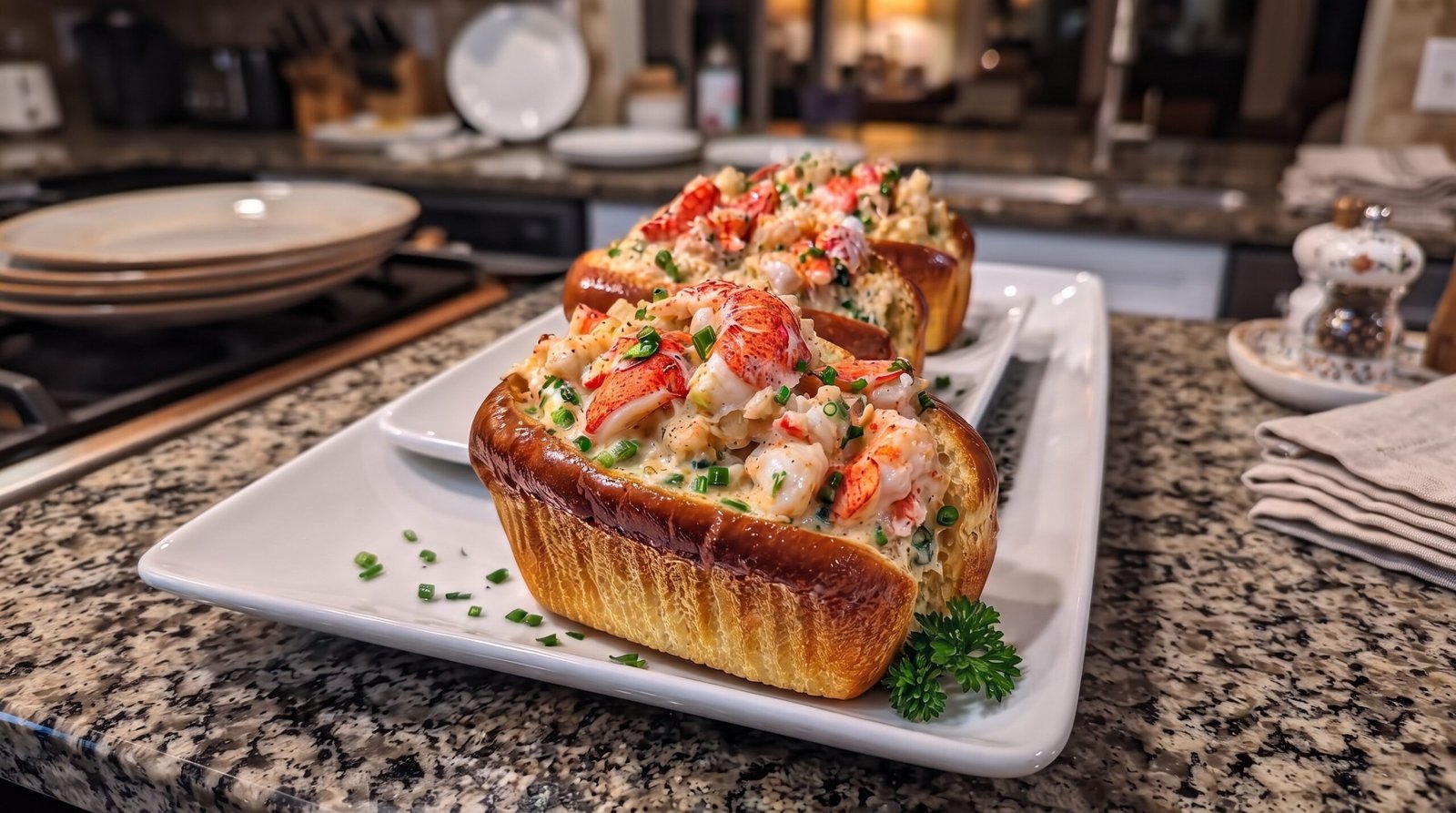
I remember the first time I tried to make a lobster roll at home. I was worried about overcooking the meat, which can turn into something resembling a rubber eraser in just a few seconds. There is a specific window of time when the lobster is tender and sweet, and missing that window is the biggest challenge for any home cook. We often think of these rolls as restaurant-only food, but the truth is that they are straightforward once you understand how to treat the seafood. I have spent many afternoons in my kitchen refining my technique to ensure the lobster stays succulent while the bun gets that golden, buttery crunch that ties everything together.
This guide will walk you through the process of preparing these rolls. You will learn how to source the lobster, how to poach it, and how to mix the dressing so that it enhances the flavor instead of masking it. Whether you are planning a special weekend meal or just want to bring a little bit of coastal inspiration to your table, these steps will help you achieve a high-quality result. You do not need professional equipment, just a few pots and a bit of patience.
Why This Recipe Works
The primary reason this recipe succeeds is the balance between the cool, creamy salad and the warm, toasted bread. Many people make the mistake of serving everything at room temperature, but the temperature contrast is essential. When you toast the bun until it is golden brown, the buttery richness of the bread contrasts with the chilled lobster meat. This makes every bite feel complete.
Another reason is the minimal dressing. I prefer a light touch with the mayonnaise. If you drown the lobster in too much sauce, you lose the texture of the meat and the delicate sweetness that makes lobster special. By using just enough to bind the pieces together, you allow the lobster to remain the star of the show. I also add a squeeze of fresh lemon juice, which cuts through the richness and brightens the entire flavor profile.
The texture of the meat is the next factor. By poaching the lobster in a court bouillon or even just salted water with a few aromatics, you control the cooking environment. Many people try to boil the lobster for too long, but gentle poaching keeps the fibers tender. I always check the meat with a thermometer to ensure it reaches an internal temperature of 140 degrees Fahrenheit. This is the safe point where the meat is fully cooked but still soft. Going beyond this temperature leads to the dreaded rubbery texture that ruins a lobster roll.
Finally, the choice of bun is important. Using a split-top brioche bun is traditional for a reason. Its structure allows it to stand upright in the pan, ensuring you can get that even golden sear on both sides. Unlike a standard hot dog bun, the brioche has a higher butter and egg content, which yields a softer, more pillowy interior that holds the lobster salad without falling apart.
Ingredient Notes
The Lobster Meat
You should aim for fresh lobster tail or claw meat if it is available at your local fish market. If you are buying whole lobsters, you will need to steam or boil them first and then remove the meat from the shell. For most home cooks, buying pre-cooked or raw lobster meat is a massive time saver. If you are using raw tails, ensure you remove the intestinal vein before poaching. I recommend one pound of meat for four generous rolls. If you cannot find lobster, some people swap in large shrimp, but the flavor profile is distinct, so stay with lobster if possible.
The Dressing
My dressing is very simple: mayonnaise, fresh chives, lemon juice, a pinch of sea salt, and a small amount of celery for crunch. You do not want to add too many competing flavors. The mayonnaise should be full-fat for the best mouthfeel. The celery must be diced very finely, or it will overwhelm the tender lobster. If you are not a fan of celery, you can use finely diced cucumber, provided you remove the seeds so it does not turn watery.
The Buns
Look for high-quality split-top brioche buns. They are slightly thicker than regular buns and have a flat surface on the sides, which makes searing them in a pan much easier. If you cannot find these, use the best quality brioche loaf you can find and cut it into thick rectangles yourself. You will also need unsalted butter for searing the buns. Do not use oil, as butter provides the signature nutty flavor and the golden color we are looking for.
| Ingredient | Amount | Notes |
|---|---|---|
| Lobster meat | 1 pound | Cooked, chopped into large chunks |
| Mayonnaise | 1/3 cup | Use high-quality, full-fat version |
| Lemon juice | 1 tablespoon | Freshly squeezed is necessary |
| Fresh chives | 2 tablespoons | Finely minced |
| Celery | 1 stalk | Finely diced |
| Salt | 1/4 teaspoon | Adjust to taste |
| Brioche buns | 4 count | Split-top style |
| Unsalted butter | 3 tablespoons | For searing the buns |
The Recipe
- Prep Time: 15 minutes
- Cook Time: 10 minutes
- Total Time: 25 minutes
- Servings: 4 rolls
- Difficulty: Easy
Equipment:
– Large mixing bowl
– Small saucepan
– Silicone spatula
– Serrated knife
– Chef’s knife
– Instant-read meat thermometer
Step-by-Step Instructions
Step 1: Prep the Lobster
Start by checking your lobster meat for any stray pieces of shell. If you cooked the lobster yourself, ensure it is completely chilled in the refrigerator for at least two hours before you begin mixing. Warm lobster will turn the mayonnaise into a loose, oily mess. Chop the meat into large, bite-sized chunks. You want to see the texture of the lobster, so do not shred it into tiny pieces.
Place the chopped meat into a large bowl. If you are using claw meat, be gentle, as it is naturally softer than tail meat. Keep the bowl in the refrigerator while you prepare the other ingredients to ensure everything remains cold and food-safe.
Step 2: Make the Dressing
In a separate small bowl, combine your mayonnaise, freshly squeezed lemon juice, and finely minced chives. Stir this until it is completely smooth. You want to incorporate the lemon juice thoroughly so it does not settle at the bottom. Taste the mixture. It should be tangy but balanced by the creamy nature of the mayonnaise.
Add the finely diced celery to the dressing bowl. I find that if you mix the celery with the dressing first, it gets coated evenly, and you avoid having clumps of dressing and clumps of celery. The texture should be consistent throughout.
Step 3: Combine and Season
Take the lobster meat out of the refrigerator and pour the dressing over it. Using a silicone spatula, gently fold the mixture together. Do not stir vigorously, or you will break up the nice, large chunks of meat you worked so hard to preserve. Fold until every piece of lobster is lightly coated with a thin layer of the dressing.
Once combined, add the salt. Start with a quarter teaspoon and taste. Remember that the salt will draw out some moisture from the lobster, so season this right before you are ready to serve. If you add salt too early, the mixture may become watery after sitting in the fridge.
Step 4: Toast the Buns
Place your skillet over medium heat. Add one tablespoon of butter and let it melt. Once the butter starts to foam, place the brioche buns into the pan. You want to toast the cut sides until they reach a deep golden brown. This usually takes about two to three minutes. Watch them closely, as brioche contains sugar and can go from golden to burnt very quickly.
Once the sides are crispy, use your spatula to tilt the bun and toast the ends if desired. Remove them from the pan and place them on a serving plate. You want the buns to be warm when you assemble the rolls, so do not toast them too far in advance.
Step 5: Assembly
Using a spoon, fill each toasted bun generously with the lobster salad. You want a good amount of height in the roll. If you have extra chives, sprinkle a few on top for color. Serve immediately. These rolls are at their absolute best when the bread is warm and the lobster is chilled.
Do not try to make these rolls too far ahead of time. The bread will lose its crispness once it touches the cold lobster salad, and the whole thing will become soggy. If you are feeding a crowd, you can prep the lobster mixture and keep it cold in the fridge, but only toast the buns and assemble the rolls when your guests are ready to sit down.
Mistakes I Made (So You Don't Have To)
Overcooking the Lobster
The most common error is cooking the lobster until it becomes rubbery. I used to think that boiling it longer meant it was safer, but that just ruins the texture. Use a thermometer. If you are poaching raw lobster, take it out of the water the second it hits 140 degrees Fahrenheit. It will continue to cook slightly from the residual heat, so pull it out just a second early if you are unsure.
Using Hot Lobster Meat
If you mix hot or even room-temperature lobster with mayonnaise, the fat in the mayonnaise will melt. This turns the dressing into a thin, greasy sauce that drips off the meat and makes the bun soggy. Always chill your cooked lobster in the refrigerator for at least two hours before tossing it with the dressing. This ensures a clean, creamy texture that stays on the meat.
Using a Poor-Quality Bun
I once tried to use standard, mass-produced hot dog buns. They were too thin and fell apart the moment I added the heavy lobster mixture. They also did not have enough structural integrity to hold up in the pan while searing. Always look for a dense, buttery brioche bun that has enough substance to handle the weight of the filling without collapsing.
Too Much Dressing
Early on, I felt like the salad was too dry, so I kept adding mayonnaise. I ended up with a lobster-flavored mayonnaise soup rather than a lobster roll. You want the dressing to bind the meat, not to drown it. Use the amount listed in the recipe as a starting point. You can always add a tiny bit more, but you cannot take it out once it is in there.
Variations and Tips
Adding a Touch of Heat
If you like a little kick, add a tiny pinch of cayenne pepper or a small amount of finely diced jalapeño to the dressing. The heat of the pepper works well with the sweetness of the lobster meat. Just be careful not to add so much that it hides the primary flavor of the seafood. Start with just a tiny pinch and taste before adding more.
Herb Variations
While fresh chives are my go-to, you can swap them for fresh tarragon if you want a more classic, bistro-style flavor profile. Tarragon has a slight anise note that works surprisingly well with shellfish. Just remember that tarragon is much stronger than chives, so use about half the amount you would use for chives. You can also mix both if you are feeling adventurous.
The Butter Poach Option
If you prefer a warm lobster roll, you can skip the mayonnaise entirely. Instead, heat the lobster meat gently in a pan with melted butter and a splash of lemon juice until it is just warmed through. Spoon this into your toasted, buttered buns. This is a very different style, but it is just as popular in many coastal regions. The key is still not to let the meat exceed 140 degrees Fahrenheit.
Make-Ahead Strategy
You can make the lobster mixture and keep it in the refrigerator for up to 24 hours. Keep it in a sealed container so it does not pick up flavors from your fridge. However, do not add the salt until right before you serve, as it will draw water out of the lobster over time. Always toast your buns fresh; do not try to toast them ahead of time, as they will get soft and lose their crunch.
Storage and Reheating
If you have leftovers, store the lobster salad in an airtight container in the refrigerator. It should be eaten within two days, as seafood is highly perishable. Do not attempt to freeze the lobster salad, as the mayonnaise will separate and the texture of the lobster will change significantly upon thawing. It will not be good.
If you have unused buns, keep them in a bread box or a sealed plastic bag at room temperature for up to two days. You can refresh them by lightly toasting them in a pan again before using. Never reheat the lobster salad itself; it is designed to be served chilled. If you have any concerns about how long the lobster has been out, discard it immediately. Food safety is not worth the risk.
Frequently Asked Questions
Can I use frozen lobster meat?
Yes, frozen lobster meat is often a great choice because it is usually flash-frozen right after being cooked. Just make sure you thaw it completely in the refrigerator overnight. Once it is thawed, drain any excess water before you start chopping it, or your salad will end up being watery. Pat it dry with a paper towel if it seems particularly wet.
What is the best internal temperature for lobster?
The target internal temperature is 140 degrees Fahrenheit. At this temperature, the lobster is fully cooked, opaque throughout, and safe to eat. If you go higher than 145 degrees, you are moving into the territory of tough, dry meat. Use a digital meat thermometer to check the thickest part of the tail meat to get an accurate reading.
How do I stop my buns from getting soggy?
The best way to prevent soggy buns is to toast them thoroughly and assemble the roll right before you plan to eat. The butter used to sear the bread creates a temporary barrier that helps keep the moisture from the lobster salad out of the bread. If you are serving a crowd, assemble them one by one rather than all at once.
Can I use different types of mayonnaise?
You can use any mayonnaise you like, but I highly recommend a full-fat version for the best results. The low-fat or light varieties have a higher water content and different stabilizers, which can make the dressing separate or have a strange, thin mouthfeel. If you want to make your own mayo, that is even better, as the fresh flavor really shines through.
What sides go best with a lobster roll?
I usually keep the sides light to balance the richness of the brioche and the lobster. A simple cucumber salad with vinegar, a small bowl of potato chips, or a crisp green salad with a bright vinaigrette are my favorite accompaniments. You do not need anything heavy like potato salad or coleslaw, as you already have plenty of texture and creaminess in the main dish.
Final Thoughts
Making a lobster roll in your own kitchen is a rewarding experience that brings a sense of occasion to any meal. By keeping the ingredients fresh and focusing on the small details like the temperature of the meat and the crispness of the bun, you can create something that rivals any seaside shack. It really comes down to respecting the quality of the seafood and not over-complicating it.
I hope you enjoy making this as much as I do. It is one of those dishes that feels sophisticated but is actually quite simple to pull together. Take your time with the butter-toasting step, ensure your lobster is well-chilled, and enjoy the result. It is a wonderful way to treat yourself to a special dinner at home.