
I will never forget the anniversary dinner four years ago that nearly caused an absolute kitchen meltdown.
I had planned an Italian bistro evening right at home: a massive skillet of silky fettuccine twirled around golden, pan-seared chicken cutlets, coated in a luscious, garlic-infused Alfredo sauce topped with coarse cracked black pepper and fresh parsley.
I figured it was as simple as boiling pasta, searing chicken, and dumping heavy cream and grated cheese into the pan. I bought a tub of pre-shredded parmesan cheese, dumped cold heavy cream into a scorching hot skillet, cranked the flame to high to get it bubbling, and tossed in the cheese.
Within sixty seconds, dinner turned into an oily catastrophe.
The raging boil instantly broke the emulsion of the heavy cream. The milk proteins seized up, and the pre-shredded parmesan—coated in powdery cellulose and potato starch—refused to melt. Instead of a silky, velvety cream sauce, I was staring at a pool of yellow, translucent butter oil floating over gritty, rubbery clumps of curdled cheese that stuck like chewing gum to the bottom of my pan.
Worse, the chicken had spent too long simmering in the boiling sauce, turning into dry, stringy chunks that felt like chewing rubber bands. When my partner twirled a forkful, the greasy oil splattered across their shirt while the naked noodles sat pale and dry beneath. We ended up eating toasted sandwich bread for our anniversary dinner, and I spent the rest of the evening scrubbing burnt dairy sediment off my nonstick skillet.
That failure drove me to master classic Italian dairy emulsification.
True restaurant-quality Chicken Alfredo doesn’t come from store-bought jars or heavy flour roux. It is an art of temperature control, fat-to-liquid balancing, capturing the magic of starchy pasta water, and taking the pan completely off the heat before melting aged cheese into the cream.
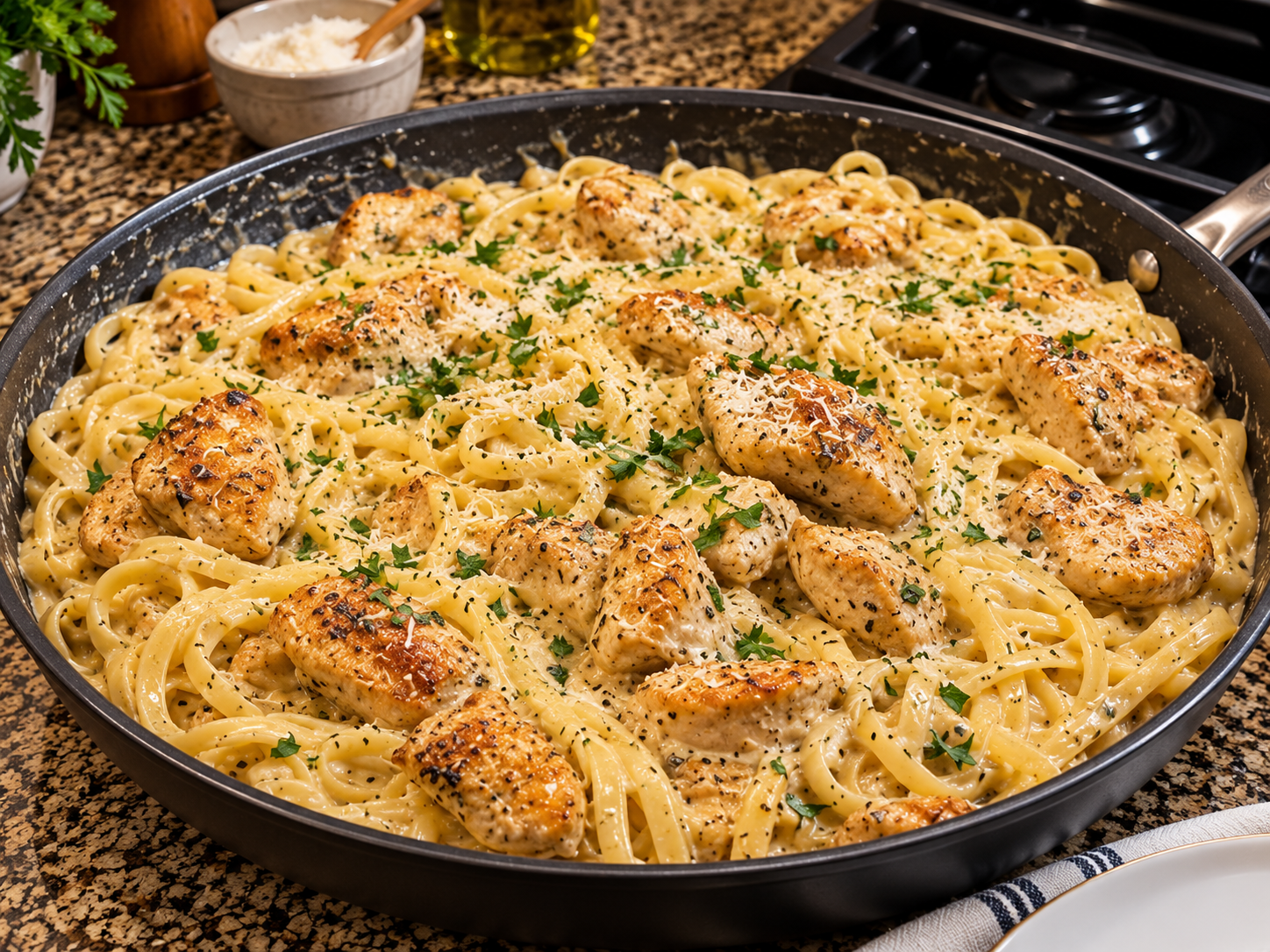
The photo above is the hard-won victory on my stovetop: a wide, deep skillet overflowing with glossy, ribbon-like fettuccine, tender bite-sized seared chicken breast pieces with caramelized golden edges, coated in a silky, rich garlic cream reduction that clings tightly to every single strand without a hint of graininess or grease.
Here is how you make foolproof, restaurant-quality Chicken Fettuccine Alfredo at home without ever breaking your sauce again.
Why Homemade Alfredo Turns Greasy and Grainy (The Dairy Science)
Alfredo sauce is a delicate emulsion of water, butterfat, and milk proteins. When that balance fails, your sauce splits into grease. Understanding these three rules makes the difference between velvet and grit:
1. The Pre-Shredded Bagged Cheese Trap
Pre-shredded cheese in plastic bags is coated in anti-caking agents like cellulose powder and potato starch to keep the shreds from clumping on grocery store shelves. When added to warm cream, those starches absorb moisture and prevent the cheese proteins from relaxing and melting. The result is a gritty, chalky sauce. Buying a wedge of aged Parmigiano-Reggiano or Grana Padano and grating it finely on a microplane ensures the cheese dissolves into the sauce in seconds like powdered sugar.
2. The Boiling Heat Mistake
Aged cheese proteins are sensitive to high temperatures. If you dump grated parmesan into a sauce that is actively boiling on high heat, the intense thermal shock causes the proteins to seize and contract tightly. As they contract, they squeeze out their fat, creating clumps of rubbery protein floating in clear yellow butter oil. aged cheese must always be stirred into the sauce off the heat source, letting the gentle residual warmth melt it into a silky suspension.
3. Missing the Starchy Pasta Water Emulsion
Heavy cream alone can feel overwhelmingly rich and can tighten up too fast as it cools. Dipping a measuring cup into the boiling pasta water to capture that cloudy, starchy liquid is non-negotiable. The amylose starch suspended in the water acts as a natural culinary bridge, binding the hot dairy fat and aromatics into a creamy, glossy glaze that coats the fettuccine ribbons instead of sliding off to the bottom of your plate.
Ingredients & Tools You’ll Need
Essential Kitchen Gear
- 12-Inch Deep Skillet or Sauté Pan: (A wide pan with high sides, like the one in the photo, provides ample surface area to toss the long pasta strands and seared chicken directly in the sauce).
- 6- to 8-Quart Large Stockpot: For boiling the fettuccine in abundant salted water so the long noodles don’t stick.
- Microplane or Fine Box Grater: Mandatory for grating your parmesan into fluffy, snow-like shreds that melt instantly.
- Metal Pasta Tongs: For swirling and tossing the pasta vigorously through the simmering cream reduction.
- Meat Mallet & Instant-Read Thermometer: For pounding the chicken breasts to uniform thickness so they sear evenly without drying out.
The Ingredient Breakdown
| Component | Ingredient | Quantity | Practical Role |
| The Star Pasta | High-Quality Fettuccine | 12 oz (340g) | Wide, sturdy ribbons that carry heavy cream sauce effortlessly. |
| The Protein | Boneless, Skinless Chicken Breasts | 1.25 to 1.5 lbs (cut into bite-sized tenders) | Succulent, lean protein; seared until golden-brown and juicy. |
| The Searing Fat | Olive Oil & Unsalted Butter | 1 tbsp olive oil, 1 tbsp butter (for searing) | Oil prevents butter from burning while building a savory sear. |
| Chicken Rub | Garlic Powder, Onion Powder, Paprika | 1 tsp garlic powder, ½ tsp onion powder, ½ tsp paprika | Creates that golden, savory, steakhouse crust on the chicken. |
| The Sauce Butter | High-Fat Unsalted European Butter | 4 tbsp (half a stick) | Sweet, rich foundation for sautéing fresh garlic and enriching sauce. |
| Aromatic Punch | Fresh Garlic | 5 to 6 cloves (finely minced) | Delivers that signature bold, sweet, bistro-style garlic backbone. |
| The Velvet Base | Heavy Whipping Cream | 1.5 cups (room temperature) | Forms the luxurious, rich, unbroken cream reduction. |
| The Secret Binder | Starchy Pasta Water | ¾ to 1 cup (reserved while boiling) | Emulsifies the butterfat and cream into a glossy pan glaze. |
| The Flavor Core | Aged Parmigiano-Reggiano | 1.25 cups (freshly grated on a microplane) | Adds nutty, salty, authentic Italian umami depth. |
| Warm Accent | Ground Nutmeg | ⅛ tsp (just a tiny pinch) | The classic secret Italian bistro note that elevates white cream. |
| Base Seasoning | Coarse Kosher Salt & Black Pepper | 1.5 tsp salt, 1.5 tsp coarse cracked black pepper | Essential seasoning across pasta water, chicken, and cream. |
| Fresh Lift | Fresh Flat-Leaf Italian Parsley | 2 tbsp (finely chopped) | Sprinkled across the hot skillet for color and clean herbal contrast. |
Step-by-Step Cooking Instructions
Step 1: Prep and Sear the Golden Chicken Bites
Pat your chicken breasts completely bone-dry with paper towels.
Slice the breasts across the grain into uniform, bite-sized medallions—roughly ½-inch thick.
Uniform thickness ensures every piece cooks at the exact same rate.
In a small bowl, combine the garlic powder, onion powder, paprika, 1 teaspoon of kosher salt, and ½ teaspoon of coarse black pepper.
Toss the chicken slices in the seasoning mix until evenly coated on all sides.
Place your 12-inch deep skillet over medium-high heat on the stovetop.
Add 1 tablespoon of olive oil and 1 tablespoon of butter.
Once the butter is melted, foaming, and shimmering hot, lay the chicken pieces flat into the pan in a single layer.
Sear untouched for 3 minutes on the first side.
Do not stir or crowd them! You want direct contact so each piece develops that speckled, deep golden-brown sear shown in the photo.
Flip the chicken and cook for another 2 to 3 minutes until the internal temperature registers 165°F (74°C).
Transfer the seared chicken to a clean plate and tent loosely with foil.
Leave the savory browned chicken drippings in the skillet!
Step 2: Boil the Fettuccine to True Al Dente
Bring your large stockpot of water to a vigorous, rolling boil over high heat.
Add 2 generous tablespoons of coarse kosher salt.
Drop in the 12 ounces of fettuccine, stirring immediately with tongs so the ribbons don’t stick to each other.
Check the package directions for al dente: set your kitchen timer for 2 minutes LESS than the lowest recommended cooking time.
The pasta must finish cooking directly inside the hot Alfredo sauce so it drinks in the garlic and cream.
Step 3: Capture the Liquid Gold
When your pasta timer rings, dip a heatproof measuring cup into the pot and scoop out at least 1 cup of cloudy, bubbling pasta water.
Set it next to your skillet.
Drain the fettuccine into a colander, but do not rinse it! The sticky starches on the surface of the noodles are what grab onto the cream sauce.
Step 4: Sauté the Garlic and Reduce the Cream
Turn the heat under your chicken skillet down to medium-low.
Add the 4 tablespoons of unsalted butter directly into the pan drippings.
Toss in your minced fresh garlic.
Cook gently for 60 to 90 seconds, stirring constantly with a wooden spoon.
You want the garlic soft, sweet, and fragrant—do not let it turn brown, or it will turn your white cream sauce bitter!
Pour in the 1.5 cups of heavy whipping cream.
Add the pinch of ground nutmeg, ½ teaspoon of kosher salt, and 1 teaspoon of freshly cracked coarse black pepper.
Bring the liquid to a gentle, bubbling simmer over medium-low heat.
Let the cream simmer for 3 to 4 minutes, stirring frequently, until it reduces slightly and coats the back of a wooden spoon in a smooth, velvety layer.
Step 5: The Starchy Emulsion (Tossing the Pasta)
Turn the burner heat down to low.
Transfer the drained al dente fettuccine directly into the bubbling skillet with the garlic cream reduction.
Pour in ½ cup of your reserved hot pasta water.
Using your metal tongs, lift, swirl, and toss the fettuccine ribbons continuously through the simmering cream for 2 full minutes.
The pasta will absorb the hot liquid, finishing its final stage of cooking right inside the sauce, while the starches bind with the heavy cream into a glossy, velvety glaze.
If the pan looks a little tight or dry, splash in another 2 to 3 tablespoons of hot pasta water.
Step 6: The Off-Heat Cheese Melt (The Velvet Secret)
Now comes the critical moment: turn the stove burner completely OFF and slide the skillet off the heat source.
The Non-Negotiable Rule: Never dump your grated Parmigiano-Reggiano into boiling dairy!
Let the skillet sit off the heat for 30 seconds so the boiling bubbles subside.
Sprinkle your freshly grated Parmigiano-Reggiano into the skillet in three gradual additions, tossing the pasta vigorously with your tongs between each handful.
The gentle, residual warmth of the cream and noodles will melt the fine cheese shreds instantly into a smooth, luxurious, unbreakable blanket.
There will be zero oil separation and zero gritty clumps—just pure, silky velvet clinging to every ribbon of pasta.
Step 7: Fold the Chicken and Garnish
Add your warm, seared chicken pieces and any accumulated savory plate juices directly into the skillet with the pasta.
Toss gently to distribute the golden chicken evenly among the fettuccine ribbons (exactly like the gorgeous, hearty skillet pictured in the photo).
Scatter finely chopped fresh Italian flat-leaf parsley across the top for a bright, vibrant contrast.
Grind extra coarse black pepper over the center.
Bring the entire skillet straight to the dining table while it is steaming hot!
Practical Troubleshooting & Common Mistakes
- “My sauce turned out too thick and sticky.”
As fettuccine cools, its starches rapidly drink in liquid. If your skillet starts looking sticky, simply splash in ¼ cup of your reserved warm pasta water (or warm chicken broth) and toss with tongs. It will instantly loosen back into that fluid, restaurant-quality glaze. - “The sauce separated into yellow oil.”
This is the hallmark of either boiling the sauce after adding the cheese, or using pre-shredded cheese from a tub or bag. Always grate a block of fresh Parmigiano-Reggiano on a microplane, and always stir it into the pasta off the heat. If it ever starts to break, immediately pull the pan away from the heat, splash in two tablespoons of cold heavy cream, and whisk vigorously. - “The chicken turned out dry and rubbery.”
Chicken breast dries out fast if left in a simmering pan. Always sear your cutlets first, remove them to a plate, and only fold them back into the pasta during the final sixty seconds just to coat them in the warm sauce.
What to Serve with Creamy Chicken Fettuccine Alfredo
Because this pasta is rich, buttery, and decadent, it pairs naturally with bright, crisp accompaniments that cleanse the palate:
- Crispy Garlic Bread or Herb Focaccia: Thick slices of toasted bread are non-negotiable for wiping your plate clean of every drop of garlic parmesan cream.
- A Crisp Caesar or Italian Chopped Salad: Crisp romaine lettuce, cherry tomatoes, and shaved parmesan tossed in a tangy lemon vinaigrette provide a cool, crunchy contrast to the warm pasta.
- Roasted Broccoli or Steamed Asparagus: Tossed simply in olive oil, sea salt, and a squeeze of fresh lemon juice, tender green vegetables balance the rich, creamy sauce.
- A Crisp, High-Acid White Wine: A chilled glass of Italian Pinot Grigio, Gavi, or an un-oaked Sauvignon Blanc cuts cleanly through the butterfat and heavy cream.
How to Store and Reheat Leftovers (The Stovetop Trick)
Leftover Chicken Alfredo keeps well in an airtight glass container in the refrigerator for up to 3 days.
Never reheat Alfredo in the microwave on high power! The microwave’s intense, uneven radiation will melt the butterfat instantly, causing the cream sauce to separate into an unappetizing pool of grease while turning the chicken rubbery.
Instead, use the gentle stovetop skillet method:
- Place your leftover pasta and chicken into a nonstick skillet over medium-low heat.
- Splash in 2 to 3 tablespoons of whole milk, cream, or chicken broth to replenish the moisture absorbed by the noodles overnight.
- Toss gently with tongs for 4 to 5 minutes as the pan warms up.
The added liquid and gentle heat will revive the starches and butterfat into a silky, cohesive glaze once again. Dust with a pinch of fresh parmesan and coarse black pepper, and your next-day lunch will taste just as rich, creamy, and satisfying as when it was freshly tossed in the skillet!