
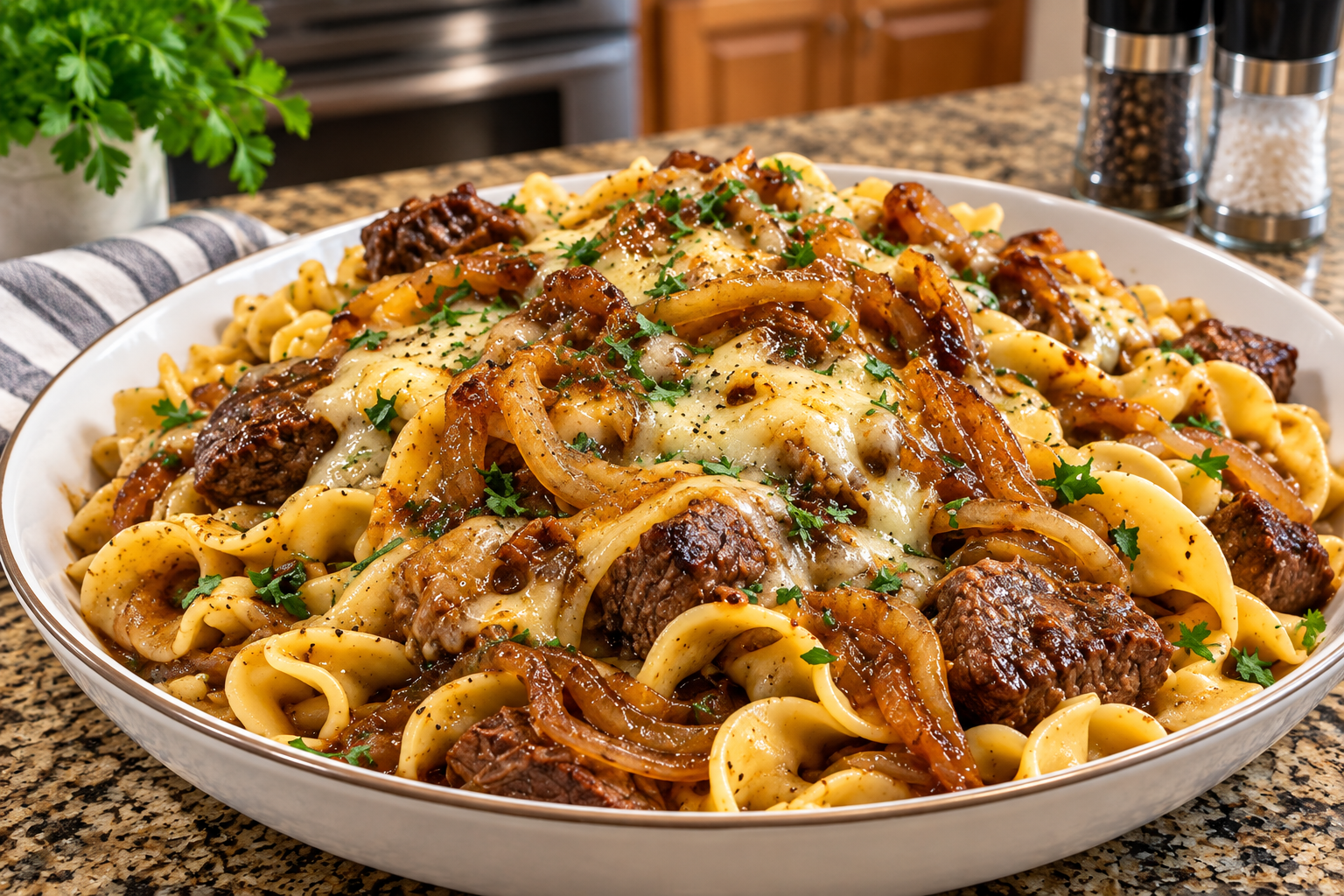
A few winters ago, I hit that mid-week dinner slump where nothing in the pantry looks appealing, the wind is rattling the storm windows, and takeout sounds too expensive. I had a two-pound package of beef stew meat sitting in the fridge, marked down on clearance, and two giant yellow onions rolling around in the bottom crisper drawer.
I decided to try my hand at an improvised beef-and-noodles dish. I threw the cold chunks of beef into a pan, dumped chopped raw onions on top, poured in a carton of beef broth, threw in a handful of dried egg noodles, and cranked the burner to high.
It was an unmitigated disaster.
The beef boiled into tough, rubbery little rubber balls that took five minutes of aggressive jaw exercise per bite. The onions dissolved into watery shreds without developing any sweetness, and the egg noodles drank up the cooking liquid until they collapsed into a gummy porridge. My partner took three polite bites, washed them down with water, and reached for the jar of peanut butter.
That meal was a wake-up call.
Tough, collagen-rich beef and sweet caramelized onions belong together—it is the foundation of classic French onion soup and Hungarian goulash. But you cannot rush the process with high heat, and you can’t treat beef and delicate egg noodles like they have the same cooking timeline.
After months of tinkering, testing beef braises, and discovering how melted cheese changes the game, I landed on this exact recipe. The photo above is the weekly gold standard in my kitchen: fork-tender, slow-braised beef sirloin cubes swimming in a rich, deeply savory onion gravy, spooned over thick buttered egg noodles, and crowned with a molten blanket of toasted, bubbly Gruyère and Swiss cheese.
Here is how to make this bistro-level comfort dish at home without turning your beef into leather.
Why Quick Beef and Noodle Skillets Fail
Tough stew cuts and delicate egg noodles have opposite physical needs on the stovetop. When dishes like this go sideways, it usually comes down to three classic mistakes:
1. The Stew Meat Boiling Trap
If you dump cold beef cubes straight into a crowded pan with broth or onions, the temperature drops instantly. The meat releases moisture, fills the pan with water, and boils. Boiled beef turns grey, dry, and chewy. You must pat the meat completely dry, sear it in batches over high heat to build a deep Maillard crust, and then braise it low and slow until the tough collagen melts into tender gelatin.
2. Rushing the Caramelization
You cannot caramelize onions in ten minutes on high heat. If you crank the flame, the edges of the onion scorch and turn bitter while the interiors stay raw and sharp. Slowly sweating thick slices in butter over medium-low heat for 25 to 30 minutes breaks down their natural sugars into sweet, jammy, golden ribbons that create the backbone of the sauce.
3. Boiling Noodles Directly in the Gravy
While one-pot pasta recipes sound convenient, cooking delicate wide egg noodles inside a thick, rich beef braise releases excess surface starch that turns the gravy pasty. Cooking the egg noodles separately in well-salted water, tossing them with melted butter and black pepper, and ladling the braised beef and onions over the top preserves the silky texture of the noodles while keeping the gravy glossy and smooth.
Ingredients & Tools You’ll Need
Essential Kitchen Gear
- 5- to 6-Quart Enameled Cast-Iron Dutch Oven: (A heavy Dutch oven provides the thick base and even heat distribution necessary for searing meat and braising onions without scorching).
- Large Stockpot & Colander: For boiling and draining the wide egg noodles.
- Metal Tongs & Wooden Spatula: For flipping seared beef cubes and scraping up fond from the bottom of the pan.
- Shallow Oven-Safe Serving Bowl or Pie Dish: If you want to finish the melted cheese layer under the oven broiler.
The Ingredient Breakdown
| Component | Ingredient | Quantity | Practical Purpose |
| The Beef | Beef Chuck Roast or Top Sirloin | 2 lbs (900g, cut into 1.5-inch cubes) | Chuck breaks down into melt-in-your-mouth tenderness during the braise. |
| Flour Dredge | All-Purpose Flour | 3 tbsp | Lightly coats the beef to build a crust and thicken the gravy naturally. |
| Aromatic Sweetness | Large Yellow or Sweet Vidalia Onions | 3 large (halved and thickly sliced) | Cooked down into sweet, jammy, golden ribbons. |
| Aromatic Backbone | Fresh Garlic | 4 cloves (minced) | Delivers robust savory depth. |
| Cooking Fats | Unsalted Butter & Neutral Oil | 3 tbsp butter, 2 tbsp oil (divided) | Oil handles high-heat beef searing; butter enriches the onions. |
| Deglazing Liquid | Dry White Wine or Dry Sherry | ½ cup | Lifts browned bits from the pan and brings authentic bistro acidity. |
| The Braising Sauce | Rich Beef Bone Broth | 3 cups | Low-sodium preferred; forms the savory base of the onion gravy. |
| Savory Boosters | Worcestershire Sauce | 2 tbsp | Delivers deep, fermented umami that enhances beef flavor. |
| Savory Boosters | Better Than Bouillon Roasted Beef Base | 1 tbsp | Adds concentrated steakhouse richness that boxed broth lacks. |
| Herbal Notes | Fresh Thyme Leaves | 1 tbsp (or 1 tsp dried) | Classic French onion herb pairing. |
| Seasoning | Coarse Kosher Salt & Cracked Pepper | 1.5 tsp salt, 1 tsp coarse black pepper | Crucial seasoning across the beef, sauce, and noodles. |
| The Noodles | Wide or Extra-Wide Egg Noodles | 12 oz (approx. ¾ of a bag) | Buttery, wavy vehicle that cradles chunks of beef and sauce. |
| Noodle Finish | Unsalted Butter (for noodles) | 2 tbsp | Keeps drained noodles separate and velvety. |
| The Cheesy Crown | Gruyère & Swiss or Provolone Cheese | 1.5 cups (shredded from the block) | Melts into a gooey, nutty, bubbly blanket over the dish. |
| Garnish | Fresh Flat-Leaf Parsley | 2 tbsp (finely chopped) | Adds a pop of clean green over the melted cheese. |
Step-by-Step Cooking Instructions
Step 1: Prep and Dry the Beef
Trim your chuck roast of any tough gristle, leaving small pockets of intramuscular fat for flavor. Cut the meat into uniform, bite-sized cubes—roughly 1.5 inches each.
Take a wad of paper towels and pat the beef cubes completely bone-dry.
Place the dried beef in a bowl, season with 1 teaspoon of kosher salt and ½ teaspoon of black pepper, and toss with the 3 tablespoons of all-purpose flour until lightly coated.
Shaking off any excess loose flour before searing prevents loose flour from burning in the oil.
Step 2: Hard Sear the Beef Cubes
Set your Dutch oven over medium-high heat with 2 tablespoons of high-smoke-point oil (like avocado or vegetable oil).
Once the oil is shimmering, add half of the beef cubes in a single layer.
Do not crowd the pan! If the beef pieces touch, they will steam instead of brown.
Sear untouched for 2 to 3 minutes until a dark, mahogany crust forms on the bottom.
Turn the cubes with tongs and brown the other sides for another 2 to 3 minutes.
Transfer the seared beef to a clean plate and repeat with the second batch. Remove the second batch of beef and set aside with the first.
Do not clean the pan—that dark layer stuck to the bottom of the Dutch oven is pure culinary gold.
Step 3: Slow-Caramelize the Onions
Turn the burner heat down to medium-low.
Melt 2 tablespoons of butter right into the pan drippings.
Add your thick-sliced yellow onions, a generous pinch of salt, and the fresh thyme leaves.
Cook gently for 25 to 30 minutes, stirring every few minutes with a wooden spoon.
As the onions release water, use your spoon to scrape up the delicious browned fond left behind from the seared beef.
The onions will slowly soften, shrink down, and turn a deep, golden amber with sweet, jammy edges.
Stir in the minced garlic during the final 2 minutes of cooking just until fragrant.
Step 4: Deglaze and Build the Braising Sauce
Pour the ½ cup of dry white wine (or dry sherry) into the caramelized onions.
Let the liquid bubble actively for 2 minutes, scraping the bottom of the pot until the bottom of the Dutch oven is completely smooth and clean.
Stir in the 3 cups of beef bone broth, 2 tablespoons of Worcestershire sauce, and 1 tablespoon of Better Than Bouillon beef base.
Stir well until the bouillon dissolves completely.
Step 5: The Tender Braise
Return the seared beef cubes and any accumulated resting juices back into the Dutch oven with the onions and broth.
Bring the liquid up to a gentle simmer.
Turn the heat to the lowest setting, cover the Dutch oven tightly with its heavy lid, and let it braise for 1 hour and 15 minutes to 1.5 hours.
Every 30 minutes, give it a quick stir.
You want a very gentle, quiet simmer. As it cooks, the flour from the seared meat combines with the melted onion sugars and rich broth, thickening into a velvety, glossy onion gravy while the beef cubes turn fork-tender.
Test a piece of beef with a fork around minute 75: it should yield with almost zero resistance.
Step 6: Boil the Buttered Egg Noodles
When your beef has about 15 minutes of braising left, bring a large stockpot of water to a rolling boil and season generously with a tablespoon of kosher salt.
Drop in your wide egg noodles and boil according to package instructions until just tender (usually 6 to 8 minutes).
Drain the noodles thoroughly in a colander.
Return the hot noodles to the warm pot, toss with 2 tablespoons of butter and a pinch of black pepper, and stir until the noodles are glistening and coated.
Step 7: Assemble and Broil the Cheese Blanket
Preheat your oven broiler to HIGH.
Transfer the warm, buttered egg noodles into a wide, shallow serving bowl or rimmed oven-safe casserole dish, spreading them into an even, fluffy bed.
Spoon the tender braised beef cubes, caramelized onions, and rich gravy generously over the center and crevices of the noodles, letting the savory juices seep down into the pasta layers.
Scatter your freshly shredded Gruyère and Swiss cheese generously across the top, concentrating it over the hot beef and jammy onions.
Slide the bowl or dish onto the upper rack of your oven, roughly 6 inches below the broiler element.
Broil for 2 to 3 minutes, watching through the oven door constantly.
The cheese will melt completely, bubble aggressively, and develop toasted, golden-brown blisters across the ridges.
Pull the dish out carefully with oven mitts the second the cheese looks molten and blistered.
Scatter fresh chopped Italian parsley over the top and serve immediately with a wide serving spoon.
Practical Troubleshooting & Common Mistakes
- “My beef stayed tough and chewy.”
Chuck roast is a working muscle that requires time to tenderize. If your beef cubes still feel stiff after an hour, they haven’t finished breaking down. Put the lid back on the pot, keep the burner on low, and let it simmer for another 20 to 30 minutes. It will surrender into tenderness. - “The gravy turned out too thin.”
If your lid didn’t seal tightly or your beef released excess liquid, uncover the Dutch oven during the final 10 minutes of braising. Let it simmer uncovered over medium-low heat so water evaporates and the gravy concentrates into a spoon-coating sauce. - “The cheese separated into a puddle of oil.”
This happens when cooks use pre-shredded cheese from a plastic tub or bag. Commercial bagged cheeses are coated in cellulose and potato starch to prevent clumping, which prevents smooth melting and causes dairy fat to separate under broiler heat. Always grate real block Gruyère and Swiss by hand on a box grater.
What to Serve with It & Handling Leftovers
This dish is rich, savory, and deeply comforting, making it a complete meal on its own. To round out the table, pair it with:
- A Crisp Green Salad: Mixed greens or baby spinach tossed in a bright lemon-shallot vinaigrette to cut through the rich beef fat and melted cheese.
- Crusty Sourdough or French Baguette: For wiping every last drop of savory onion gravy from the bottom of your bowl.
- A Dry Red Wine: A medium-bodied Pinot Noir, Côtes du Rhône, or Cabernet Franc complements the rich caramelized onions and beef.
If you have leftover beef and noodles, store them together in an airtight glass container in the refrigerator for up to 4 days.
Egg noodles will continue to drink up sauce as they sit chilled.
When reheating, transfer your portion to a skillet or microwave-safe bowl, splash in 2 tablespoons of beef broth or water, and warm gently over medium-low heat, stirring until the gravy loosens and the cheese turns gooey again. The flavors of slow-cooked onion, garlic, and braised beef taste even richer the next day.