
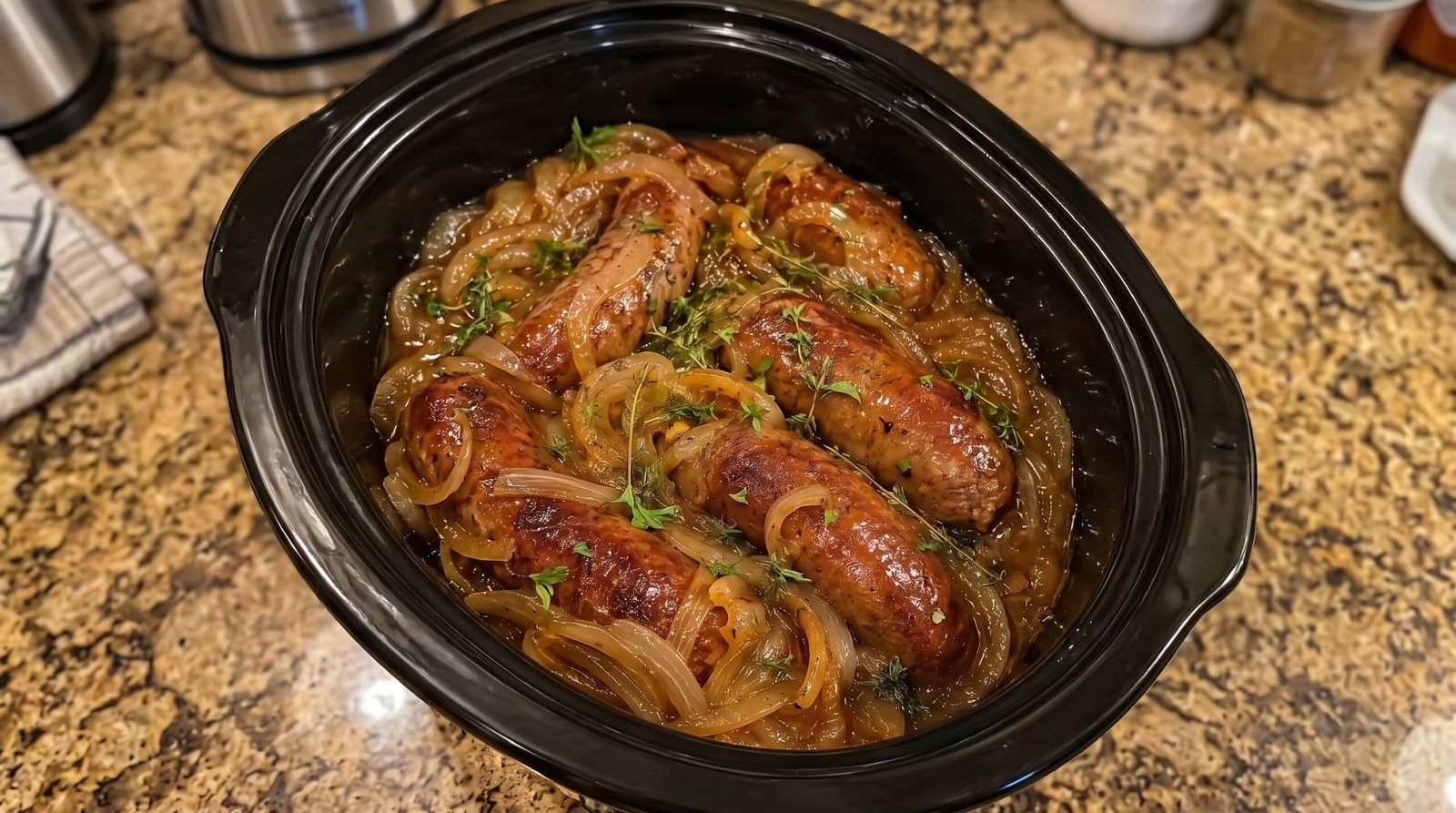
I remember the first time I realized how much difference a slow cooker makes on a busy Tuesday. I was juggling a pile of laundry and a looming work deadline, and the idea of standing over a stove for forty minutes was not happening. I needed something hearty, savory, and fuss-free. I reached for a pack of sausages and some onions I had in the pantry, and that is how this recipe for slow cooker sausage and onions became a permanent fixture in my rotation.
The beauty of this meal is how it transforms simple pantry staples into a comforting main dish without any active effort from me once the lid is on. You get tender, juicy sausages that have soaked up all the sweet, earthy notes of the slow-cooked onions. It is the kind of dinner that makes your house smell cozy all afternoon. Whether you serve it in a crusty roll or alongside some mashed potatoes, it is a straightforward way to put a filling meal on the table.
Why This Recipe Works
This dish works because the slow cooker provides the exact environment needed to coax deep flavor out of onions. When you cook onions for several hours in a moist heat, they do not just soften; they break down and release their natural sugars into the juices left by the sausages. This creates a savory, onion-rich sauce that coats every single link. Because you are using a low-temperature, consistent heat, the sausages stay moist rather than drying out like they often do in a frying pan if you get distracted by a phone call or a task.
The texture is another reason this is a favorite of mine. The onions become silky and translucent, melting away into the broth, which provides a nice contrast to the firm, meaty texture of the sausages. There is no need for fancy marinades or complex spice blends here. The rendered fat from the sausages adds depth, while the fresh herbs brighten things up at the end. It is a very forgiving process. Even if you let it cook for an extra hour, the sausages remain tender and the onions just get deeper in flavor.
Ease of preparation is the final key. You are essentially doing five minutes of work and then letting the machine take over. I like that I can prep everything before I start my morning tasks and not think about dinner again until it is time to serve. It removes the stress of timing different side dishes, because everything in the slow cooker is ready at once. You are left with a dish that tastes like it took all day to monitor, but really only took a few minutes of your time.
Ingredient Notes
The Main Components
The base of this dish relies on good quality sausages. I prefer using pork-based Italian sausages, either sweet or hot depending on what I have in the kitchen. If you are not a fan of pork, you can certainly use chicken sausages, but just keep an eye on them since they tend to be leaner and might cook slightly faster. The onions are the other hero here. I prefer using yellow onions because they have a balanced sweetness, but red onions or a mix also work if that is what you have on hand.
Aromatics and Liquids
I always use fresh garlic because the punch it gives the sauce is much better than the jarred kind. I slice the cloves thinly so they melt into the onions. For the liquid, you do not need much since the onions and sausages will release plenty of moisture as they heat up. I usually add a splash of chicken broth to ensure there is enough volume for the onions to simmer properly. A little bit of dried thyme or oregano goes a long way to provide an earthy background note that complements the pork.
| Ingredient | Amount | Notes |
|---|---|---|
| Pork Sausages | 8 to 10 links | Keep them whole for best results |
| Yellow Onions | 4 large | Slice them into thick half-moons |
| Garlic Cloves | 5 cloves | Thinly sliced or minced |
| Chicken Broth | 1/2 cup | Low sodium is best |
| Dried Thyme | 1 teaspoon | Adds an earthy aroma |
| Olive Oil | 1 tablespoon | Used to lightly coat the base |
| Fresh Parsley | 2 tablespoons | Chopped for garnish at the end |
| Salt and Pepper | To taste | Add carefully as sausages are salty |
The Recipe
- Prep Time: 10 minutes
- Cook Time: 4 hours
- Total Time: 4 hours 10 minutes
- Servings: 4 to 5
- Difficulty: Easy
Equipment Needed:
– Slow cooker with at least a 6-quart capacity
– Sharp chef knife
– Cutting board
– Tongs
– Measuring cups
Step-by-Step Instructions
Step 1: Prep the Aromatics
Start by peeling your onions and cutting them into thick, half-moon slices. You want these to be substantial enough so they do not completely disappear during the four hours of cooking. If you cut them too thin, they will turn into a mushy puree, which is still tasty but changes the mouthfeel of the dish. Peel your garlic and slice the cloves thinly. Set these aside while you handle the meat.
Step 2: Prepare the Slow Cooker Base
Take your slow cooker and lightly coat the bottom with the tablespoon of olive oil. Even though the sausages will release fat, this helps keep the onions from sticking in the first hour before everything gets moving. Layer about two-thirds of your sliced onions at the bottom of the pot. Scatter the sliced garlic and the dried thyme evenly over the onion layer.
Step 3: Arrange the Sausages
Using your tongs, nestle the sausages on top of the onion bed. It is fine if they overlap slightly, but try to keep them in an even layer so they cook consistently. Place the remaining onions on top of the sausages. This helps the onions cook down and infuse the flavor into the meat from both sides. Pour the half-cup of chicken broth carefully around the edges of the pot. Do not pour it directly over the sausages, as you do not want to wash off any seasoning.
Step 4: The Long Cook
Cover the slow cooker with the lid and set it to the low heat setting. You will let this cook for 4 hours. During this time, the onions will release their moisture and the sausages will poach in a combination of broth and onion juices. You should see a gentle simmer happening inside. Do not be tempted to lift the lid too often, as every time you do, you lose heat and increase the cooking time.
Step 5: Check for Doneness
After 4 hours, remove the lid. The sausages should be firm to the touch and opaque throughout. To be absolutely sure, use a meat thermometer and check that the internal temperature of the center of a sausage has reached 165 degrees Fahrenheit. The onions should be soft, golden, and translucent. If the liquid looks too thin, you can leave the lid off for the final fifteen minutes of cooking to let some of the steam escape and thicken the sauce.
Step 6: Finishing Touches
Before serving, stir in the freshly chopped parsley. This adds a clean, bright flavor that cuts through the richness of the pork and the concentrated sweetness of the onions. Taste a bit of the onion-broth mixture and decide if it needs any extra salt or pepper. Usually, the sausages provide enough salt, but depending on the brand you buy, you might need a tiny pinch more. Serve hot directly from the pot.
Mistakes I Made (So You Don't Have To)
Overstuffing the Pot
One of the first times I made this, I tried to pack in as many sausages as possible. I ended up with a mountain of meat, and the ones in the middle stayed cold for way too long. This led to uneven cooking and some sausages getting overdone while others were barely warm. Now, I make sure the sausages fit in a single layer or a loose pile that allows the heat to circulate properly. If you have more than the pot can comfortably hold, save them for another meal instead of forcing them into the slow cooker.
Cutting the Onions Too Small
I once got a bit overzealous with my knife skills and diced the onions into small, uniform squares. After four hours, they had completely disintegrated into the sauce. While the sauce tasted great, I lost that wonderful, stringy onion texture that makes this dish so satisfying. I learned that slicing them into thick, quarter-inch half-moons is the secret. They hold their shape enough to provide texture while still becoming perfectly tender.
Adding Too Much Liquid
I used to add a full cup of broth thinking I needed to keep the sausages submerged. What I learned is that both the onions and the pork release a significant amount of liquid as they heat up. Using too much broth resulted in a thin, watery sauce that lacked that concentrated flavor. Now, I only use a half-cup, which is just enough to get the cooking process started without drowning the ingredients. The resulting sauce is much richer and coats the food better.
Skipping the Seasoning Adjustment
In the beginning, I just assumed the sausages would be salty enough. One time, I served the dish without tasting the broth, and it was a bit flat. The onions absorb a lot of the flavor, so they need a little help to stand out. Always take a small spoonful of the onion and juice mix at the end of the cooking time to test it. Adding that little bit of extra salt or fresh black pepper right before serving makes a huge difference in how the flavors pop.
Variations and Tips
Adding Bell Peppers
If you have them on hand, tossing in two sliced bell peppers during the first step creates a classic combination. Red or yellow peppers add a nice sweetness and extra color to the dish. They follow the same cooking rules as the onions, softening up beautifully over the four-hour period. It turns this into a more robust meal that feels even more complete. Just slice them in strips of similar thickness to the onions so they cook at the same rate.
Using Different Sausages
While Italian pork sausages are the standard, do not be afraid to mix it up. Spicy andouille can add a nice smoky kick if you want a bit more heat. Alternatively, bratwursts offer a different profile that goes well with a splash of apple cider or beer instead of the chicken broth. Just remember that whatever sausage you choose will impact the final saltiness of the sauce, so adjust your seasonings accordingly.
Make-Ahead Strategy
You can prep the entire pot the night before, cover it, and keep it in the refrigerator. In the morning, just pull it out of the fridge and plug it into the slow cooker base. I do recommend letting the ceramic insert sit on the counter for about twenty minutes to take the chill off before turning it on, so you do not subject the pot to a sudden temperature shock. This makes the morning routine even faster since the cutting is already done.
Serving Suggestions
I love serving this on a toasted sub roll with a little bit of spicy mustard. It is also excellent served over a bed of creamy polenta or mashed potatoes to soak up those savory juices. For a lighter approach, serve it alongside some roasted potatoes or a simple green salad with a vinaigrette. The richness of the onions and sausages means you want a side dish that can either stand up to those bold flavors or provide a little acidity to balance things out.
Storage and Reheating
If you have leftovers, store them in an airtight container in the refrigerator within two hours of cooking. They will stay good for up to three days. I find that this dish actually tastes even better the next day because the onions and meat have had time to hang out in the fridge and really meld their flavors.
To reheat, the best method is using a saucepan on the stovetop over low heat. Add a tiny splash of water if the sauce has become too thick or gel-like from the cold. Heat it slowly until the sausages reach an internal temperature of 165 degrees Fahrenheit. I do not recommend freezing this dish, as the onions tend to lose their structure and become watery once thawed and reheated. It is best eaten fresh or from the fridge within that three-day window.
Frequently Asked Questions
Can I cook this on high instead of low?
While you can technically cook it on high for two hours, I strongly recommend the low setting for four hours. Cooking on high heat tends to make the sausage casings tough and can dry out the meat before the onions have a chance to fully break down and release their sweetness. The low setting ensures everything cooks at a consistent pace, resulting in much more tender onions and juicier sausages.
Do I need to brown the sausages first?
You do not have to, and I rarely do it because it creates extra cleanup and takes away from the simplicity of the dish. The sausages will cook perfectly fine in the slow cooker without being seared first. However, if you have an extra ten minutes and prefer a slightly deeper color and a firmer skin on your sausages, you can brown them in a skillet for two minutes per side before putting them into the slow cooker. It is a personal choice, not a requirement.
How do I know when the onions are done?
The onions are done when they are soft, translucent, and have a golden hue from soaking up the juices. They should be very easy to cut with a fork. If they still look white or feel crisp, they need more time. The goal is a texture that is almost melting into the liquid. In my experience, the four-hour mark is usually when they hit this stage, but slow cookers can vary slightly, so check them around that time.
Can I use turkey sausages instead?
Yes, turkey sausages work well, but you need to be mindful of their fat content. Turkey sausages are much leaner and can dry out if cooked for too long. If you use turkey links, check the internal temperature after three hours. They also do not render as much fat as pork sausages, so you might want to add a tablespoon of butter or a little extra olive oil to the pot to make sure the onions and garlic stay moist while they cook.
Should I stir the dish while it cooks?
It is best to leave the lid on as much as possible to keep the heat constant. There is no need to stir the sausages and onions during the four hours. The liquid at the bottom and the steam trapped under the lid do all the work for you. If you are worried about the onions at the very top, you can give it one quick stir at the three-hour mark, but honestly, it is not necessary for a good result.
Final Thoughts
This simple dish has saved me on more nights than I can count. It is reliable, tasty, and honestly feels like a treat despite how little effort it takes to prepare. I always enjoy that quiet moment when I finally lift the lid and the smell of savory onions fills the kitchen.
If you are looking for a meal that allows you to focus on your day while dinner handles itself, this is a great one to have in your back pocket. Give it a try next time your schedule is looking a bit too full, and I think you will find it just as helpful as I do.