
There is a specific kind of food heartbreak that happens when you sit down with a towering gourmet burger, take one bite, and watch the entire back half slide out onto your lap. The lettuce wilts into hot slime, the tomato wedge acts like a slip-and-slide for the patty, and the puffy brioche bun disintegrates into wet dough before you even reach the halfway mark.
Years ago, after a particularly messy burger disaster on my living room couch, I declared a moratorium on overly stacked restaurant-style burgers. I wanted all the savory richness—crispy smoky bacon, juicy beef, molten cheese, and a punchy sauce—without feeling like I needed a raincoat to eat it.
Enter the diner-style patty melt.
My first attempt at home, however, was far from glorious. I used cheap, soft white sandwich bread, slapped thick pre-formed burger patties in a scorching frying pan, threw on cold bacon, and hoped for the best.
The bread scorched black in sixty seconds, the cold bacon stayed limp and chewy, and the middle of the cheese never even warmed up. When I tried to cut it in half, the bread tore open and leaked grease all over my cutting board. It was dry, burned, and frustrating.
It took dozens of weekend cookouts, testing different griddle fats, playing with cheese blends, and engineering a spicy smash-sauce to get it right.
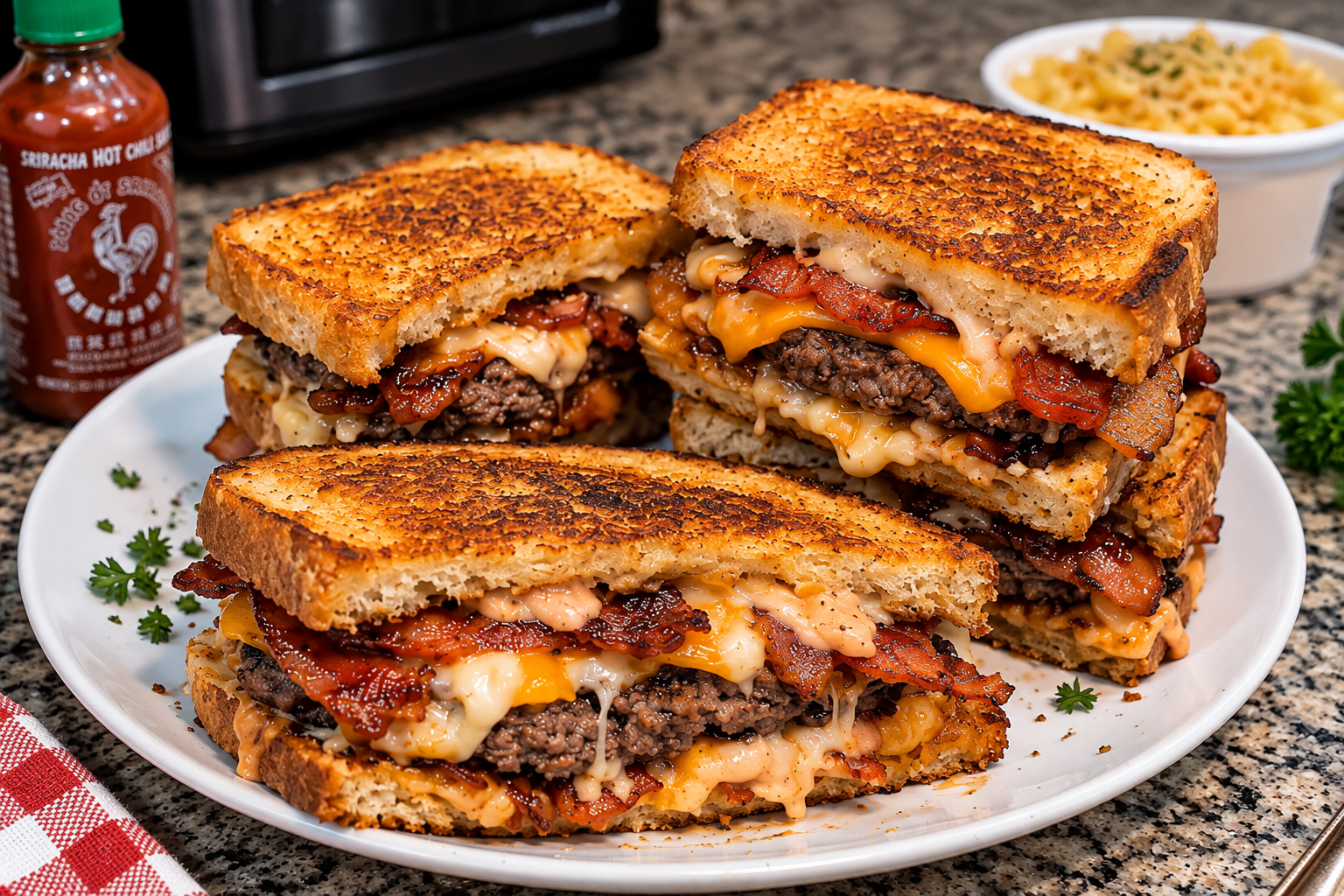
The photo above is the ultimate reward: thick, artisan sourdough griddled to a golden, shatteringly crisp exterior, hugging a deeply seared beef patty, ribbons of smoky crispy bacon, a double blanket of gooey melted cheddar and pepper jack, and a creamy, tangy Sriracha burger sauce.
Once you build a patty melt using proper griddle technique, you might never go back to standard burger buns again.
The Secret Architecture of a Crispy, Mess-Free Melt
Building a legendary patty melt is a matter of structural engineering. If you stack the ingredients out of order, the sandwich falls apart or turns soggy. Here are the three non-negotiables:
1. The Cheese “Grout” Method
Never put your burger sauce or hot meat directly against dry toasted bread. The steam and fat will instantly turn the crumb into mush.
Instead, place a slice of cheese directly on the bottom piece of bread and another slice on the top piece of bread. As the cheese melts on the griddle, it creates a waterproof barrier that traps juices inside the sandwich and “glues” the bread, bacon, and patty together into a solid, sliceable unit.
2. Match the Patty Shape to the Bread
Round burger patties leave bare, dry corners on rectangular sandwich bread. Shape your raw ground beef into an oval or rectangle that mimics the exact footprint of your sourdough slices.
Make the raw patty roughly 15% to 20% larger than the bread slice and press it relatively thin (about ⅓-inch). As the beef cooks and fat renders, it will shrink to match the bread perfectly from edge to edge.
3. Mayo Over Butter on the Exterior
Standard butter contains about 16% to 18% water and delicate milk solids that burn quickly over prolonged griddle heat. Spreading a thin, even coat of real mayonnaise on the outside faces of the bread changes everything.
Mayonnaise is an emulsion of oil and egg whites with a higher smoke point. It spreads smoothly into every pore of the bread and yields an even, deep golden-brown crunch without scorching before the interior cheese has time to melt.
Ingredients & Kitchen Tools
Essential Gear
- 12-Inch Cast-Iron Skillet or Flat-Top Griddle: (A Lodge cast-iron skillet or heavy electric griddle holds the heat needed to crisp bread evenly).
- Heavy Metal Spatula or Burger Press: For smashing the patties and pressing down on the sandwich for uniform griddle contact.
- Serrated Bread Knife: The only tool that cleanly cuts through a crunchy toasted melt without crushing the molten center.
The Ingredient Breakdown
| Component | Ingredient | Quantity | Practical Role |
| The Meat | 80/20 Ground Chuck | 1.5 lbs (makes 3 to 4 large melts) | 20% fat content ensures juicy meat that sears with a lacy, caramelized crust. |
| The Bread | Thick-Cut Sourdough or Country White | 6 to 8 sturdy slices | Robust structure that crisps up without collapsing under weight. |
| The Bacon | Thick-Cut Applewood Smoked Bacon | 8 to 10 strips | Adds a smoky, salty crunch between the beef and cheese layers. |
| Melt Layer 1 | Sharp Cheddar Cheese | 6 to 8 slices | Bold, rich dairy bite that gives that signature golden melt. |
| Melt Layer 2 | Pepper Jack or Monterey Jack | 6 to 8 slices | Superb, creamy meltability with a gentle spicy kick. |
| Griddle Fat | Real Mayonnaise (Duke’s or Hellmann’s) | ¼ cup | Brushed or spread on outer bread crusts for an ultra-crispy toast. |
| Spicy Sauce | Mayonnaise | ⅓ cup | Creamy base for the house smash sauce. |
| Spicy Sauce | Sriracha or Chili Garlic Sauce | 1.5 tbsp | Brings vibrant red heat and garlicky tang (seen in the bottle behind the plate!). |
| Spicy Sauce | Yellow or Dijon Mustard | 1 tsp | Cuts through the richness with acidity. |
| Spicy Sauce | Sweet Pickle Relish (or minced dill pickles) | 1 tbsp | Classic burger-sauce crunch and vinegar brightness. |
| Spicy Sauce | Smoked Paprika & Garlic Powder | ½ tsp each | Adds color and deep savory warmth to the sauce. |
| Seasoning | Coarse Kosher Salt & Coarse Black Pepper | 1.5 tsp salt, 1 tsp pepper | Essential seasoning applied just before the meat hits the heat. |
Step-by-Step Cooking Instructions
Step 1: Crisp the Bacon
Never use soggy, rubbery microwave bacon in a sandwich with melted cheese.
Preheat your oven to 400°F (200°C) and line a rimmed baking sheet with aluminum foil. Lay the thick-cut bacon strips flat in a single layer.
Bake for 15 to 18 minutes until deep mahogany and crisp. Transfer the bacon strips to a paper-towel-lined plate to drain.
Diner Secret: Snap each cooked strip of bacon in half. Layering shorter, halved strips across the patty gives you full edge-to-edge bacon coverage so you get crunch in every bite without pulling an entire long strip out of the sandwich on your first mouthful.
Step 2: Stir Up the Spicy Burger Sauce
In a small bowl, whisk together the ⅓ cup mayonnaise, 1.5 tablespoons Sriracha, 1 teaspoon mustard, 1 tablespoon relish, garlic powder, and smoked paprika.
Taste it. It should be tangy, creamy, and have a noticeable peppery punch. Pop it in the fridge while you cook the beef so the flavors marry together.
Step 3: Shape and Hard-Sear the Patties
Divide your ground chuck into 3 or 4 equal portions (about 6 to 8 oz each).
Gently pat each ball out onto parchment paper into an oblong oval or rounded rectangle that matches the outline of your sourdough slices. Keep them thin (roughly ⅓-inch thick) and slightly wider than the bread.
Season both sides aggressively with coarse kosher salt and freshly cracked black pepper right before cooking.
Get your cast-iron skillet or griddle smoking hot over medium-high heat.
Lay the patties down. Press firmly with your stiff metal spatula for 10 seconds to make solid contact.
Sear undisturbed for 2.5 to 3 minutes until a dark, deeply browned crust forms on the bottom.
Flip the patties and cook for another 2 minutes on the second side. Transfer them to a plate to rest. Carefully wipe away excess pooling grease from your skillet, but leave a thin sheen of flavor on the iron.
Step 4: The Strategic Sandwich Build
Turn your skillet or burner heat down to medium-low. High heat is the enemy of the final melt.
Lay your sourdough bread slices out on a clean board. Spread a thin, even layer of mayonnaise across one side of each slice (this will be the outside griddled face).
Flip half the slices over so the dry side is facing up.
Assemble the layers in this exact moisture-proof order:
- Bottom Bread (mayo-coated side facing down)
- 1 slice of Sharp Cheddar (melts to seal the bottom bread)
- 1 slice of Pepper Jack cheese
- 2 to 3 half-strips of crispy bacon
- The hot seared beef patty
- A generous smear of Spicy Burger Sauce directly on the warm meat
- 2 to 3 more half-strips of crispy bacon
- 1 slice of Cheddar and 1 slice of Pepper Jack (melts to glue the top bread)
- Top Bread (mayo-coated side facing up)
Step 5: The Low-and-Slow Griddle Toast
Transfer the assembled sandwiches onto your warm griddle or skillet over medium-low heat.
You should hear a quiet, steady sizzle. If it starts crackling aggressively or smoking, drop the heat immediately.
Place a light press or a second empty skillet gently on top of the sandwiches to ensure uniform contact with the hot iron.
Cook undisturbed for 4 to 5 minutes on the first side.
Slide your spatula underneath to check: the bread should be an even, speckled golden-brown with a crisp, toasted surface.
Carefully flip the sandwich over.
Griddle the second side for another 3 to 4 minutes.
Watch the edges: both cheeses should be completely molten, draping over the seared beef and bacon, bubbling out slightly against the hot griddle.
Step 6: The Vital 2-Minute Rest
Pull the melts off the griddle and set them on a wire rack or cutting board.
Do not slice into them immediately! If you cut right away, the hot melted cheese will run out onto the board like liquid lava.
Giving the melt two minutes to rest allows the cheese to stabilize into an unctuous, stretchy glue that holds the meat and bacon locked tightly between the bread slices.
Using a sharp serrated knife, cut the melt cleanly in half on a slight diagonal. You will hear an audible crunch from the toasted sourdough as the knife glides through.
Common Pitfalls to Avoid
- Cranking the Heat Too High: If your pan is set to high heat, the bread will turn dark brown and scorch in ninety seconds while the center cheese and beef stay cold. Low-and-slow heat lets the heat penetrate deep into the sandwich, melting both cheeses completely while the bread develops that crisp crust.
- Using Pre-Shredded Bagged Cheese: Never try to make a patty melt using pre-shredded cheese from a plastic pouch. Bagged cheese is dusted with potato starch and cellulose to prevent sticking in the bag, which produces a chalky, separated melt. Use thick deli-counter slices or slice your own cheddar and pepper jack from a block.
- Skimping on Bread Sturdiness: Ultra-soft commercial white sandwich bread will compress into a flat, soggy pancake under the weight of a half-pound beef patty and molten cheese. Use a hearty artisan sourdough, levain, or seeded rye that has an open, chewy crumb and a sturdy crust.
What to Serve with Your Patty Melt
A rich, cheesy melt calls for sides that bring crisp texture or creamy comfort:
- Creamy Macaroni Salad or Potato Salad: A cool, creamy deli-style side balances the smoky heat of the sandwich (just like the side dish pictured in the background).
- Extra Spicy Sauce for Dipping: Double the burger sauce recipe and serve extra ramekins on the side for dipping the crunchy crust corners.
- Crispy French Fries or Salted Kettle Potato Chips: For that classic American diner counter experience.
If you happen to have a leftover half-sandwich, wrap it loosely in foil and store it in the fridge for up to two days. Reheat it in a dry skillet over medium-low heat or pop it into an air fryer at 350°F (175°C) for 4 to 5 minutes to restore that crunch without turning the bread soggy.