
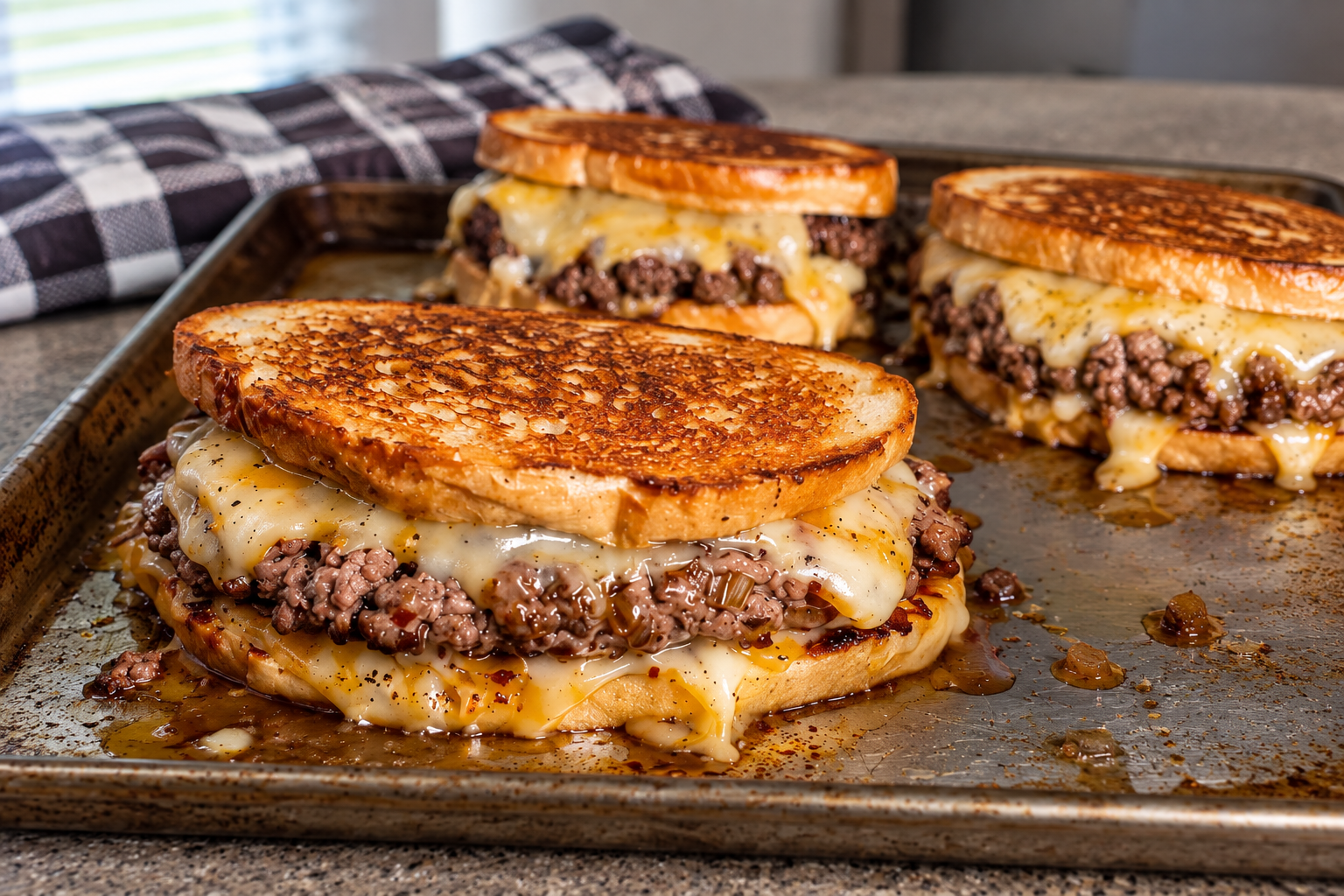
I still remember the late-night diner that ruined all regular patty melts for me. It was an old chrome-car diner tucked just off the highway, smelling permanently of griddle onions and black coffee. The guy behind the counter slid a plate over that broke every rule: instead of dry toasted bread and a bland burger patty, it was a shatteringly crisp sourdough melt stuffed with sweet caramelized onions, molten Swiss and Gruyère cheese, and a seared, juicy beef patty that had been splashed with rich beef jus right on the flat-top.
When I went home and tried to recreate it the following weekend, it was a complete flop.
I took thick sourdough bread, slapped cold butter on it, dumped raw burger patties into a frying pan, and tried to melt the cheese under a lid. The bread burned before the cheese even thought about melting. When I finally bit into it, the bottom bread slice had absorbed all the pooling grease from the burger, turning into a wet, soggy sponge that collapsed straight through my fingers. The onions were half-raw and sulfurous, completely overpowering the beef.
It took me half a dozen griddle sessions, a lot of smoke alarms, and a few burned slices of sourdough to figure out the real diner mechanics of this sandwich.
The secret isn’t just stacking good ingredients—it’s how you manage heat, moisture, and cheese placement. The photo above shows the glorious end game: an edge-to-edge golden-brown, crispy grilled bread crust holding together a deeply browned smash-style patty, sweet jammy caramelized onions, and layers of molten, stretchy cheese dripping with rich, savory jus.
Here is how to make the ultimate French Dip Patty Melt in your own kitchen without ending up with soggy bread or grease-soaked fingers.
Why Most Homemade Patty Melts Fail (And How to Fix Them)
A patty melt is not just a cheeseburger on toast. It lives at the intersection of a smash burger, a classic grilled cheese, and a hot French dip. When it goes wrong, it’s usually because of these three traps:
1. The Soggy Bread Breakdown
If hot meat juices and griddle grease touch bare toasted bread, the bread immediately turns to mush. The fix? The cheese barricade. You must layer cheese on both sides of the sandwich—one layer touching the bottom bread slice, one layer touching the top bread slice. As the cheese melts, it forms a waterproof barrier that traps juices inside the sandwich while keeping the bread crispy and toasted.
2. Cooking Thick, Round Burgers
If you try to cook a thick, golf-ball-sized burger patty inside a grilled sandwich, the bread will burn long before the thick center of the beef cooks through. You need a wide, thin patty pressed slightly larger than your bread slices. Meat shrinks as its fat renders, so shaping it larger ensures edge-to-edge beef in every single bite.
3. Butter Burns Too Fast
Pure butter contains milk solids and water. If you grease the outside of your bread with standard salted butter and let it sit on a medium griddle long enough to melt thick layers of Swiss and Gruyère, the milk solids will scorch black before the cheese fully liquefies. The professional line-cook move is brushing the outside of the bread with mayonnaise or clarified butter (ghee). Mayo has a higher smoke point, distributes evenly into every pore of the bread, and yields a shatteringly crisp, deep golden crust without bitter burned spots.
Ingredients & Kitchen Tools
Essential Gear
- Cast-Iron Skillet, Griddle, or Flat-Top Pan: (A 12-inch Lodge cast-iron skillet or reversible cast-iron griddle holds the heat needed for an intense sear).
- Heavy Metal Burger Press or Stiff Spatula: For smashing the patties thin.
- Rimmed Baking Sheet: Perfect for staging your toasted melts and resting them before slicing.
- Instant-Read Thermometer: Useful for double-checking patty doneness without cutting open the crust.
The Ingredient Breakdown
| Component | Ingredient | Quantity | Practical Role |
| The Beef | 80/20 Ground Chuck | 1.5 lbs (makes 3 to 4 large melts) | The 20% fat ratio renders out to fry the edges and keep the patty juicy. |
| The Bread | Thick-Cut Sourdough or Rye Bread | 6 to 8 sturdy slices | A sturdy crumb holds up to heavy cheese and juices without crumbling. |
| The Melty Cheese | Deli-Sliced Swiss & Gruyère Cheese | 8 to 12 slices total | Swiss brings creamy melt; aged Gruyère brings that nutty French onion bite. |
| Caramelized Sweetness | Yellow Onions | 2 large (thinly sliced) | Cooked down slowly until sweet, jammy, and golden-brown. |
| Pan-Frying Fat | Mayonnaise (Duke’s or Hellmann’s) | ¼ cup | Spread on the outer bread faces for an even, golden-brown griddle crust. |
| Onion Butter | Unsalted Butter | 2 tbsp | For sweating and caramelizing the onions slowly. |
| French Dip Jus Splash | Beef Bone Broth or Au Jus Base | ½ cup (warm) | Splashed over the patties on the griddle to build savory moisture. |
| Savory Punch | Worcestershire Sauce | 1 tbsp | Adds fermented umami to the cooking onions and jus. |
| Aromatic Touch | Fresh Thyme Leaves | 1 tsp (finely minced) | Infuses classic French onion soup herbal notes into the onions. |
| Seasoning | Coarse Kosher Salt & Cracked Black Pepper | 1.5 tsp coarse salt, 1 tsp pepper | Coarse grains create an aggressive crust on the seared beef. |
Step-by-Step Cooking Instructions
Step 1: Caramelize the French Onions First
Never cook your onions at the same time as the patties. Onions need time to lose water and sweeten, while burger patties take only minutes.
Melt 2 tablespoons of butter in your cast-iron skillet over medium-low heat. Add the thinly sliced yellow onions with a generous pinch of kosher salt and the fresh thyme leaves.
Cook gently for 20 to 25 minutes, stirring every few minutes. If the onions start catching or drying out on the bottom of the pan, splash in a tablespoon of beef broth or water to deglaze the pan.
When they are soft, sticky, and deep amber-brown, splash in 1 tablespoon of Worcestershire sauce, stir for another minute, and scrape them out into a small bowl. Set aside.
Step 2: Form the Wide, Thin Patties
Divide your 1.5 pounds of 80/20 ground chuck into 3 or 4 equal portions (about 6 to 8 oz each).
Gently shape each portion into an oval or oblong patty that matches the silhouette of your sourdough slices.
Important Cook’s Rule: Shape your raw patties roughly 20% larger than your bread slices. As the fat cooks out, the patty will shrink. If you make them the exact size of the bread when raw, you’ll end up with an inch of plain bread and no meat around the borders. Keep the patties relatively thin—about ⅓-inch thick.
Season both sides aggressively with coarse kosher salt and freshly cracked black pepper right before they hit the heat.
Step 3: Hard Sear the Patties
Wipe out the cast-iron skillet and crank the heat to medium-high. You want the surface smoking hot.
Lay the patties down into the dry pan. Press down firmly with your heavy spatula or burger press for 10 seconds to maximize contact with the hot iron.
Sear untouched for 2.5 to 3 minutes until a dark, caramelized lacy crust forms on the bottom.
Flip the patties over. Immediately splash a tablespoon of warm beef broth or au jus directly around the base of each patty in the screaming-hot pan. The liquid will instantly flash-steam, infusing deep beef flavor into the meat. Cook for another 2 minutes, then remove the patties to a plate. Do not wipe out the skillet completely—leave that flavorful film of beef fat in the pan!
Step 4: The Strategic Cheese & Onion Assembly
Turn the griddle or skillet down to medium-low.
Lay your sturdy sourdough slices on a clean cutting board. Lightly spread a thin, even layer of mayonnaise across one side of every bread slice (these mayo-coated sides are what will touch the hot pan).
Flip half of the slices over so the dry sides are facing up. Now build your moisture-proof sandwich stack in this exact order:
- Bottom Bread (mayo-side down on the board)
- 1-2 slices of Swiss or Gruyère cheese (this shields the bottom bread from meat juices)
- A generous layer of warm caramelized onions
- The hot seared beef patty
- Another spoonful of caramelized onions
- 1-2 more slices of Swiss or Gruyère cheese (this glues the top bread in place)
- Top Bread (mayo-side facing up)
Step 5: The Low and Slow Griddle Melt
Place the assembled sandwiches into your medium-low skillet or griddle. You should hear a gentle, gentle sizzle—not a violent roar.
Cook slowly for 4 to 5 minutes on the first side.
Place a light weight on top of the sandwiches (like a small pan lid or another empty skillet) to encourage even contact with the griddle surface.
Peek underneath: when the bottom bread has turned an even, golden-brown with that glossy griddle sheen, use a wide spatula to flip each sandwich carefully.
Cook the second side for another 3 to 4 minutes until the underside matches and the cheese layers on both sides have melted completely, draping over the edges of the beef.
Step 6: Rest and Carve
Transfer the hot patty melts from the griddle directly onto a rimmed metal sheet pan or cutting board.
Let them rest for 2 to 3 minutes before cutting.
If you slice immediately, the molten cheese and beef juices will bleed everywhere. A short rest lets the melted cheese stabilize into an unctuous glue that keeps the onions and patty securely tucked between the crisp bread slices.
Cut diagonally with a sharp serrated knife, listening for that unmistakable crunch as the blade breaks through the toasted crust.
Pitfalls to Avoid
- Relying on Pre-Sliced, Waxy Sandwich Cheese: Pre-packaged singles often have chemical emulsifiers or low fat content that separates into oil rather than melting smoothly. Ask the deli counter to slice real Swiss or Gruyère from the block; the nutty aroma and stretch make all the difference.
- Over-Cranking the Stove Heat: The number one reason patty melts fail is impatience. If your burner is set to high, the bread toasts in 90 seconds while the interior cheese stays cold and solid. Keep the heat at medium-low so the bread has time to toast at the exact same pace the cheese takes to melt completely.
- Soft, Thin Sandwich White Bread: Standard soft sandwich bread will turn into mush the moment the steam and onion juices hit it. Always use a rustic bread with a tight crumb and sturdy crust, such as sourdough, rye, or marbled pumpernickel.
Serving & The Au Jus Sidecar
While these patty melts are rich enough to eat on their own, serving them with a small bowl of hot, concentrated beef au jus on the side transforms dinner into an authentic bistro experience.
Simmer a cup of beef bone broth with a smashed garlic clove, a sprig of fresh thyme, a dash of Worcestershire sauce, and a splash of red wine for five minutes until reduced. Dip the crusty, cheese-draped corner of the sandwich right into the warm jus before every bite.
Pair it with salty kettle chips or crispy fries, crack open a cold beverage, and prepare to never look at a standard diner burger the same way again.