
Every summer cookout has that one tragic, half-eaten bowl sitting in the sun: a mountain of pasty, store-bought potato salad that tastes like plain mayonnaise, chalky starch, and regret.
For the longest time, my own homemade version was not much better. My family still remembers the Fourth of July barbecue where I proudly unveiled my “signature” potato salad. By hour two, the bottom of the ceramic bowl held a pool of murky, watery liquid, the potato chunks had broken into wet baby food, and the entire thing tasted so flat that my uncle quietly walked over to grab the yellow mustard bottle just to give it some life.
I was mortified. Potato salad looks so simple on paper—boiled potatoes, mayo, some crunch—that most of us treat it as a casual afterthought. We boil whatever spuds are lying around, drown them cold in mayonnaise, and cross our fingers.
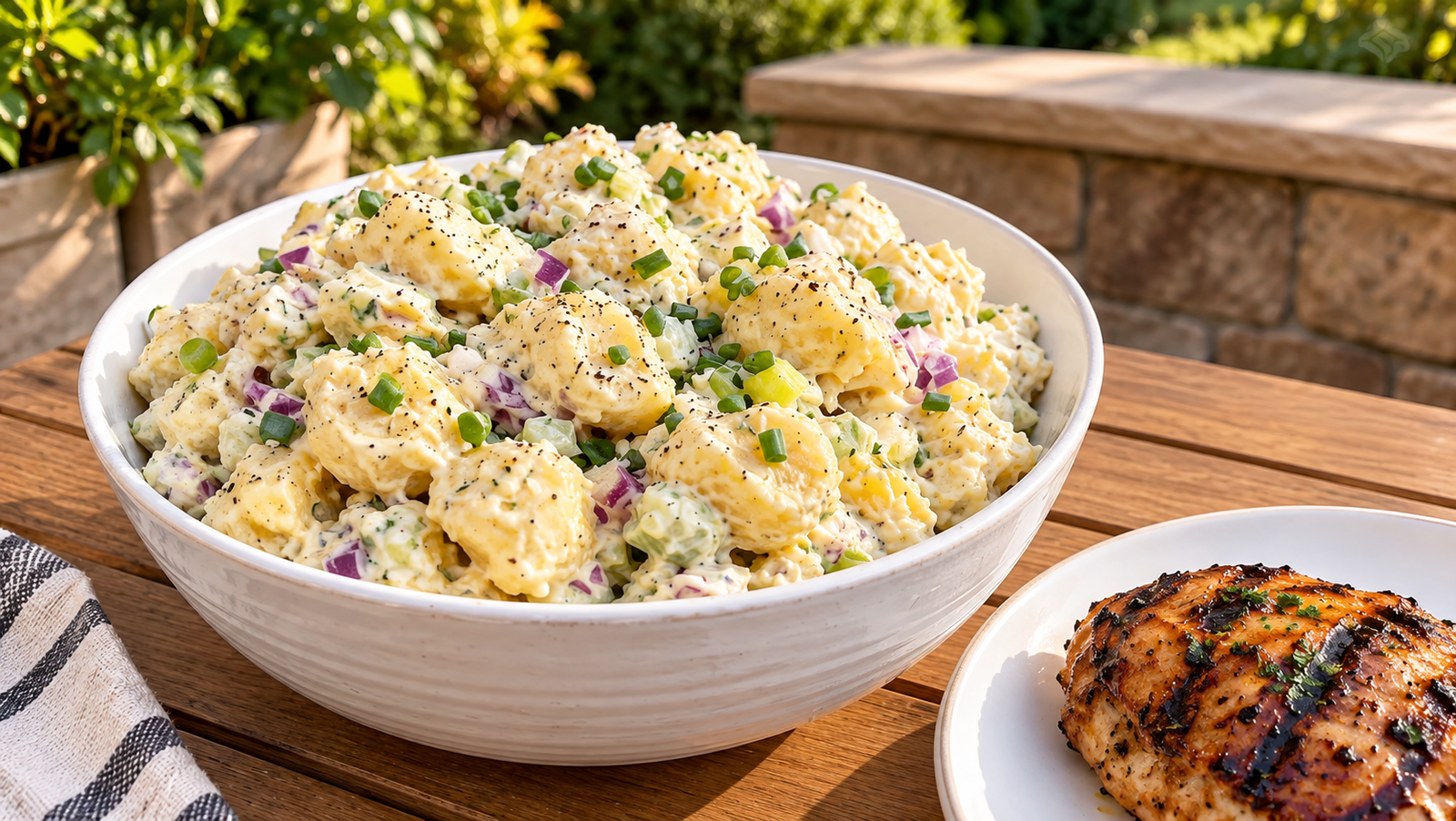
The secret to a potato salad that disappears within ten minutes—like the loaded, creamy, herb-speckled bowl in the photo above—is not exotic ingredients. It comes down to potato variety, a warm vinegar splash, and balancing fat with crunch and acidity.
Here is every mistake I made over years of trial and error, and the exact formula to make the best potato salad of your life.
The Three Mistakes Ruining Your Potato Salad
1. Using Russet (Baking) Potatoes
Russets are high in starch and soak up water like sponges. When you boil them, the outside disintegrates into mush before the core is tender. Cut them up and toss them with dressing, and they crumble into cold mashed potatoes. Stick to waxy or semi-waxy varieties like Yukon Golds or red potatoes. They keep their clean edges and hold their shape after tossing.
2. Dressing Ice-Cold Potatoes with Cold Mayonnaise
Cold starch molecules lock up tight. If you let boiled potatoes cool down completely in the fridge before adding dressing, the mayonnaise just sits on the outside like grease paint. The potatoes taste bland on the inside no matter how much salt you throw on top.
3. Forgetting the Warm Acid Splash
This is the single biggest game-changer. Drizzling warm, freshly drained potatoes with a splash of vinegar or pickle brine lets the warm starches drink the acid deep into the center of every piece. It builds a bright foundation so the heavy mayonnaise dressing never feels cloying.
Ingredients & Why Every Piece Counts
| Component | Ingredient | Quantity | Practical Purpose |
| The Base | Yukon Gold Potatoes | 3 lbs (about 6–8 medium) | Naturally buttery, holds distinct clean cubes without falling apart. |
| The Flavor Splash | Pickle Brine (Dill or Bread & Butter) or Apple Cider Vinegar | 3 tbsp | Splashed onto hot potatoes to infuse acidity straight to the core. |
| Creamy Foundation | Real Mayonnaise (Duke’s or Hellmann’s) | ¾ cup | Rich, velvety body for the binder. Avoid salad dressing spreads. |
| Creamy Foundation | Sour Cream or Greek Yogurt | ¼ cup | Cuts the heavy mayo richness with a pleasant dairy tang. |
| Tang & Depth | Dijon or Whole Grain Mustard | 1.5 tbsp | Adds sharpness and prevents a flat, one-note dressing. |
| The Crunch | Celery Stalks | 3 ribs (finely diced) | Essential crisp texture to break up the soft potatoes. |
| Aromatic Bite | Red Onion | ½ cup (finely minced) | Pungent color and crunch. (Soak in cold water first to tame raw bite). |
| Savory Notes | Hard-Boiled Eggs (Optional) | 3 large (chopped) | Traditional creamy richness; mash yolks into the dressing. |
| Herbal Freshness | Fresh Chives & Dill | 3 tbsp (finely chopped) | Lifts the entire dish with a garden-fresh aroma. |
| Seasoning | Celery Seed | ½ tsp | The classic deli-counter secret flavor that people can’t quite identify. |
| Seasoning | Coarse Kosher Salt & Fresh Black Pepper | 1.5 tsp salt (plus salt for boiling), 1 tsp coarse pepper | Generous coarse pepper gives that speckled picnic look. |
Essential Kitchen Tools
- Large 6-Quart Stockpot: Ample room for boiling potatoes without water bubbling over.
- Colander: For a fast, thorough drain so potatoes do not sit in steam.
- Large Wide Rimmed Bowl: Gives you space to fold the dressing without crushing the spuds.
- Silicone Spatula: The gentlest tool for folding potatoes and dressing together without breaking corners.
Step-by-Step Cooking Instructions
Step 1: Prep and the Cold-Water Start
Wash your Yukon Gold potatoes. You can peel them completely or leave thin strips of skin for rustic texture.
Cut them into uniform, bite-sized cubes—aim for roughly ¾-inch pieces. If your cuts are uneven, small pieces turn to mush while large pieces remain hard in the center.
Place the cut potatoes into your large pot and cover them with cold tap water by at least an inch.
Cook’s Mistake to Avoid: Never drop raw potatoes into boiling water! The outside cooks instantly while the dense center stays raw. Starting in cold water ensures the potato cubes heat evenly from edge to core.
Add 1 generous tablespoon of kosher salt to the water. This is your only chance to season the inside of the potato starch itself.
Step 2: The Fork-Tender Simmer
Bring the pot to a rolling boil over high heat, then drop the burner to medium so it maintains a steady, active simmer.
Cook for 8 to 12 minutes.
Start testing with a small paring knife or fork around minute 8. The tines should slide into the center of a cube with zero resistance, but the potato should not shatter or crumble at the edges.
Step 3: The Steam-Dry and Acid Splash
Drain the potatoes thoroughly in a colander.
Let them sit in the colander untouched for 3 to 5 minutes so steam evaporates. Trapped steam equals water, and water waters down your dressing.
Transfer the hot, drained potatoes into your large mixing bowl. Immediately drizzle the 3 tablespoons of pickle brine or apple cider vinegar evenly over the warm potatoes. Gently toss with a rubber spatula once, then let them sit on your counter for 10 to 15 minutes to cool down from piping hot to comfortably warm.
Step 4: Tame the Onions
While the potatoes cool, finely dice your red onion.
Drop the diced red onion into a small bowl filled with cold tap water and let it sit for 5 minutes, then drain and pat dry. This quick soak washes away harsh sulfur compounds, giving you all the crisp onion flavor and vivid purple color without burning your mouth or leaving a lingering aftertaste.
Step 5: Whisk the Dressing
In a medium bowl, whisk together:
- ¾ cup real mayonnaise
- ¼ cup sour cream
- 1.5 tablespoons Dijon mustard
- ½ teaspoon celery seed
- 1.5 teaspoons kosher salt
- 1 teaspoon coarse freshly ground black pepper
- (Optional) Mash the yolks from your hard-boiled eggs directly into this dressing for a sunny yellow hue and velvety texture.
Taste the dressing right now on a spoon. It should taste slightly more tangy and salty than you think it needs to be, because once it coats all those mild potatoes, the flavor balances out.
Step 6: The Gentle Fold
Pour the dressing over the lukewarm potatoes.
Add the diced celery, drained red onions, chopped egg whites (if using), and most of your chopped fresh chives and dill.
Using your wide silicone spatula, gently fold the mixture together using an under-and-over motion. Do not stir briskly like cake batter. Fold just until every cube is coated in that glossy, creamy dressing.
Step 7: The Chilling Window
Cover the bowl with plastic wrap and slide it into the refrigerator for at least 2 hours before serving.
Potato salad served immediately after mixing tastes disjointed. Chilling gives the starches time to absorb the mustard, herbs, and aromatics into a cohesive, creamy side dish.
Just before carrying the bowl outside, garnish the top with extra freshly cracked black pepper and a scatter of vibrant green chopped chives.
Recipe Variations for Every Crowd
- Bacon & Cheddar Loaded: Stir in ½ cup of crisp, crumbled bacon and ½ cup of sharp white cheddar cubes alongside the celery.
- Herby German-American Hybrid: Swap out half the mayonnaise for whole-grain German mustard and double the chopped dill, flat-leaf parsley, and chives for an herb-heavy, lighter profile.
- Sweet Relish Classic: If you grew up on Southern-style potato salad, replace the pickle brine splash with 2 tablespoons of sweet pickle relish stirred directly into the mayonnaise base.
Mistakes to Watch Out For
- Over-mixing the bowl: Treat the cooked potatoes gently. If you stir aggressively with a metal spoon, you shear off the cooked edges, turning the dressing cloudy and thick instead of light and creamy.
- Leaving it out in direct summer sun: Food safety matters. Mayo and dairy sitting above 40°F (4°C) for more than two hours can spoil quickly. Nest your serving bowl inside a slightly larger bowl filled with crushed ice on outdoor picnic tables.
- Skipping the fresh herbs: Dried herbs taste dusty in cold salads. Fresh chives and dill provide the sharp, grassy counterpoint that makes people go back for second helpings.
Serving & Leftovers
Pair this potato salad with sticky BBQ glazed chicken thighs hot off the grill (just like in the photo), smoked brisket, or grilled burgers.
Store any leftovers in an airtight glass container in the fridge for up to 4 days. (Do not freeze potato salad; cooked potatoes turn watery and spongy once thawed). If the potatoes have soaked up the dressing overnight and look a little dry on day two, stir in a single tablespoon of sour cream or milk to bring back that velvety picnic gloss.