
There is a running joke among home cooks that “sheet pan steak” is just a polite term for expensive, steamed grey meat and half-raw potatoes. For a long time, I was right there with the skeptics.
A few years ago, I hosted dinner for a couple of friends on a chaotic Friday night. Seduced by slick social media videos showing full steak dinners tossed casually onto a single metal baking sheet and slid into the oven, I decided to give it a go. I diced up raw russet potatoes, threw two gorgeous thick-cut strip steaks on the same tray, drizzled everything with olive oil, and baked it at 400°F (200°C) for twenty-five minutes.
It was an unmitigated disaster.
The potatoes released steam as they heated, creating a foggy sauna inside the oven that robbed the steaks of any chance at getting a crust. By the time the potatoes were finally soft enough to chew, the steaks were cooked past well-done into leather. We ended up dousing the beef in steak sauce just to get it down. I was completely embarrassed, and my good cut of meat had gone entirely to waste.
That failure bothered me for months. The appeal of a steakhouse dinner cooked on one tray with almost zero cleanup was too good to leave on the table. So, I started testing the physics of the pan.
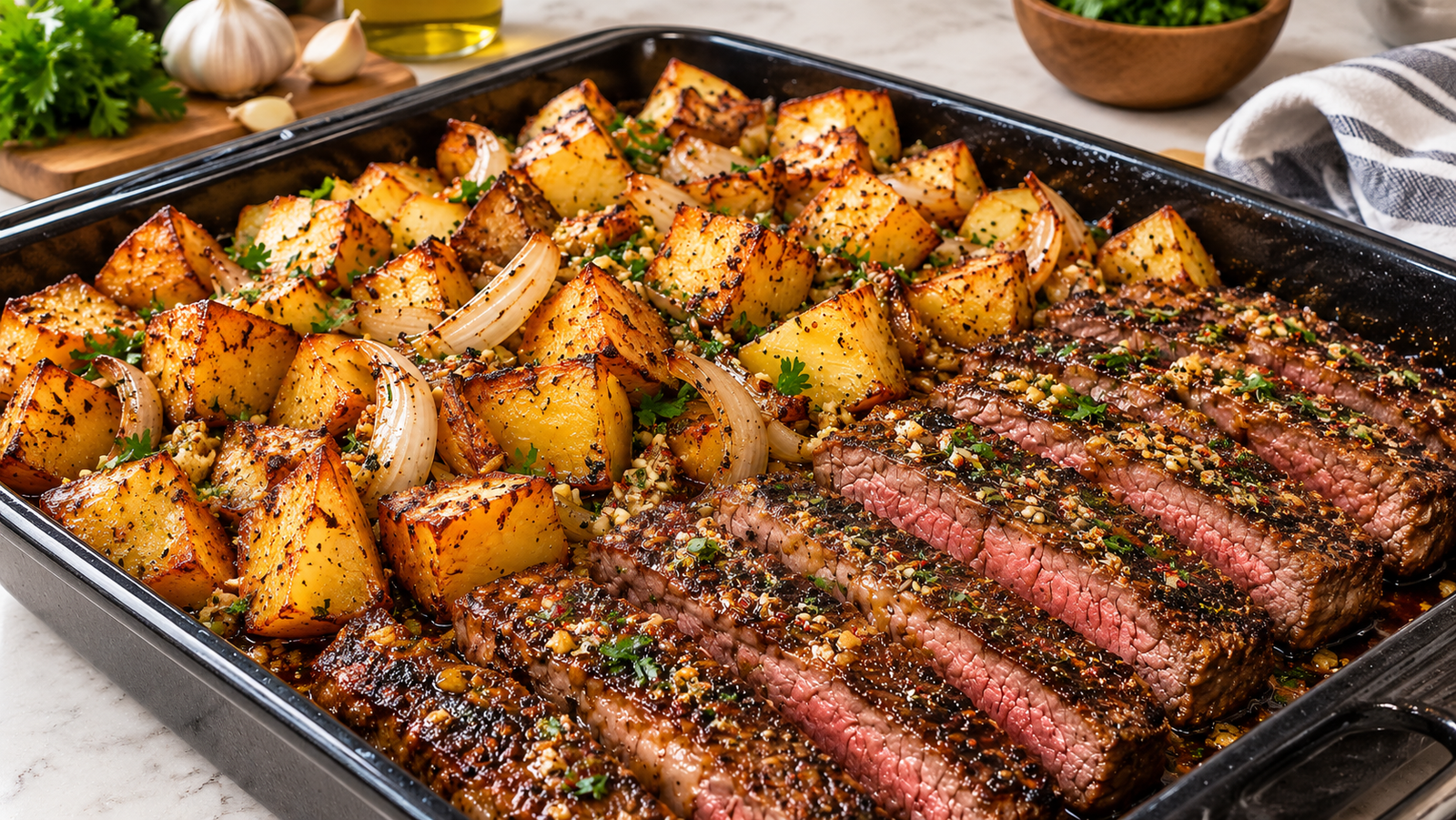
The breakthrough came down to staggering the cooking times, cutting the potatoes for maximum surface area, and leveraging the broiler to blast the steak with intense, direct radiant heat while the potatoes finished soaking up garlic-herb butter. The photo above is the payoff: deep, charred steak strips that are juicy and tender on the inside, sitting alongside deeply caramelized, herb-crusted potatoes and sweet roasted onions.
Here is how you do it at home without turning your steak grey or your potatoes into mush.
Why Most Sheet Pan Steak Fails (And the Science to Fix It)
Steak and potatoes have fundamentally opposing cooking requirements:
- Potatoes are dense and full of water. They require sustained, high heat for 35 to 45 minutes to break down starches, evaporate moisture, and build a crispy exterior.
- Thick steaks cook fast. Exposing a good steak to oven heat for more than 8 to 12 minutes will overcook the center into a dry, chalky mess.
If you throw them in the oven at the exact same moment, one of them will always suffer.
The fix is staggered cooking. You roast the potatoes and sliced onions alone on a hot, preheated sheet pan until they are nearly finished and deeply browned. Then, you push them to one side of the pan, drop the well-seasoned steaks right onto the screaming-hot metal, and finish the entire tray under the high heat of your oven’s broiler. The blazing metal underneath sears the bottom of the steak, the broiler chars the top, and the potatoes soak up all the melted garlic butter and drippings.
Ingredients & Equipment
Kitchen Tools That Matter
- Heavy-Duty Half-Sheet Pan or Cast-Iron Roasting Dish: (A dark, heavy rimmed pan or cast-iron baking tray conducts heat much better than thin aluminum, giving you that dark sear on the bottom).
- Instant-Read Digital Thermometer: (A ThermoWorks ThermoPop or similar digital instant-read probe is non-negotiable for steak).
- Sharp Chef’s Knife: For cutting uniform potato cubes so they cook at an identical rate.
The Ingredients Breakdown
| Component | Ingredient | Quantity | Practical Purpose |
| The Protein | New York Strip or Ribeye Steaks | 2 steaks (approx. 1 to 1.25 lbs each, 1.5 inches thick) | Thick cuts are mandatory so the interior stays juicy while the exterior gets a charred crust. |
| The Spuds | Yukon Gold Potatoes | 1.5 lbs (about 4–5 medium) | Thin skins and a creamy, buttery interior that crisps up without requiring par-boiling. |
| Sweet Aromatics | Yellow Onion | 1 large (sliced into thick wedges) | Roasts into sweet, jammy petals right alongside the potatoes. |
| Cooking Fat | Avocado Oil or Beef Tallow | 2.5 tbsp | High smoke point fat that won’t scorch or turn bitter during the initial high-heat roast. |
| Finishing Butter | Unsalted Butter | 4 tbsp (half a stick, melted) | Basted over the steak and potatoes during the final broil. |
| Garlic Punch | Fresh Garlic | 5 cloves (finely minced) | Infuses into the melted butter; garlic powder burns too quickly under a direct broiler. |
| Herbs | Fresh Rosemary & Thyme | 1 tbsp each (finely minced) | Classic steakhouse herbs that bloom when hit with hot butter. |
| Seasoning | Coarse Kosher Salt | 1.5 tsp (divided) | Coarse salt draws moisture out of the potato surfaces for better browning. |
| Seasoning | Freshly Cracked Black Pepper | 1 tsp | Course grind gives you that distinct peppery bark. |
| Garnish | Fresh Flat-Leaf Parsley | 2 tbsp (finely chopped) | A bright, grassy finish that cuts through the rich butter fat. |
Step-by-Step Cooking Method
Step 1: Prep the Steaks (The 45-Minute Window)
Take your steaks out of the refrigerator 30 to 45 minutes before cooking. A fridge-cold steak dropped onto a hot pan cools the surface down instantly, causing the meat to steam instead of sear.
Use paper towels to pat the steaks completely dry on every side. Moisture is the enemy of browning. Season both sides generously with half of your coarse kosher salt and plenty of freshly cracked black pepper. Set them on your cutting board to come up toward room temperature.
Step 2: The Potato Chop and Toss
Preheat your oven to 425°F (220°C). If you are using a standard metal sheet pan, slide the empty pan into the oven while it preheats. Getting the pan hot beforehand gives the potatoes an instant sizzle the moment they touch it.
Wash the Yukon Gold potatoes and leave the skins on for extra texture. Cut them into uniform, bite-sized cubes—roughly ¾-inch to 1-inch squares. Peel the yellow onion and slice it into thick wedges.
In a large bowl, toss the cubed potatoes and onion wedges with 2 tablespoons of avocado oil, 1 teaspoon of kosher salt, black pepper, and half of the minced fresh herbs. Make sure every cut surface of the potato is glistening with oil.
Step 3: The Potato Head Start
Carefully remove the hot sheet pan from the oven using oven mitts.
Pour the oiled potatoes and onions across the pan in a single layer. You should hear an audible sizzle. Spread them out so they aren’t piled on top of each other.
Return the pan to the oven and roast at 425°F (220°C) for 25 to 30 minutes.
Around the 15-minute mark, use a metal spatula to flip the potatoes once. You want to see golden, blistered edges forming on all sides.
Step 4: Whisk the Garlic Herb Butter
While the potatoes finish their roast, melt your 4 tablespoons of butter in a small ramekin. Stir in the minced garlic and the remaining fresh rosemary and thyme. Set it aside on your stovetop so the garlic gently warms and perfumes the melted butter.
Step 5: The Hot Pan Assembly
Pull the sheet pan out of the oven. At this point, the potatoes should be fork-tender and deeply browned on the edges, and the onions should be soft and caramelized.
Use your spatula to slide the potatoes and onions over to one half or one side of the tray, clearing a dedicated space for the beef.
Drizzle a half teaspoon of oil directly onto the empty, hot section of the pan. Lay your seasoned steaks right onto that screaming-hot metal. Spoon half of the warm garlic herb butter generously over the tops of the steaks and drizzle the rest across the roasted potatoes and onions.
Step 6: The High-Heat Broil
Switch your oven setting from Bake to BROIL (High).
Slide the sheet pan onto the top rack of your oven, positioned about 4 to 6 inches below the heating element.
Broil undisturbed for 4 to 5 minutes.
Carefully pull the pan out, flip the steaks over using tongs, and broil the second side for another 3 to 4 minutes.
Watch the broiler closely. The fat along the edges of the steak should sizzle and char, and the garlic butter will foam and coat the potatoes in a deeply browned crust.
Step 7: Check the Temperature
Insert the probe of your digital thermometer into the thickest center of each steak:
- Rare: 120°F to 125°F
- Medium-Rare: 130°F to 135°F (Recommended sweet spot for strip or ribeye)
- Medium: 140°F to 145°F
Pull the pan out of the oven the second your thermometer reads about 5°F below your desired final doneness, as carryover heat will continue to cook the meat while it rests.
Step 8: The Mandatory Rest and Carve
Transfer the steaks from the hot pan to a wooden cutting board. If you leave them on the blistering metal pan, they will keep cooking and dry out. Let the meat rest undisturbed for a full 8 to 10 minutes. This resting window allows the muscle fibers to relax, locking all the savory juices inside instead of letting them run across the board.
While the steak rests, leave the potatoes and onions resting right in the warm pan drippings to soak up every drop of beef fat and garlic butter.
Slice the steaks across the grain into thick, juicy strips. Arrange the carved steak slices right back in the roasting pan alongside the crispy potatoes and jammy onions. Spoon any juices left on your cutting board over the meat, scatter finely chopped fresh parsley across the top, and bring the entire pan straight to the table.
Practical Troubleshooting & Common Mistakes
- “My potatoes ended up soft and pale instead of crispy.”
This almost always means the pan was overcrowded, or you used high-starch Russets without par-boiling. When potatoes are packed too tightly against each other, the moisture escaping from them has nowhere to go, so they steam instead of fry. Give them breathing room on the pan, and stick with waxy-firm Yukon Golds. - “The garlic burned and turned bitter under the broiler.”
Never add raw minced garlic to the potatoes during the first 30 minutes of baking. Minced garlic will burn into bitter black ash within ten minutes of oven exposure. Keep the garlic suspended in melted butter and add it only during the final broiling stage. - “Using steaks that are too thin.”
If your grocery store only sells thin, ¾-inch steaks, do not use the broiler method. A thin steak will be cooked to well-done before the broiler can ever form an exterior crust. Look for steaks that are at least 1.25 to 1.5 inches thick. If thin steaks are all you have, sear them separately in a ripping-hot cast-iron skillet on the stovetop for 90 seconds per side, then plate them alongside the roasted potatoes.
Leftovers & The Morning-After Upgrade
If by some miracle you have portions left over, slide them into an airtight container in the fridge for up to 3 days.
Don’t reheat this in the microwave; it turns the steak rubbery and makes the potatoes limp. Instead, chop the leftover steak and potatoes into smaller bite-sized cubes and toss them into a hot buttered skillet over medium-high heat. Fry everything until the potato edges re-crisp and the beef warms through, then slide two fried sunny-side-up eggs right on top. It makes one of the best morning hashes you will ever eat.