
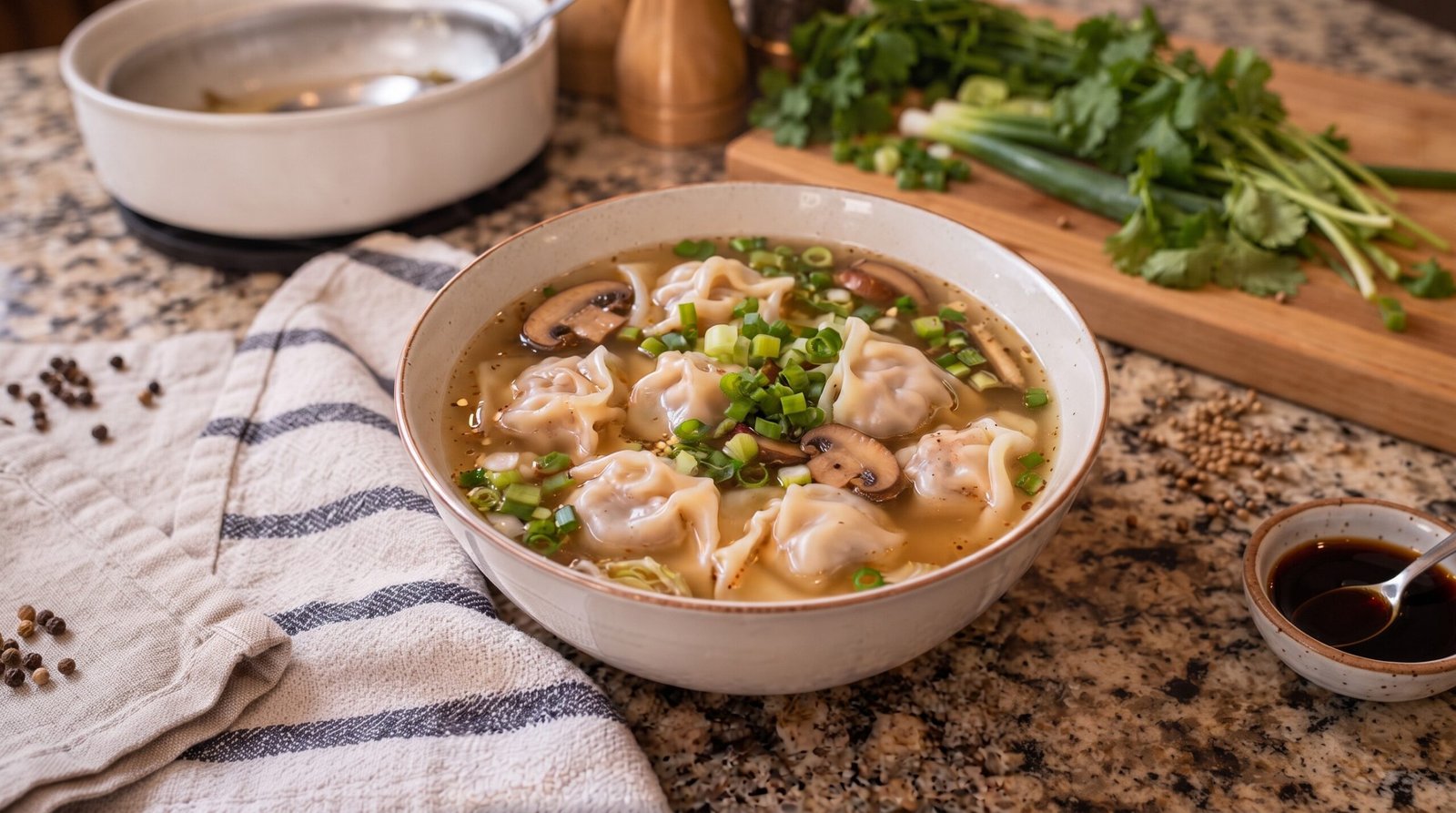
It usually happens on a Thursday evening. I am tired, the kitchen feels a bit cold, and I realize I have absolutely no plan for dinner. This is the moment I turn to making homemade wonton soup. It is one of those meals that does not require a trip to the store if you keep a few basics in your freezer and pantry. The process is meditative, involving the small, repetitive task of folding the wontons, which helps me unwind after a long day of work.
This bowl of wonton soup provides a soothing base of seasoned broth with tender dumplings that melt in your mouth. By adding earthy mushrooms and fresh scallions, you get a balance of textures that makes a simple bowl feel like a full, intentional meal. It is light enough that you do not feel heavy afterward, yet substantial enough to feel satisfied. Making this at home is much more rewarding than ordering takeout because you control the salt and the freshness of every component.
Why This Recipe Works
This recipe relies on the contrast between the silky texture of the boiled wonton wrappers and the slight chew of fresh mushrooms. I find that using store-bought frozen wontons is the biggest time-saver here, but you can also make them from scratch if you have extra time. The broth is where most of the flavor lives. By simmering it with ginger and soy sauce, you create a depth that usually takes hours to develop in a restaurant.
Another reason I prefer this approach is the speed of cooking. Since the wontons only need about four to five minutes in boiling water to cook through, the entire soup comes together in under twenty minutes from start to finish. You are not hovering over a pot for hours, and you do not need fancy equipment. A standard medium pot and a ladle are all you really need to get the job done.
The choice of mushrooms is also important. I prefer cremini or brown button mushrooms because they hold their shape well in the hot broth. They provide a savory, umami note that complements the ginger and scallion base. When you slice them thinly, they cook quickly and absorb the flavor of the liquid. The scallions added at the very end provide a sharp, fresh crunch that cuts through the saltiness of the soy sauce.
Finally, this soup is very forgiving. If you want a more substantial meal, you can drop in some baby bok choy or spinach during the last minute of simmering. The instructions below focus on the classic version, but it serves as a blank canvas for whatever you have in your vegetable drawer. The result is always a clean, clear broth that highlights the quality of your ingredients without being masked by heavy creams or thickeners.
Ingredient Notes
The Broth Base
The broth is the foundation of this dish. You want a high-quality chicken or vegetable stock. I always check labels to make sure it is not overly processed. Fresh ginger is a must here; do not use dried ginger powder as it lacks the brightness needed for a soup like this. A small piece, about an inch long, sliced into rounds, is enough to infuse the broth without being overpowering. Soy sauce adds the salt and color, while a dash of sesame oil brings a nutty aroma that rounds everything out.
The Dumplings
You can find wonton wrappers in the refrigerated section of most grocery stores. If you are making your own filling, ground pork with a little bit of finely minced scallion and ginger works well. If you are buying frozen wontons, look for a brand with a simple ingredient list. The wrappers should be thin so they become translucent when boiled, showing off the filling inside.
The Vegetables
Cremini mushrooms are my go-to choice, but white button mushrooms or sliced shiitake mushrooms also work beautifully. You want to wipe them clean with a damp towel rather than washing them under running water, as mushrooms soak up liquid like a sponge. Scallions should be vibrant green and crisp. I use both the white parts for the broth base and the green parts for the garnish at the end.
| Ingredient | Amount | Notes |
|---|---|---|
| Chicken or Vegetable Stock | 4 cups | Low sodium preferred |
| Frozen Wontons | 12-15 pieces | Keep frozen until use |
| Cremini Mushrooms | 1 cup | Thinly sliced |
| Fresh Ginger | 1 tablespoon | Sliced into thin rounds |
| Soy Sauce | 2 tablespoons | Adds depth and color |
| Sesame Oil | 1 teaspoon | Added at the very end |
| Fresh Scallions | 3 stalks | Thinly sliced |
The Recipe
- Prep Time: 10 minutes
- Cook Time: 12 minutes
- Total Time: 22 minutes
- Servings: 2
- Difficulty: Easy
Equipment needed: Medium pot, ladle, knife, cutting board, measuring spoons.
Step-by-Step Instructions
Step 1: Prep the Aromatics and Mushrooms
Start by washing your mushrooms and slicing them into thin, even strips. You want them about an eighth of an inch thick so they cook through in the broth without turning mushy. Peel your fresh ginger using the edge of a spoon and slice it into four or five thin rounds. Finally, trim the ends off the scallions and slice them into small rings, keeping the white parts separate from the green parts.
Step 2: Infuse the Broth
Place your medium pot on the stove over medium-high heat. Pour in the four cups of stock and add the ginger rounds along with the white parts of the scallions. Bring this mixture to a gentle boil, then turn the heat down to low. Let it simmer for about five minutes. This allows the ginger and scallions to release their oils into the liquid, creating a fragrant base that smells warm and inviting.
Step 3: Cook the Mushrooms
Once the broth is fragrant, add the sliced mushrooms to the pot. Increase the heat slightly to bring the liquid back to a simmer. Let the mushrooms cook for about three to four minutes. They should soften and darken slightly in color. If you are using shiitake, they might take an extra minute to reach the right texture. You do not want them to disintegrate, so keep an eye on them.
Step 4: Add the Soy Sauce and Wontons
Pour the two tablespoons of soy sauce into the broth and stir. Taste the liquid—if it needs more salt, add a tiny bit more soy sauce, but remember that the wontons will add some saltiness as they release their juices. Carefully drop the frozen wontons into the simmering broth one by one. Do not crowd the pot. If the pot is too small, do this in two batches to ensure they cook evenly without sticking together.
Step 5: Boil the Dumplings
Let the wontons cook in the broth for four to five minutes. You will know they are ready when they float to the surface and the wrappers look soft and slightly translucent. Use a spoon to gently lift one out to make sure the center is hot. If you are using pork-filled wontons, ensure they are cooked through to an internal temperature of 165 degrees Fahrenheit. Once done, remove the pot from the heat immediately.
Step 6: Finish and Serve
Stir in the teaspoon of sesame oil. This gives the broth a beautiful, glossy finish and a distinct smell. Ladle the soup into two bowls, making sure to distribute the mushrooms and wontons evenly. Top each bowl generously with the reserved green parts of the scallions. Serve immediately while the broth is piping hot. The contrast between the hot soup and the fresh, cool scallions is the highlight of the dish.
Mistakes I Made (So You Don't Have To)
Overcrowding the Pot
Early on, I tried to cook all fifteen wontons at once in a pot that was far too small. They ended up sticking together in one big lump, and the ones in the center stayed raw while the outside became soggy. The fix is simple: use a larger pot or cook them in smaller batches. Giving the wontons room to move in the boiling water ensures they cook through consistently.
Using Dried Ginger
I once used ginger powder instead of fresh ginger thinking it would save me time. The flavor was totally different and much sharper, missing the clean, spicy kick that fresh ginger provides. If you find yourself without fresh ginger, it is better to skip it altogether than to use the powdered version. Fresh ginger is worth the extra thirty seconds of work for the result it produces in the broth.
Forgetting the Sesame Oil
There was a time I added the sesame oil at the beginning of the cooking process. By the time the soup was served, the flavor had faded away because sesame oil is very volatile when heated for long periods. Always add the sesame oil after you remove the pot from the heat. This preserves its nutty, toasted aroma, which is essential to the final profile of the soup.
Boiling the Wontons Too Long
I once got distracted by a phone call and left the wontons boiling for ten minutes instead of five. The wrappers disintegrated into the broth, leaving me with a starchy, messy soup instead of clear broth with distinct dumplings. Set a timer as soon as you drop them in. Wonton wrappers are delicate and cook very quickly, so stay by the stove until they are finished.
Variations and Tips
Adding Greens
If you want more bulk, add a handful of baby spinach or thin slices of bok choy when you add the mushrooms. They only need about one minute to wilt in the hot broth. This adds a nice pop of color and extra texture, turning a simple soup into a more filling meal. Always wash your greens thoroughly before adding them to ensure there is no grit left behind.
Making It Spicy
If you like heat, add a teaspoon of chili oil or a few thinly sliced fresh Thai chilies when you add the soy sauce. I find that a little bit of heat helps clear the sinuses on a cold day. Be careful with the amount, as some chili oils can be quite intense. Start with a little, taste the broth, and add more if you think it needs it.
The Time-Saving Trick
When I am really short on time, I keep my wontons pre-portioned in small freezer bags. This prevents them from sticking together in the freezer, so I can just dump a handful into the boiling broth without any extra prep. It makes this soup a genuine ten-minute meal that is faster than ordering out. Just make sure the bags are sealed well to prevent freezer burn on the delicate wrappers.
Adjusting for Saltiness
Different brands of soy sauce and broth have different levels of salt. I always start with less soy sauce than I think I need. You can always add more at the end, but you cannot take salt out once it is in the pot. If the soup ends up too salty, the only real way to fix it is to add more water or unsalted stock, which can dilute the other flavors. Taste as you go.
Storage and Reheating
If you have leftovers, store the soup in an airtight container in the refrigerator. It is best to keep the wontons and the broth in the same container, but understand that the wrappers will continue to absorb liquid and get softer over time. I suggest consuming the leftovers within two days. Any longer than that, and the wonton wrappers will lose their integrity and fall apart when reheated.
To reheat, pour the soup into a small saucepan and heat it over medium-low heat until it reaches a simmer. Do not boil it hard, as this will further break down the dumplings. You want to bring it to a gentle, steaming temperature of 165 degrees Fahrenheit. Once it is hot, serve it immediately. I do not recommend freezing this soup, as the wonton wrappers tend to get mushy and lose their texture entirely once they have been thawed and reheated. It is better to make only what you plan to eat.
Frequently Asked Questions
Can I make the wontons from scratch?
Yes, you certainly can. You will need ground pork, finely minced ginger, a dash of soy sauce, and a little sesame oil for the filling. Place a small spoonful in the center of a wrapper, wet the edges with water, and fold them into a triangle or a purse shape. Homemade wontons taste wonderful, though they do add significant time to the process. If you go this route, ensure the meat is fully cooked through by using a thermometer.
How do I know when the pork is fully cooked?
If you are using pork-filled wontons, they are cooked when the filling reaches an internal temperature of 165 degrees Fahrenheit. Visually, the wrapper should be slightly translucent and the filling should look firm. If you cut into one, the pork should be opaque throughout, not pink. Always err on the side of caution with meat. Using a digital meat thermometer is the most reliable way to check, especially if you are new to making dumplings.
Can I use vegetable broth instead of chicken stock?
Absolutely. A good mushroom-based vegetable broth works very well with this recipe because it enhances the earthy notes of the cremini mushrooms. Just ensure the vegetable broth is flavorful enough on its own, as some can be quite bland. If you find your vegetable broth is too light, adding a bit more ginger or a splash of rice vinegar can help give it more character and brightness.
Are there other types of mushrooms I can use?
While cremini or white button mushrooms are traditional and easy to find, you can also use shiitake, oyster, or even wood ear mushrooms. Shiitake mushrooms have a deeper, more intense flavor that works great in soup. Just make sure to remove the woody stems before slicing them. Whatever mushroom you choose, slice it thinly so it cooks evenly alongside the wontons. Do not use canned mushrooms, as they lack the texture and fresh flavor needed for this dish.
Why does my broth look cloudy?
Cloudy broth often happens if you boil the soup too vigorously after adding the wontons. Wonton wrappers contain flour, and if they boil too hard, that starch releases into the liquid, making it cloudy. Keep the heat at a gentle simmer once the dumplings are in the pot to maintain a clear, clean broth. This also helps keep the dumplings intact and prevents them from breaking open during the cooking process.
Final Thoughts
Making this soup has become a regular part of my weekly routine. It is simple, requires very few ingredients, and always leaves me feeling satisfied. It is a reminder that you do not need to spend hours in the kitchen to put together something that tastes like a thoughtful meal.
I hope you enjoy making this in your own home as much as I do. Once you get the hang of the basic technique, feel free to adjust the aromatics or add your own favorite greens. It is a versatile recipe that is meant to be adapted to what you have on hand. Happy cooking, and I hope this becomes a staple in your kitchen too.