
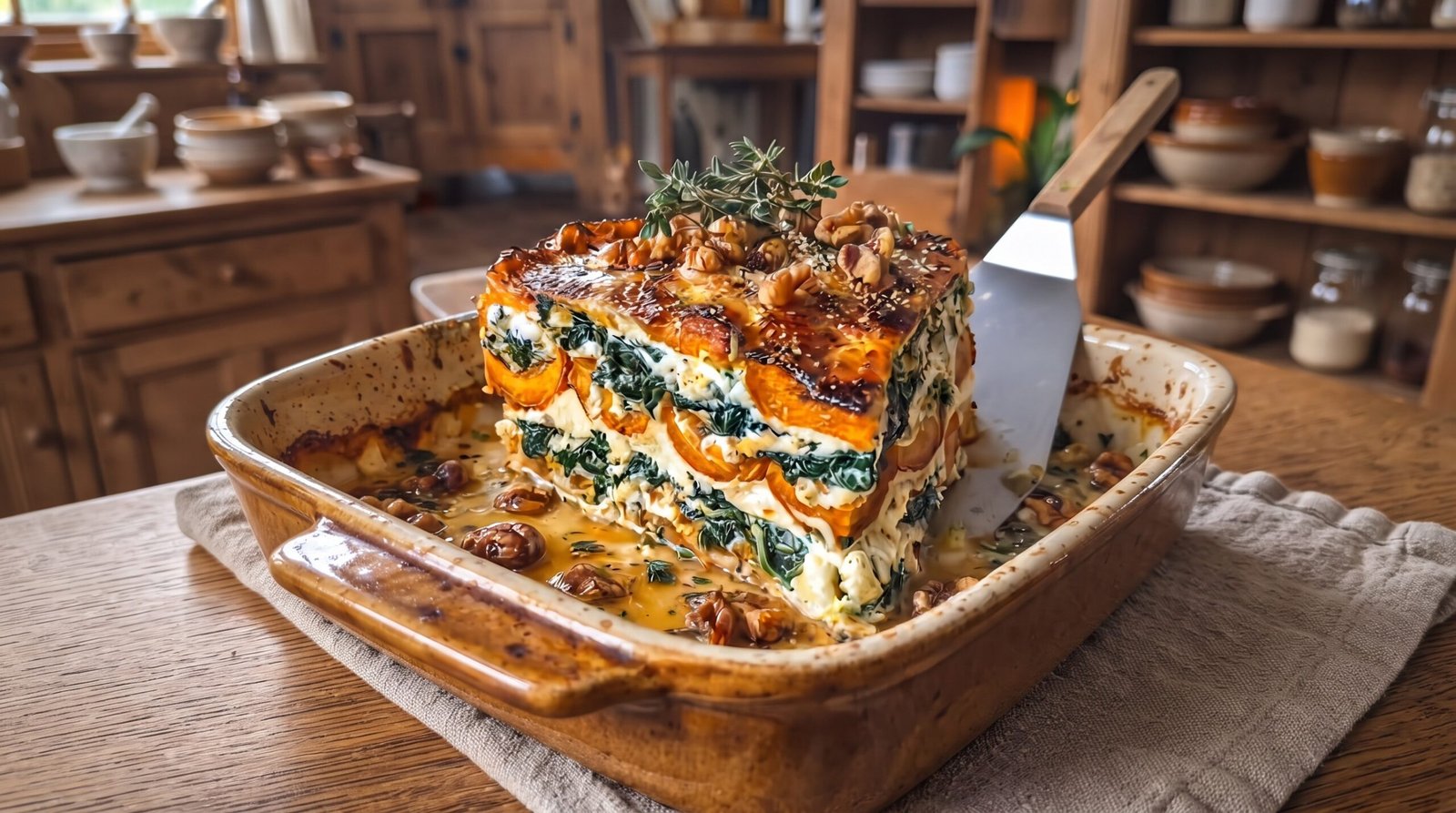
I often find myself staring at a pile of seasonal squash on my kitchen counter during the autumn months, wondering how to turn it into something more than just a soup. Making a traditional lasagna can be labor-intensive, but this roasted butternut squash and spinach lasagna with walnuts brings a earthy, sophisticated twist to the classic layered pasta dish. It is the kind of meal that feels special enough for a Sunday dinner but does not require hours of complex prep work. I started making this version because I wanted a savory, vegetable-forward dinner that provided a satisfying contrast between the sweet, tender roasted squash and the slightly bitter, iron-rich spinach. The addition of toasted walnuts adds a crunch that you usually do not find in a soft pasta bake. This dish relies on simple roasting and basic layering techniques to create layers of flavor that meld together beautifully in the oven. If you are looking for a way to use up winter produce while keeping things relatively straightforward, this recipe is a reliable choice that fills the house with a comforting aroma.
Why This Recipe Works
This dish works because it balances the natural sweetness of roasted butternut squash with a creamy, sharp cheese filling. When you roast the squash slices until they are tender and slightly darkened at the edges, you draw out a depth of flavor that simple boiling or steaming cannot achieve. This sweetness is countered by the wilted spinach, which adds a fresh, green element that prevents the dish from feeling too heavy. The choice of cheese is vital here. Using a combination of ricotta for a base layer of creaminess and mozzarella for the classic pull and browning creates the right texture.
The walnut component is what elevates this dish beyond a standard vegetable bake. Walnuts provide a necessary texture shift. Without them, the lasagna would be uniformly soft. By scattering them between the layers and on the top, you get a subtle nuttiness that pairs perfectly with the squash. The walnuts do not lose their crunch entirely because they are protected by the moisture of the ricotta and the pasta layers, though the ones on top develop a toasted, golden quality that mimics the crisp edges of the pasta.
Ease of assembly is another reason I return to this recipe. You do not need to make a complicated sauce from scratch if you do not want to. While a simple bechamel can be nice, a seasoned ricotta mixture works just as well and saves a significant amount of time at the stove. The pasta sheets are layered raw if you use the no-boil variety, or parboiled if you prefer a softer texture, making the whole process feel much less like a chore. The flavors meld in the oven at 375 degrees Fahrenheit for 40 minutes, which is enough time for the pasta to absorb the moisture from the vegetables and cheese, resulting in a cohesive block that holds its shape when sliced.
Ingredient Notes
The Squash and Greens
The foundation of this dish is a medium-sized butternut squash. You want one that feels heavy for its size. I usually peel it and cut it into quarter-inch thick slices. These slices provide the structure for the layers. For the spinach, I prefer fresh baby spinach. You will need a large amount because it wilts down significantly. If you use frozen spinach, ensure you squeeze out every drop of moisture, or the lasagna will turn into a puddle in the pan.
The Cheese and Binder
Ricotta is the heart of the creamy layer. Use whole milk ricotta for a richer result. I always mix in an egg to help the cheese set as it bakes. This prevents the lasagna from becoming watery once it comes out of the oven. Mozzarella should be shredded yourself if possible, as the pre-shredded bags often contain anti-caking agents that stop the cheese from melting into that smooth, gooey consistency we want.
The Walnuts and Seasoning
The walnuts should be raw and unsalted so you can control the toast level. Thyme is the best herb here, as its woodsy flavor bridges the gap between the sweet squash and the rich cheese. Nutmeg is a secret weapon that highlights the natural sugars in the squash. A little sea salt and cracked black pepper are essential for seasoning the ricotta base, as the other ingredients can be quite mild on their own.
| Ingredient | Amount | Notes |
|---|---|---|
| Butternut Squash | 2 pounds | Peeled and sliced into thin rounds |
| Fresh Spinach | 1 pound | Washed and stemmed |
| Ricotta Cheese | 15 ounces | Whole milk variety |
| Mozzarella Cheese | 12 ounces | Shredded by hand |
| Walnuts | 1 cup | Roughly chopped |
| Large Egg | 1 | Room temperature |
| Thyme | 2 tablespoons | Fresh leaves only |
| Nutmeg | 1/4 teaspoon | Freshly grated is best |
| Lasagna Noodles | 9 to 12 sheets | No-boil or pre-boiled |
| Olive Oil | 2 tablespoons | For roasting the squash |
| Sea Salt | 1 teaspoon | To taste |
| Black Pepper | 1/2 teaspoon | Freshly cracked |
The Recipe
- Prep Time: 30 minutes
- Cook Time: 40 minutes
- Total Time: 1 hour 10 minutes
- Servings: 6 to 8
- Difficulty: Intermediate
Equipment Needed:
– Large rimmed baking sheet
– 9×13 inch ceramic or glass baking dish
– Mixing bowl
– Chef's knife
– Whisk
– Aluminum foil
Step-by-Step Instructions
Step 1: Prep the Squash
Preheat your oven to 400 degrees Fahrenheit. Peel the butternut squash and remove the seeds. Slice it into rounds about 1/4 inch thick. Lay these out on your large baking sheet and drizzle with olive oil. Sprinkle with half of the thyme and a pinch of salt. Roast them for 20 minutes until they are soft when poked with a fork. They do not need to be browned, just tender. Once done, remove the tray from the oven and reduce the heat to 375 degrees Fahrenheit.
Step 2: Prepare the Spinach and Cheese
While the squash is roasting, place the spinach in a hot skillet with a tiny splash of water. Cover for 2 minutes until it wilts completely. Transfer it to a colander and press down hard with a spoon to drain the liquid. Let it cool slightly. In a medium mixing bowl, combine the ricotta, the egg, the remaining thyme, the nutmeg, and half of the salt and pepper. Stir in the chopped spinach until it is evenly distributed throughout the cheese.
Step 3: Layering the Lasagna
Grease your 9×13 inch baking dish with a little olive oil or butter. Spread a thin layer of the ricotta and spinach mixture on the bottom to prevent sticking. Place a layer of pasta sheets over the base. Top this with a layer of roasted squash slices, followed by a generous spread of the ricotta mixture. Sprinkle a small handful of chopped walnuts and a layer of shredded mozzarella over the top. Repeat these layers until you reach the top of the dish.
Step 4: The Final Assembly
On the final layer of pasta, use the remaining ricotta mixture, the rest of the shredded mozzarella, and scatter the remaining walnuts across the top. This top layer will get toasted and crunchy, providing a nice texture. Cover the dish with a piece of aluminum foil, making sure it is tented slightly so it does not touch the cheese directly. If the foil sits on the cheese, you will lose your topping when you take it off.
Step 5: Baking
Bake the covered lasagna at 375 degrees Fahrenheit for 25 minutes. After this time, remove the foil carefully to avoid steam burns. Continue to bake the dish uncovered for another 15 minutes. You want the cheese to be bubbling and slightly golden brown on the edges. The internal temperature of the center should reach 165 degrees Fahrenheit if you want to be certain, though the visual cues of melting cheese and softened pasta are usually sufficient.
Step 6: Resting
This is the most important step. Let the lasagna rest on your counter for at least 15 minutes before you try to cut it. This allows the internal structures to firm up, ensuring you get clean, square portions instead of a collapsed mess on the plate. It stays hot for a long time, so do not worry about it cooling down too much during this wait. Serve with a simple side salad if desired.
Mistakes I Made (So You Don't Have To)
Using watery spinach
The first time I made this, I skipped the step of squeezing the moisture out of the spinach. The result was a watery mess in the bottom of my baking dish that made the pasta gummy and unpleasant. Now, I use a clean kitchen towel to wrap the cooked spinach and wring it out over the sink until no more liquid comes out. This keeps the ricotta mixture firm.
Thinning the squash slices too much
I once sliced my squash paper-thin with a mandoline. When I baked it, the squash disintegrated into the cheese, and I lost the distinct, layered look of the dish. Stick to 1/4 inch slices. They need enough bulk to hold their own between the layers of pasta and cheese. If you cut them too thin, you lose the texture of the vegetable entirely.
Forgetting the egg in the ricotta
I thought I could skip the egg to save a trip to the store once. Without the egg to bind the ricotta, the cheese layer spread everywhere as soon as I pulled the dish from the oven. The egg is crucial for creating a set, uniform layer that stays where you put it when you lift a piece out with a spatula. Do not leave it out.
Not tenting the foil
My early attempts often ended with me losing half of my cheese topping because it stuck to the underside of the aluminum foil. It was frustrating to clean the foil and disappointing to look at a bare lasagna. By tenting the foil—making sure it arches over the dish—you create a pocket for heat to circulate without the foil coming into contact with the molten cheese.
Variations and Tips
Swapping the squash
If butternut squash is not available, acorn squash works very well. It has a similar sweetness and density. You can also use sweet potato, though you should roast it a few minutes longer because it tends to be firmer. Do not use watery squashes like zucchini for this specific recipe, as the moisture balance will be off.
Adding protein
If you want to add a source of protein that keeps the dish feeling light, you can add cooked lentils into the ricotta and spinach mixture. They blend in well and add a subtle earthiness that works with the nuts. Avoid adding raw meat, as the cooking time is not long enough to ensure it cooks through safely.
Make-ahead advice
You can assemble the entire lasagna a day in advance. Cover it tightly and keep it in the refrigerator. When you are ready to bake it, pull it out about 30 minutes before putting it into the oven to take the chill off. You may need to add 5 to 10 minutes to the total baking time to ensure it is heated through to 165 degrees Fahrenheit in the center.
Walnut alternatives
If you are not a fan of walnuts, toasted pecans are an excellent substitute. They provide a similar crunch and a sweet, buttery profile that complements the squash. If you have a nut allergy, roasted pumpkin seeds, also known as pepitas, offer a great crunch and add a vibrant green color to the top of the dish.
Storage and Reheating
If you have leftovers, allow the dish to cool completely before covering it. It can be stored in the refrigerator in an airtight container for up to 3 days. Because this contains dairy and an egg, do not leave it out on the counter for longer than 2 hours. When you are ready to reheat, the best method is the oven. Preheat to 350 degrees Fahrenheit and cover with foil. Bake until it is steaming hot and reaches 165 degrees Fahrenheit in the center. I do not recommend freezing this dish as a whole, as the texture of the ricotta and the water content of the cooked squash can make the pasta turn mushy upon thawing. If you must freeze it, freeze individual portions in airtight containers, though the texture will be noticeably softer than when fresh.
Frequently Asked Questions
Can I use store-bought no-boil noodles?
Yes, you can. They are designed to absorb the moisture from the surrounding sauce as they bake. Make sure that you have enough moisture in your ricotta and that the squash is not overly dry. If the lasagna seems too dry before putting it in the oven, you can add a half-cup of vegetable broth around the edges of the pan to help steam the noodles.
How do I know when the lasagna is done?
The best way to tell is by looking for a bubbling cheese top and golden brown edges. If you have a thermometer, insert it into the center. It should read at least 165 degrees Fahrenheit. The pasta should be tender when pierced with a small knife. If the top is browning too quickly, place the foil back over it loosely for the remainder of the time.
Do I need to peel the butternut squash?
Yes, please peel it. While the skin of some squash varieties becomes tender when roasted for a long time, the skin of a butternut squash can be tough and waxy, even after 40 minutes in the oven. A standard vegetable peeler works just fine for this. Peeling it ensures the final dish has a smooth, consistent texture in every bite.
Why is my lasagna watery after baking?
Watery lasagna usually comes from one of two things: the spinach or the squash. If you do not squeeze the water out of the spinach, it will release fluid as it cooks. If you use squash that is too watery or sliced too thickly, it can also release liquid. Always drain your cooked greens thoroughly and ensure your squash is roasted until tender but not mushy.
Can I add extra vegetables?
You can add thin slices of mushrooms or thinly sliced leeks to the layers. If you do add mushrooms, sauté them in a pan first to draw out their moisture. If you add raw mushrooms, they will release too much water during the baking process and ruin the texture of the lasagna. Keep the additions thin so they layer easily.
Final Thoughts
This butternut squash and spinach lasagna has become a reliable staple in my kitchen, especially when I want to create something comforting without spending the entire day at the stove. It hits the right balance of flavors and textures, making it a satisfying main dish for anyone at the table.
Once you have the basics down, you will find it easy to adjust the seasonings to your personal preference. Keep the core steps in mind, especially the resting time, and you will have a perfect meal ready to slice and serve every time you make it.