
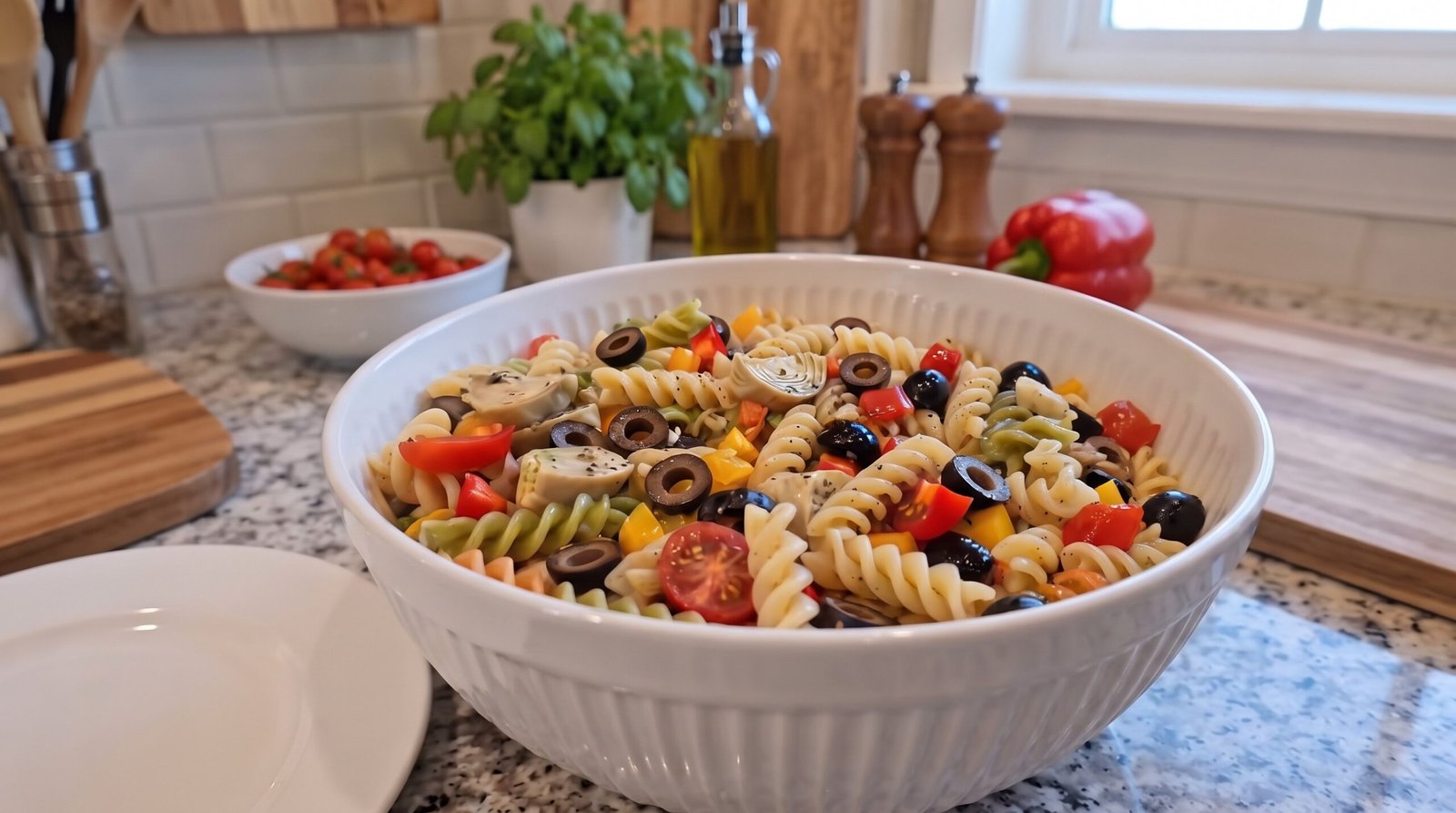
When the temperature rises or a busy work week leaves me with little energy to spend over a hot stove, my thoughts immediately turn to a reliable pasta salad. There is something grounding about the combination of chewy fusilli, briny olives, and bright vegetables that brings me right back to basics. I spent years trying to get the right balance of acidity and texture in a bowl like this, often ending up with either soggy noodles or a dressing that just slid right off the ingredients. Over time, I learned that the secret is treating the pasta with respect during the boiling phase and ensuring the vegetables are chopped into uniform, manageable bites. This recipe is what I lean on when I need something that holds up well for a few days in the fridge and makes an easy lunch or a side for dinner without any fuss. It is a humble, straightforward dish that serves as a dependable companion during those long afternoons when the kitchen feels like the last place I want to be.
Why This Recipe Works
This pasta salad succeeds because of the physical structure of the ingredients. By using fusilli or a similar twisted pasta shape, the surface area is maximized, which means the oil-based dressing actually clings to the grain instead of pooling at the bottom of the bowl. The choice of ingredients provides a natural progression of textures, starting with the firm bite of the pasta, followed by the soft, almost creamy artichoke hearts, and finishing with the crisp, watery pop of the fresh bell peppers and cherry tomatoes. These contrasts keep every mouthful interesting, preventing that monotone feel that can sometimes plague large batches of mixed grain dishes.
The flavor profile relies on high-quality pantry staples that do the heavy lifting for you. Briny black olives and marinated artichokes offer a savory depth that balances the sweetness of the peppers and the bright, slightly tart notes of the tomatoes. Because this is a cold dish, the ingredients have time to mingle in the refrigerator, allowing the dressing to penetrate the surface of the pasta. This creates a cohesive bite where the salt from the olives and the tang from the artichoke brine season the starch from the inside out. It is a practical approach to building flavor without needing to simmer sauces for hours or manage complex cooking stages. The assembly is forgiving, making it a reliable option when you are moving quickly through your kitchen prep.
Ingredient Notes
Pasta and Base
The most important part of this dish is the pasta. I prefer fusilli or rotini because those spirals are designed to grab and hold onto dressing, herbs, and small bits of ingredients like diced peppers. You could use penne or farfalle if that is what you have on hand, but keep in mind that smoother surfaces might require a thicker coating. Whatever you choose, aim to cook it until it is just tender but still has a slight resistance to the tooth. If you overcook it even by a minute, the starch will break down in the dressing, leading to a mushy texture after the first day in the refrigerator.
Vegetables and Add-ins
The vegetables here are chosen for their ability to maintain their integrity over time. Cherry tomatoes should be halved to release some of their natural juices into the mix. Bell peppers provide a necessary crunch; I like to use a mix of colors for visual appeal, but red or yellow are my personal favorites because they have a slightly sweeter finish than green ones. Artichoke hearts should be quartered if they are whole, though buying the pre-marinated quartered kind saves you a step. The black olives add a distinct saltiness that ties the other flavors together, and I usually leave them in rounds or slice them just once if they are particularly large. Fresh basil is essential for the finish; it should be added right before serving to keep it from wilting or turning dark in the acid of the dressing.
| Ingredient | Amount | Notes |
|---|---|---|
| Fusilli pasta | 1 pound | Cooked al dente |
| Black olives | 1 cup | Pitted and sliced |
| Artichoke hearts | 1 jar | Marinated and drained |
| Cherry tomatoes | 1.5 cups | Halved |
| Bell peppers | 2 whole | Diced into 1/2 inch pieces |
| Olive oil | 0.5 cup | Extra virgin preferred |
| Red wine vinegar | 3 tablespoons | For acidity |
| Dried oregano | 1 teaspoon | For herbal notes |
| Salt and pepper | To taste | Add carefully |
The Recipe
- Prep Time: 15 minutes
- Cook Time: 10 minutes
- Total Time: 25 minutes plus chilling
- Servings: 6 to 8
- Difficulty: Easy
Equipment Needed
- Large stockpot for boiling pasta
- Colander
- Large mixing bowl
- Chef knife and cutting board
- Whisk or jar for the dressing
Step-by-Step Instructions
Step 1: Prepare the Pasta
Bring a large pot of heavily salted water to a rolling boil over high heat. Add the pound of fusilli and cook according to the package directions, typically around 9 to 11 minutes. I always start checking for doneness at the 8-minute mark by biting into a single noodle. You are looking for a state where the pasta is fully cooked through but still firm enough that it does not flatten when you press it against the side of the pot.
Once the pasta reaches the desired texture, drain it immediately into a colander. Do not rinse the pasta with cold water unless you are in a massive hurry, as the residual starch on the surface helps the dressing adhere better. Give the colander a few good shakes to get rid of excess moisture, then let it sit for a minute while you gather your other components.
Step 2: Prep the Vegetables
While the pasta is cooling slightly, move to your cutting board. Wash the cherry tomatoes and slice each one in half. If you find any particularly large ones, feel free to quarter them so they match the size of the olive slices. Take your bell peppers, remove the stems and seeds, and dice them into uniform pieces roughly half an inch wide.
Open your jar of marinated artichoke hearts and drain the liquid, though you can reserve a tablespoon or two if you want an extra boost of flavor in your dressing. If the pieces are large, cut them into bite-sized quarters. Finally, if your black olives are whole, slice them into rounds. Having everything in similar, bite-sized pieces makes the salad much easier to eat.
Step 3: Whisk the Dressing
In a small bowl or a clean glass jar, combine the extra virgin olive oil and the red wine vinegar. Add the dried oregano, along with a pinch of salt and a fair amount of cracked black pepper. If you are using a jar, seal it tightly and shake it vigorously for about 30 seconds until the mixture looks emulsified and creamy.
If you are whisking in a bowl, add the oil in a thin, slow stream while whisking constantly to ensure the vinegar and oil bond together. Taste the dressing with a piece of pasta or a crust of bread. It should taste bright and slightly acidic, which is necessary to cut through the neutral starch of the pasta. Do not be afraid of the salt, as the pasta will absorb a surprising amount.
Step 4: Combine the Ingredients
Place the slightly warm pasta into your large serving bowl. Pour about three-quarters of the dressing over the noodles while they are still warm, as this encourages the pasta to soak up the seasoning. Give it a gentle toss with a large spoon or spatula. Let this sit for about five minutes to cool down further.
Once the pasta is no longer steaming, add your tomatoes, peppers, olives, and artichokes. Toss everything together very gently to avoid breaking up the tomatoes or mashing the artichokes. Add the remaining dressing if the salad looks a bit dry. The goal is a light, glossy coating rather than a pool of oil at the bottom of the bowl.
Step 5: Final Chill and Serve
Cover the bowl with plastic wrap or a tight-fitting lid and place it in the refrigerator. It needs at least 30 minutes to chill, but the flavors improve significantly if you let it rest for at least two hours. The cold temperature helps firm up the textures and allows the salt and herbs to distribute evenly through the starch.
Right before you are ready to serve, take a final look at the consistency. Pasta has a way of soaking up moisture while it sits, so if it looks dry, add a tiny drizzle of olive oil or a splash of fresh lemon juice. Garnish with fresh basil leaves if you have them, as the herbal aroma really rounds out the Mediterranean profile. Give it one last gentle stir and serve cold.
Mistakes I Made (So You Don't Have To)
Overcooking the Pasta
I used to set my timer for the full length suggested on the box, which often resulted in pasta that was far too soft. When you mix pasta with a vinaigrette and let it sit for a few hours, the acid in the vinegar and the moisture from the vegetables continue to soften the starch. Now, I pull the pot off the heat about one minute before the box says to. It makes a significant difference in the final mouthfeel.
Using Too Little Salt
Because pasta is essentially bland, it acts like a sponge for salt. If you do not salt your boiling water generously, or if you are stingy with the salt in the dressing, the entire salad will taste flat and boring regardless of how good your vegetables are. I have learned to taste the water before adding the pasta; it should taste like the sea. If the salad tastes dull later, a simple extra pinch of sea salt usually revives the flavors immediately.
Adding Herbs Too Early
I once added chopped fresh basil to the bowl before putting it in the fridge, only to find the leaves turned brown and slimy by the time I served it the next day. Fresh herbs are delicate. Now, I only add them right before taking the bowl to the table. If I am prepping for a crowd, I keep the herbs in a separate small container and stir them in at the very last second to ensure they look vibrant and green.
Crowding the Bowl
Trying to mix everything in a bowl that is too small usually leads to crushed vegetables and bruised pasta. I have learned to use a bowl that is at least twice the volume of the ingredients so I have plenty of room to toss everything without frustration. When you have enough space, you can use a wider, gentler motion to combine the dressing, which keeps your peppers crisp and your tomatoes intact.
Variations and Tips
Add a Protein
If you want to make this into a more substantial meal, consider adding cubed feta cheese or mini mozzarella pearls. Both hold their shape well in a cold salad. If you eat meat, shredded rotisserie chicken or sliced salami also works very well, providing a salty, savory contrast that pairs beautifully with the olives and artichokes. Just be sure to keep the pieces small so they distribute evenly with the pasta.
The Make-Ahead Trick
This dish is actually better the next day, provided you keep the pasta and dressing properly balanced. If you know you are making it for a gathering, make it the morning of or even the night before, but keep the dressing separate if you are worried about the pasta drying out. If you mix it all together, just be prepared to add a splash of olive oil right before serving to bring back that glossy finish.
Swap the Vegetables
While I love the combination of peppers and artichokes, you can easily swap them based on what is in season. Cucumbers are a great addition for extra crunch, though I recommend seeding them first so they do not water down the dressing. Sun-dried tomatoes are a fantastic, punchy alternative to fresh ones if you want a more intense, concentrated flavor.
Adjust the Acid
Not everyone likes the sharp bite of red wine vinegar. If you find it too harsh, try using fresh lemon juice or a mix of lemon juice and white balsamic vinegar. Lemon adds a bright, zesty note that feels very fresh in the summer, while white balsamic offers a touch of sweetness that balances out the briny olives. Experimenting with different vinegars is the easiest way to change the character of the dish.
Storage and Reheating
Storage is quite straightforward with this salad because it is designed to be eaten cold. Once you have finished your meal, transfer any leftovers to an airtight container. It is best to use a glass container if possible, as plastic can sometimes hold onto the scent of the onions or vinegar. Keep the container in the coldest part of your refrigerator, usually the back shelf, rather than in the door where the temperature fluctuates.
This salad will stay fresh and flavorful for up to three days. After that, the vegetables begin to lose their texture and the pasta starts to become overly soft. If you notice any liquid pooling at the bottom of the container, do not toss it out; that is just the flavorful dressing. Give the salad a good stir before serving to redistribute the oils and seasonings.
Regarding reheating, this is strictly a cold dish. I would not recommend trying to heat it up, as the vegetables and the delicate nature of the dressing are meant for a chilled environment. If you find the cold pasta too hard after being in the fridge, take the portion you plan to eat out of the refrigerator about 20 minutes before serving to let it come closer to room temperature. This helps the olive oil in the dressing soften, making the pasta feel much more pleasant to eat.
Frequently Asked Questions
Can I use whole wheat pasta for this salad?
Yes, you certainly can. Whole wheat pasta has a slightly nuttier flavor and a denser texture than traditional white pasta. Keep in mind that it can be a bit more absorbent, so you might want to make an extra tablespoon or two of dressing to account for that. Just ensure you monitor the cooking time carefully, as whole wheat pasta can sometimes turn from al dente to soft very quickly.
Why does my pasta salad get dry in the fridge?
Pasta is porous and it will naturally soak up the liquid from the dressing as it sits. It is not necessarily that your dressing disappeared, but rather that the noodles have acted like a sponge. To fix this, always reserve a little bit of the dressing and toss the salad one last time just before you put it on the table. A quick drizzle of good olive oil is also an easy remedy.
Can I freeze this pasta salad?
I do not recommend freezing this dish. Pasta, once cooked and then frozen, tends to break down and lose its structure, becoming quite mushy once it thaws. Furthermore, the fresh vegetables like tomatoes and peppers will lose all their crispness and become watery upon defrosting. It is much better to make only what you can eat within a few days to maintain the best quality.
Should I rinse the pasta with cold water?
In most cases, no. Rinsing pasta removes the surface starch, which is exactly what helps the dressing stick to the noodles. If you skip the rinse, the oil and vinegar will coat the pasta evenly and stay on the noodles. The only time I rinse is if I am in an extreme hurry and need the pasta to cool down instantly so I can serve the meal within minutes.
What is the best way to keep the basil from turning black?
Basil is very sensitive to both cold temperatures and acidic dressings. The absolute best way to keep it fresh is to leave the leaves whole and wait until the very last second to add them to the bowl. If you want to make the salad ahead of time, keep the basil in a paper towel in a separate bag and stir it in right as you set the bowl on the table.
Final Thoughts
There is a genuine comfort in knowing that a bowl of pasta, a few quality jarred ingredients, and some fresh vegetables can turn into a complete meal. I have found that whenever I try to overcomplicate things with too many extra steps or fancy techniques, I end up missing the simple joy of a dish that just works. This pasta salad has been a staple in my kitchen for a long time, and I hope it becomes one in yours as well.
It is rare to find a dish that feels equally appropriate for a quick lunch at home or a shared side at a weekend gathering. The best advice I can give is to taste as you go and trust your own preferences when it comes to the balance of salt and acidity. Once you have the method down, you will likely find yourself coming back to these flavors again and again whenever you need something reliable.