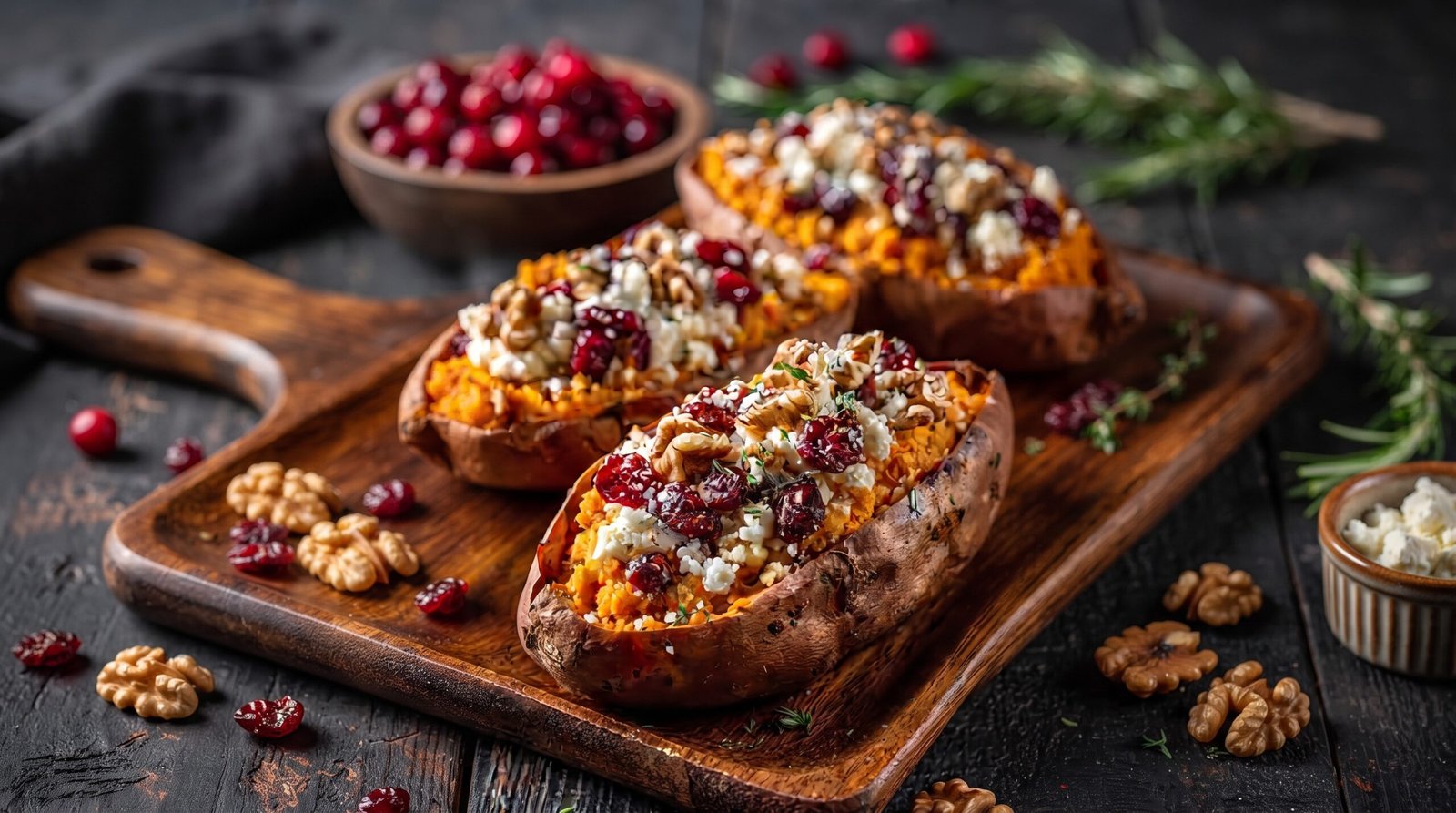
Finding time to put together a nutritious lunch during a busy Tuesday often leads me back to the same pantry staples. I keep a bag of sweet potatoes on hand because they are reliable, filling, and store well for weeks. This version, stuffed with feta, walnuts, and dried cranberries, has become a regular rotation in my kitchen because it balances earthy, sweet, and salty notes in every bite. It feels like a complete meal without requiring a long list of complicated steps.
I have found that this dish works just as well as a lighter evening meal or a satisfying side for a holiday gathering. By roasting the potatoes until the skin is slightly papery and the inside is soft enough to yield to the pressure of a fork, you create the base for a hearty topping. You will get a simple, straightforward recipe that relies on the natural sweetness of the potato to carry the bolder flavors of the cheese and the crunch of the nuts.
Why This Recipe Works
This dish works because it relies on the contrast between soft textures and firmer, crunchy elements. The center of a roasted sweet potato has a creamy, almost mashed consistency once you fluff it with a fork. When you add the crumbled feta, the saltiness cuts through that natural sugar, preventing the meal from feeling too heavy or one-note.
The walnuts provide an essential texture that makes each bite feel substantial. Because they toast slightly while the potatoes finish their final few minutes in the oven, their oils are released, giving the dish a deeper, toastier flavor. The dried cranberries add a pleasant chewiness and a hint of tartness that rounds everything out.
Another reason this recipe succeeds is its simplicity regarding the equipment. You do not need anything fancy to get these results. A baking sheet, a piece of parchment paper, and a fork are enough to handle the job. It is a forgiving process, as the oven does most of the heavy lifting. If you are someone who likes to prep ahead, you can roast the potatoes days in advance and just add the toppings right before you are ready to eat.
Furthermore, the ingredients are accessible and versatile. You likely have most of these items in your pantry already. Because sweet potatoes are naturally robust, they can hold up to different kinds of toppings if you decide to swap the feta for goat cheese or the walnuts for pecans. This flexibility means you are less likely to get bored of the recipe, making it a reliable staple for your kitchen.
Ingredient Notes
The Sweet Potatoes
I always look for medium-sized sweet potatoes that feel firm to the touch. Avoid any that have soft spots or deep cracks in the skin, as these will affect how evenly they roast. You want them to be roughly similar in size so they cook at the same rate. You do not need to peel them; the skin helps hold the shape together after you slice them open, and it adds a nice texture to the dish.
The Toppings
For the feta, I prefer to buy a block and crumble it myself. The pre-crumbled versions are often coated in starches to keep them from sticking, which can affect the way they melt into the warm potato. Raw walnut halves work best here, as you can crush them into slightly larger, uneven pieces that provide a better crunch than the pre-chopped bags. If you prefer, pecans are a direct substitute that adds a slightly earthier note. Dried cranberries should be soft; if they feel very dry, you can toss them in a teaspoon of warm water for a few minutes to rehydrate them before adding them to the potatoes.
Seasoning and Herbs
I keep the seasoning minimal because the toppings are quite flavorful on their own. A little bit of extra virgin olive oil is necessary to help the skin get crisp and to keep the interior from drying out once it is exposed to the air. Fresh thyme leaves are my favorite herb for this because they bridge the gap between the savory cheese and the sweet potato, but if you do not have fresh herbs, a pinch of dried rosemary also works.
| Ingredient | Amount | Notes |
|---|---|---|
| Sweet potatoes | 4 medium | Look for uniform size |
| Olive oil | 2 tablespoons | Extra virgin is best |
| Feta cheese | 3/4 cup | Crumbled |
| Walnuts | 1/2 cup | Roughly chopped |
| Dried cranberries | 1/3 cup | Unsweetened if possible |
| Fresh thyme | 1 tablespoon | Leaves only |
| Sea salt | 1/2 teaspoon | To taste |
| Black pepper | 1/4 teaspoon | Freshly cracked |
The Recipe
- Prep time: 10 minutes
- Cook time: 60 minutes
- Total time: 70 minutes
- Servings: 4
- Difficulty: Easy
Equipment needed:
– Baking sheet
– Parchment paper
– Chef knife
– Fork
– Small mixing bowl
Step-by-Step Instructions
Step 1: Prepare the Potatoes
Start by preheating your oven to 400 degrees Fahrenheit. Wash the sweet potatoes thoroughly under cold running water, using a scrub brush if there is any dirt stuck to the skin. Dry them completely with a clean towel.
Use a fork to poke holes all over each potato. This is a crucial step because it allows steam to escape while they bake. If you skip this, the pressure inside the potato can cause it to split or even burst in your oven. Aim for at least six to eight holes per potato, focusing on both the top and the sides.
Step 2: The Initial Roast
Line your baking sheet with a piece of parchment paper to make cleanup much easier. Place the potatoes on the sheet, leaving enough space between them so the air can circulate properly. Do not wrap them in foil, as this steams the skins and makes them soggy rather than thin and papery.
Slide the baking sheet onto the center rack of your oven. Let them bake for 45 minutes. At the 45-minute mark, check them by gently squeezing one with an oven mitt. It should feel quite soft throughout, almost like a ripe avocado. If they still feel firm in the center, leave them in for another 10 to 15 minutes.
Step 3: Add the Toppings
Once the potatoes are fully tender, remove the sheet from the oven and carefully slice them down the center lengthwise. Use your fork to gently fluff the orange flesh inside. This creates a soft, warm bed for the toppings to sink into.
Drizzle a small amount of olive oil over the exposed flesh of each potato. Sprinkle the salt and pepper over the top. Now, distribute the crumbled feta, chopped walnuts, and dried cranberries evenly among the four potatoes. Do not be shy with the portions, as the toppings should cover the surface of the potato entirely.
Step 4: Final Topping Toasting
Place the baking sheet back into the oven for an additional 10 minutes. This second, shorter bake allows the feta to soften and warm through without turning into liquid. It also toasts the walnuts and slightly warms the cranberries, which releases their natural sweetness.
Keep an eye on the walnuts during this stage to make sure they do not turn dark or bitter. Once you see the edges of the feta softening and the walnuts look golden, take the tray out. The potatoes should smell fragrant and inviting.
Step 5: Garnish and Serve
Right before you serve, sprinkle the fresh thyme leaves over the top of each potato. The heat from the dish will release the oils from the herbs, making the aroma much stronger. This is the best time to check the seasoning; if you find it needs a little more salt, add a tiny pinch now.
Transfer each potato to a plate using a wide spatula to keep them intact. They are best served hot, while the cheese is still warm and soft. The combination of the hot interior and the crispier, toasted topping is what makes this simple dish satisfying.
Mistakes I Made (So You Don't Have To)
Overcrowding the Tray
When I first made this, I tried to jam six potatoes onto one pan. Because they were touching, the sides that were pressed together steamed instead of roasting. This left me with wet, mushy patches on the skin. Now, I always make sure there is at least two inches of space between each potato so the hot air can reach every part of the skin.
Using the Wrong Potato Size
I once grabbed some giant potatoes that looked impressive, but they took forever to cook through. By the time the centers were soft, the skins were becoming too dry and almost leathery. Sticking to medium-sized potatoes, around the size of your hand, ensures that the inside cooks at the same pace as the skin.
Adding Herbs Too Early
I used to add the fresh thyme right at the start of the roasting process. By the time the potatoes were finished, the herbs were burnt, black, and tasted like ash. I realized the herbs should only be added at the very end. The residual heat of the oven and the hot potato are more than enough to release the flavor without turning the delicate leaves into dust.
Skipping the Fork Holes
There was one time I was in a rush and forgot to prick the skins. Halfway through the bake, I heard a loud pop. One of the potatoes had exploded, leaving a mess of hot, starchy pulp all over the bottom of my oven. It took me much longer to clean the oven than it would have taken to just poke the holes in the first place.
Variations and Tips
Swapping the Base
While sweet potatoes are the star, you can use this same topping method on regular russet potatoes. They have a different, more earthy flavor profile that works well with the salty feta. If you use russets, you might want to add a small dollop of sour cream or plain Greek yogurt under the feta to add some moisture, as russets are naturally drier than sweet potatoes.
Adding a Protein Boost
If you want to make this into a more substantial meal, you can add cooked chickpeas or black beans. Stir them into the fluffed potato flesh before adding the cheese. This adds another layer of texture and makes the dish much more filling without changing the overall flavor profile too much.
The Make-Ahead Trick
You can roast the potatoes ahead of time and keep them in the fridge for up to three days. When you are ready for a meal, slice them open and add your toppings, then pop them into a 400-degree oven for about 15 minutes. This is a great way to save time on busy evenings when you do not want to wait an hour for dinner to roast.
Enhancing the Texture
If you really like a crunch, you can toast your walnuts in a dry skillet over medium heat for 3 minutes before you add them to the potato. This creates a much more intense, deep flavor than just letting them toast in the oven. Just be sure to watch them closely, as nuts can go from toasted to burnt very quickly.
Storage and Reheating
If you find yourself with leftovers, store them in an airtight container in the refrigerator within two hours of cooking. They will stay safe and fresh for up to three days. I find that the skin loses a bit of its crispness once it has been refrigerated, so keep that in mind if you prefer texture over convenience.
To reheat, avoid the microwave if possible, as it tends to make the potato flesh very soggy. Instead, place the potatoes on a tray and heat them in the oven at 350 degrees Fahrenheit for about 15 minutes, or until the center is steaming hot. If you must use the microwave, heat them for 2 minutes on high, but know that the walnuts and skin will not have the same pleasant bite. I do not recommend freezing these, as the texture of both the sweet potato and the feta changes significantly after being thawed and reheated.
Frequently Asked Questions
Can I use goat cheese instead of feta?
Yes, goat cheese is an excellent substitute for feta in this recipe. It offers a similar tanginess and crumbles easily. Keep in mind that goat cheese melts faster than feta, so watch the final ten minutes of baking closely so it does not disappear into the potato too much.
Should I peel the sweet potato skin?
I always leave the skin on. The skin of a roasted sweet potato is packed with nutrients and adds a nice structure to the dish. As long as you scrub the outside well before cooking, the skin becomes thin and soft enough to eat comfortably along with the flesh.
How do I know when the potato is done?
The best way to tell is by the feel. When you squeeze the potato with an oven mitt, it should feel like it is filled with mashed potato. If you feel any resistance or a hard lump in the center, it needs a few more minutes in the oven.
Are dried cranberries necessary?
They add a nice tartness that contrasts with the sweet potato, but if you do not have them, you can leave them out. Some people also enjoy substituting them with pomegranate seeds for a different kind of pop, or dried figs for a deeper, richer sweetness.
Is it safe to eat the leftovers after three days?
I recommend eating them within three days for the best quality and safety. Beyond that point, the texture of the potato can become grainy and the toppings may start to lose their flavor. Always make sure the center is steaming hot before you eat any leftovers.
Final Thoughts
Making this dish reminds me that simple ingredients often yield the most satisfying results. By focusing on quality produce and letting the natural flavors of the potato and the crunch of the nuts work together, you end up with something that feels special without needing hours of preparation. It is a reliable, wholesome way to get a meal on the table that pleases everyone.
I hope you find this recipe as helpful and easy to follow as I have. Once you get the timing down for your specific oven, it will likely become a go-to option for those moments when you want something warm and filling. Enjoy the process of roasting, topping, and finally, the first bite of these flavorful, simple potatoes.