
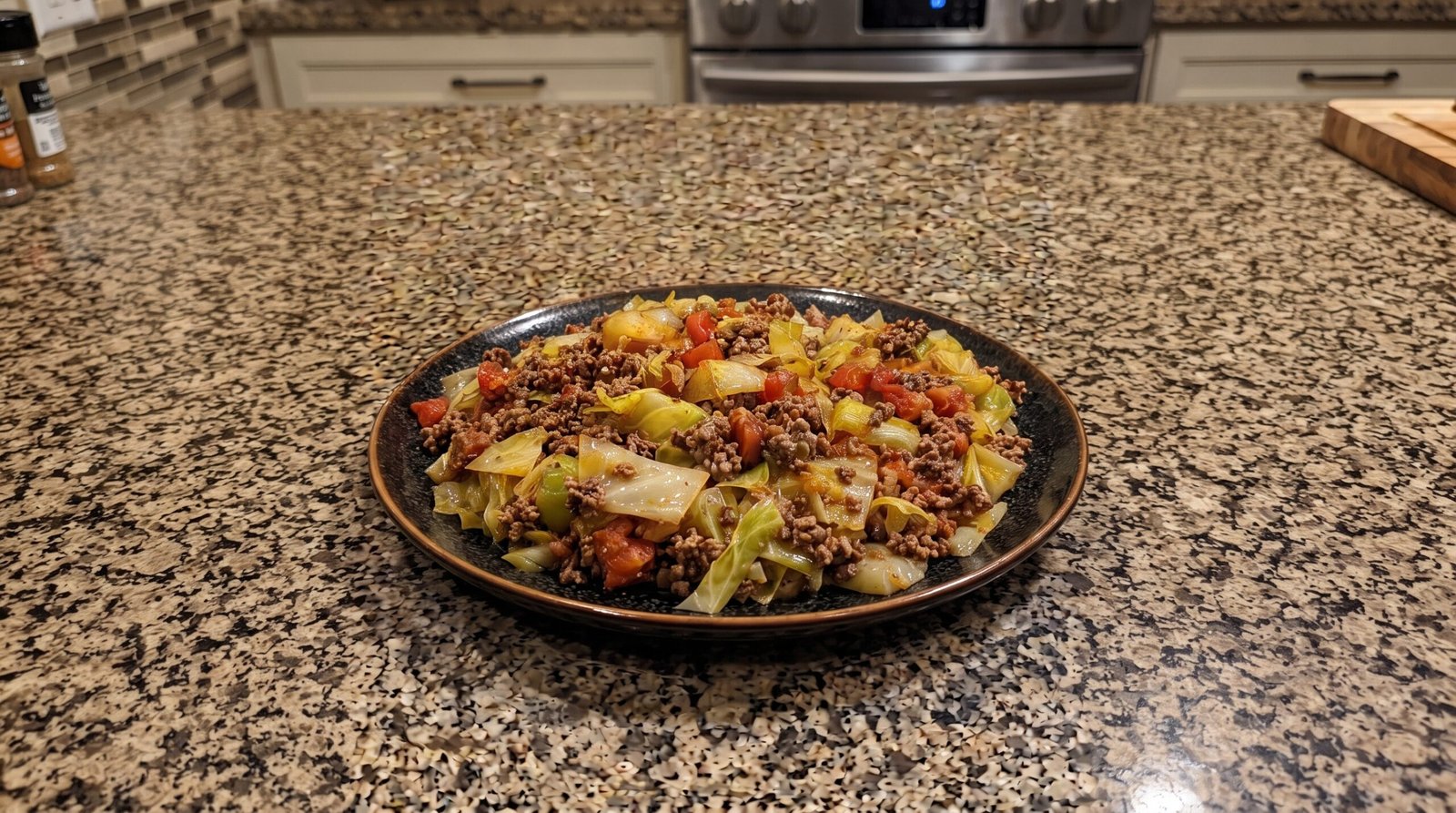
Some nights, the idea of spending an hour in the kitchen feels like too much to ask. We all have those moments when the pantry looks a bit bare and our energy levels are low. I have spent many evenings searching for something simple, filling, and straightforward that does not require a pile of dishes to clean up afterward. This skillet beef and cabbage stir fry has become my go-to meal because it relies on basic ingredients I almost always have on hand. It is one of those meals that comes together quickly in a single pan, which is a major win for busy weeknights when you just want to sit down and eat.
If you enjoy the combination of savory ground meat and softened vegetables, this dish hits the spot. The cabbage wilts down into a mild, tender base that absorbs the juices from the browned beef, while the tomatoes add a subtle acidity that cuts through the richness. It is a hearty meal that feels complete on its own, but it is also flexible enough to serve over rice or noodles if you need something to stretch it further for a larger group. You will find that this recipe is a reliable way to get a solid meal on the table with minimal effort.
Why This Recipe Works
The beauty of this dish lies in its simplicity and the way the ingredients interact in the pan. When you brown ground beef, you create a foundation of flavor that is hard to beat. By cooking the cabbage in the same pan with those drippings, the cabbage takes on a savory quality that it would not have if boiled or steamed alone. The cabbage loses its raw, crunchy edge and becomes soft and buttery, which makes it much easier to eat in large quantities.
Another reason this recipe is a staple in my kitchen is the texture contrast. You get the small, slightly browned bits of ground beef mixed with the silky, tender ribbons of cabbage. Because the tomatoes are added toward the end, they retain a bit of their shape while releasing enough liquid to create a light sauce that coats everything. It is not a soupy dish, but it is certainly not dry. This balance is what makes it satisfying to eat without needing a heavy sauce or a long list of thickeners.
The cooking process is also very forgiving. Because you are working with ground beef and cabbage, you are not worried about delicate internal temperatures or timing things down to the second like you might with a thick steak or a whole chicken. If you let the cabbage cook a few minutes longer, it just gets softer and sweeter. If you brown the meat a little deeper, you get a more robust flavor. The recipe does not require constant attention, leaving you free to clean up the cutting board or set the table while the skillet does the work.
Finally, the dish is very friendly to modifications. If you have a different type of ground meat, it works just as well. If you have extra vegetables in the fridge that need to be used up, this skillet is a perfect dumping ground for them. It is a humble meal that relies on basic culinary techniques—browning, sweating, and combining—to create something that feels like a home-cooked dinner. It is consistent, easy to manage, and rarely fails to please anyone at the table.
Ingredient Notes
The Main Proteins and Produce
The quality of your ingredients really dictates the final result, even in a simple recipe like this. For the meat, I prefer a standard ground beef, usually around 85 percent lean. You want a little bit of fat to help flavor the cabbage and keep the meat from getting dry. If you use a very lean variety, you might need to add a teaspoon of oil to the pan to get things moving. For the cabbage, a standard head of green cabbage is the best choice. It is sturdy enough to hold up to the heat of the skillet without turning into complete mush. When picking a head, look for one that feels heavy for its size with tight, crisp leaves.
The Tomatoes and Aromatics
Using canned diced tomatoes is a time-saver that ensures you have a consistent liquid base for the dish. I prefer to buy the ones with no added salt so that I can control the seasoning throughout the cooking process. If you prefer using fresh tomatoes, you can chop up three or four Roma tomatoes, but be aware that they will take a little longer to break down than canned ones. For aromatics, I stick to basics. Garlic is essential for depth, and you want to use fresh cloves rather than the bottled powder if possible. The punch of fresh garlic really brightens up the earthiness of the cooked cabbage.
| Ingredient | Amount | Notes |
|---|---|---|
| Ground beef | 1 pound | 85 percent lean works best |
| Green cabbage | 1 medium head | Remove the core and slice thinly |
| Diced tomatoes | 1 can (14.5 ounces) | Drain only half the liquid |
| Garlic | 3 cloves | Minced finely |
| Salt | 1 teaspoon | Add more to taste |
| Black pepper | 0.5 teaspoon | Freshly cracked is ideal |
| Olive oil | 1 tablespoon | Only if your beef is very lean |
The Recipe
- Prep Time: 15 minutes
- Cook Time: 20 minutes
- Total Time: 35 minutes
- Servings: 4
- Difficulty: Easy
Equipment needed:
– Large heavy-bottomed skillet or Dutch oven
– Wooden spoon or spatula
– Chef knife and cutting board
– Measuring spoons
Step-by-Step Instructions
Step 1: Prep the Ingredients
Start by removing the wilted outer leaves from your head of cabbage. Cut the head into quarters and slice out the tough core at the base of each piece. Place the quarters on your cutting board and slice them into thin strips, about half an inch wide. You do not need to be overly precise, but keeping the pieces relatively uniform helps them cook at the same rate. Once sliced, give the cabbage a good rinse in a colander and shake off any excess water.
Next, peel and mince your three cloves of garlic. Having your ingredients ready before you turn on the stove is key to a smooth process. Open your can of diced tomatoes and set them aside. If you are using a very lean ground beef, have your olive oil ready to go, though you will likely find that the beef provides enough fat on its own once it hits the hot pan.
Step 2: Brown the Beef
Place your large skillet over medium-high heat. Once the pan is hot, add the ground beef. Break it apart with a wooden spoon or spatula as it cooks. You are looking to brown the meat thoroughly, which usually takes about 6 to 8 minutes. You want to see deep brown bits forming in the pan. If the meat starts to stick or look dry, add the tablespoon of olive oil.
Once the beef is fully browned, use your spoon to ensure there are no large clumps remaining. If there is an excessive amount of rendered fat in the pan, you can spoon out some of it, but leave about a tablespoon behind to help soften the cabbage. It is important that the meat is cooked through; there should be no pink remaining. The internal temperature of the beef should reach at least 160 degrees Fahrenheit to be safe.
Step 3: Add the Aromatics
Lower the heat to medium. Add the minced garlic to the skillet with the browned beef. Stir it around constantly for about 60 seconds. You want the garlic to become fragrant, but do not let it turn dark brown or burn, as that will make it taste bitter. You will know it is ready when your kitchen starts to smell like savory, garlicky goodness.
If you feel the pan is getting a bit too dry at this stage, you can add a splash of water or a tiny bit of the liquid from the tomato can to deglaze the pan. Use your spoon to scrape up any browned bits from the bottom of the skillet, as those carry a lot of flavor. This simple step ensures that the base of your dish is well-seasoned and ready for the main vegetable component.
Step 4: Sauté the Cabbage
Now it is time to add the cabbage. This might look like a lot, and it will likely fill your skillet to the brim. That is perfectly normal. Add the cabbage in handfuls, tossing it with the meat to coat it in the juices. It will seem impossible to fit it all, but cabbage is mostly water and will shrink significantly as it cooks.
Let the cabbage sit for a minute, then stir it again. Continue cooking over medium heat for about 10 to 12 minutes, stirring every few minutes. You are looking for the cabbage to become tender and translucent. It should look soft and wilted, not bright and crunchy. If you prefer it even softer, you can add a quarter cup of water or beef broth, cover the skillet with a lid, and let it steam for an additional 3 minutes.
Step 5: Incorporate the Tomatoes
Once the cabbage has reached your desired level of tenderness, pour in the diced tomatoes. I typically add about half of the liquid from the can, as adding too much can make the dish watery. If you prefer a saucier meal, feel free to add the whole can. Stir everything together so the tomatoes are evenly distributed among the beef and cabbage.
Cook for another 3 to 5 minutes to allow the tomatoes to heat through and meld with the other ingredients. Season with the salt and black pepper at this point. Taste a small piece of cabbage and a bit of beef to check the seasoning. If it needs more punch, adjust with a little extra salt. Once heated through, the dish is ready to serve immediately while steaming hot.
Mistakes I Made (So You Don't Have To)
Overcrowding the Pan Too Early
Early on, I tried to jam the entire head of cabbage into a pan that was simply too small. Because the cabbage could not move, the bottom layer turned into a soggy mess while the top layer remained raw and tough. The fix is simple: use the largest skillet you own. If you only have a smaller pan, cook the cabbage in two batches, set it aside, then combine everything with the meat at the very end.
Forgetting to Season the Cabbage
I once assumed that the salt from the browned beef would be enough to flavor the entire mountain of cabbage. I was wrong. Cabbage is quite mild and needs its own seasoning to taste good. Now, I make sure to sprinkle a little salt over the cabbage as soon as it hits the pan, and then I check the seasoning again once the tomatoes are added. Do not be afraid of using enough salt to bring out the natural sweetness of the vegetable.
Burning the Garlic
One time, I threw the garlic in the pan while the heat was still on high, right when the beef was finishing up. Within thirty seconds, the garlic turned black and ruined the entire batch with a bitter, burnt taste. Now, I always turn the heat down to medium before adding the garlic. It only needs a quick turn in the pan, and if the pan is too hot, it will ruin in seconds.
Adding Too Much Liquid
There was a period where I thought this needed to be a stew, so I dumped in the entire can of tomatoes, juice and all, plus extra water. The result was a bowl of soggy, boiled cabbage floating in tomato water. The texture was completely ruined. Now, I drain at least half the liquid from the can before adding the tomatoes to the pan. This keeps the dish concentrated and savory rather than thin and watery.
Variations and Tips
Adding Extra Vegetables
This dish is a fantastic way to clean out your produce drawer. I have added diced bell peppers, sliced carrots, or even some frozen peas at the very end of cooking. If you add harder vegetables like carrots, toss them in with the cabbage so they have enough time to soften. If you use something like zucchini or spinach, add them during the final few minutes so they do not disappear into the mix.
Using Different Proteins
While ground beef is the classic choice, I have made this with ground turkey and ground pork as well. Ground turkey is leaner, so you will definitely need that tablespoon of olive oil I mentioned earlier. Ground pork brings a different fat profile that pairs very well with cabbage; it is actually quite popular in various traditional cabbage dishes. Just ensure your chosen meat is fully cooked through before adding the vegetables.
Adjusting the Texture
If you are someone who really dislikes the texture of cooked cabbage, try slicing it into thinner, finer ribbons. The finer the cut, the faster it will break down into a silky, almost noodle-like consistency. Conversely, if you enjoy a bit of bite, cut the cabbage into larger squares, about one inch in size. You will just need to increase the cooking time by a few minutes to ensure the thicker pieces are tender enough to chew comfortably.
Make-Ahead Strategy
This dish reheats incredibly well, which makes it great for meal prep. I often cook a double batch on Sunday night. After it cools down, I portion it into airtight containers and keep them in the fridge. To reheat, I just pop a portion in the microwave for two minutes or heat it in a small skillet over low heat until it is steaming hot. It actually tastes better the next day after the flavors have had time to settle.
Storage and Reheating
If you have leftovers, they should be stored in the refrigerator within two hours of cooking to keep them safe. Place them in a shallow, airtight container to allow for even cooling. You can safely keep this in the fridge for up to three days. Beyond that, the cabbage starts to lose its texture and can become quite soft.
When you are ready to eat the leftovers, make sure you reheat the dish until it is steaming hot throughout. If you are using a microwave, cover the dish to prevent it from drying out, and heat it in one-minute intervals, stirring in between. If you are reheating on the stove, add a small splash of water to the pan to help generate steam and prevent the bottom from scorching. Do not attempt to refreeze this dish after it has been stored in the fridge, as the texture of the cabbage will not hold up well to a second thaw.
Frequently Asked Questions
Can I use red cabbage instead of green cabbage?
You certainly can, but keep in mind that red cabbage is slightly tougher and has a more robust, earthy flavor than green cabbage. It will also turn the entire dish a deep purple color as it cooks, which might look a bit unusual. If you use red cabbage, you may want to increase the cooking time by about five minutes to ensure it softens properly, as it does not break down as easily as the green variety.
Is it necessary to drain the tomatoes?
I highly recommend draining at least half of the liquid from the can of diced tomatoes. If you add the full can of juice, the dish will likely become too watery and you will end up boiling the cabbage rather than sautéing it. Draining some of the liquid ensures that the natural juices from the beef and the cabbage create a cohesive, flavorful coating rather than a soupy base.
What should I serve with this skillet dish?
This dish is quite hearty on its own because of the combination of beef and cabbage, but if you want to stretch the meal, it goes well with a side of white rice, brown rice, or even some buttered egg noodles. The starch helps to soak up any remaining juices in the pan. If you prefer to keep it lower in carbohydrates, you could serve it with a slice of crusty bread for dipping.
Can I add spices to change the flavor profile?
Absolutely. This recipe is a neutral base that takes well to many additions. A teaspoon of smoked paprika adds a wonderful depth, while a dash of red pepper flakes can provide a nice kick of heat. If you want to lean into an Asian-inspired flavor profile, you could swap the salt for a splash of soy sauce and add a teaspoon of toasted sesame oil right before serving.
Why did my cabbage turn out bitter?
If your cabbage turned out bitter, it was likely cooked for too short of a time or you accidentally burned the garlic. Cabbage needs time to soften and release its natural sugars; if it stays too crisp, the flavor can remain sharp. Additionally, if the garlic in the pan burned, the bitterness from the garlic would have permeated the entire dish. Always ensure your aromatics are cooked gently and the cabbage is fully tender.
Final Thoughts
Making this skillet beef and cabbage at home is a reminder that you do not need a complicated list of ingredients to put a satisfying dinner on the table. It is the kind of recipe that stays in your rotation because it asks so little of you while delivering a reliable, savory meal. Once you have made it a few times, you will likely find yourself adjusting the seasonings or adding a different vegetable based on what you have in the fridge.
Do not stress if it does not look exactly the same every time you make it. The beauty of this kind of cooking is that it changes slightly based on the size of the cabbage or how much liquid the tomatoes release. Keep the heat controlled, make sure your beef is well-browned, and give the cabbage enough time to transform. It is a simple process that results in a humble, warming meal.