
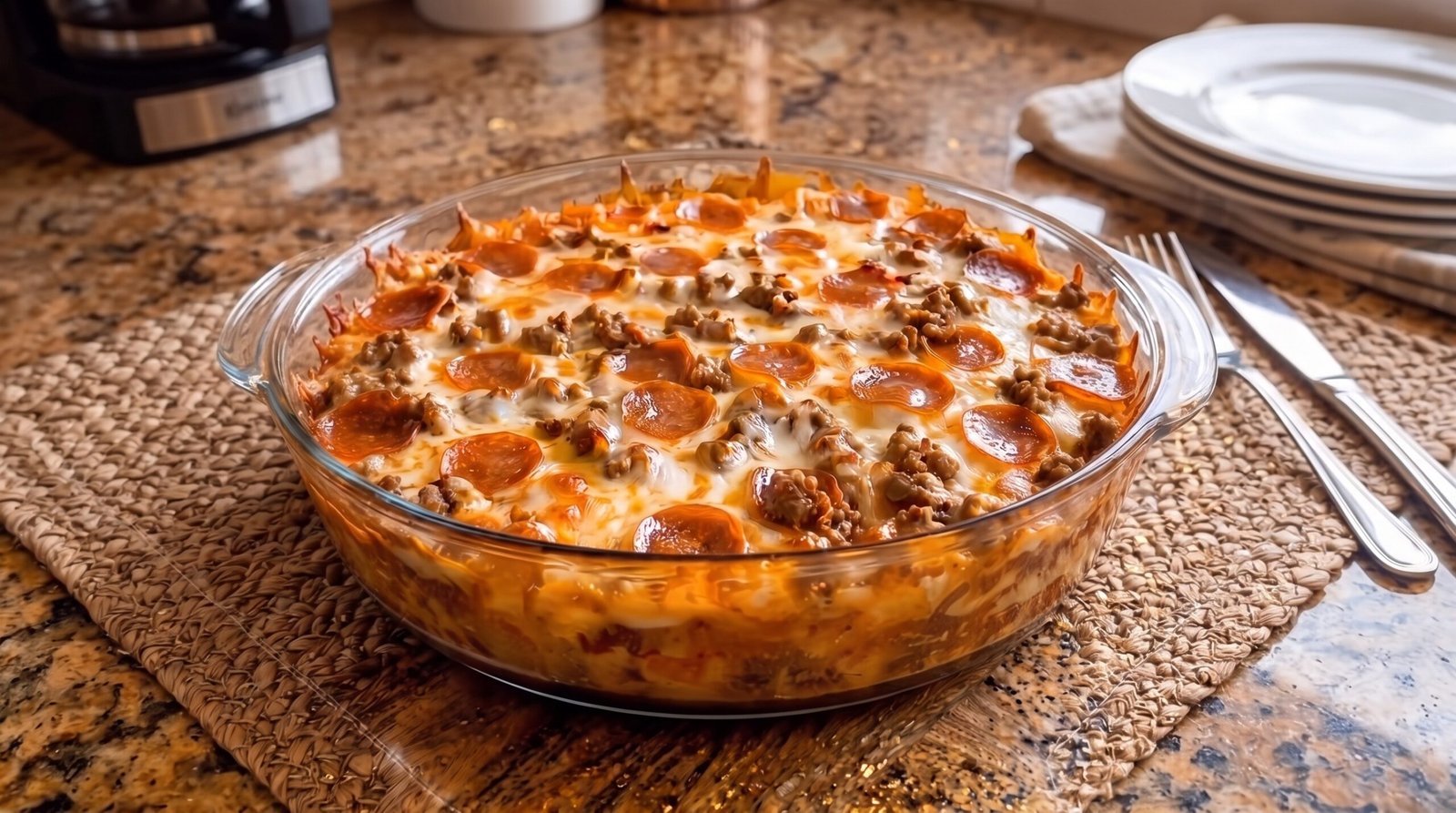
I remember the first time I tried to recreate a pizza in pasta form. It was one of those frantic Tuesday evenings when the kids were demanding pizza, but I did not have the energy to knead dough or wait for a delivery. I had a bag of rotini, a jar of sauce, and a pack of pepperoni in the fridge. I tossed them into a baking dish with some mozzarella and hoped for the best. To my surprise, it turned out to be exactly what we needed: a warm, filling bowl of comfort that tasted just like a slice of pepperoni pie but was much easier to manage.
This Pepperoni Pizza Pasta Casserole has since become a regular in my kitchen. It is one of those meals that relies on pantry staples, making it a reliable friend when you are staring at an empty cupboard. Whether you are feeding a hungry group after a long day or just want something comforting, this dish comes together with minimal fuss. In the following guide, I share how I put this together so you can make it for your own table tonight.
Why This Recipe Works
The beauty of this Pepperoni Pizza Pasta Casserole lies in its simplicity. It bridges the gap between a hearty pasta bake and a classic pepperoni pizza. When you mix pasta with a thick tomato sauce, ground beef, and a mountain of cheese, you get a texture that is both soft and slightly chewy. The pepperoni slices on top crisp up in the oven, adding a bit of saltiness that balances the mild sweetness of the cheese and sauce. It is a texture play that keeps you coming back for another bite.
From a flavor standpoint, this dish hits all the right notes. The savory depth of the ground beef pairs well with Italian-style tomato sauce, which usually contains herbs like oregano, basil, and garlic. These herbs are the backbone of any good pizza profile. By incorporating the pepperoni, you infuse the entire casserole with that familiar, slightly spicy scent that signals it is pizza night. It is a reliable comfort food profile that most people enjoy, making it a safe choice for families or casual get-togethers.
Finally, the ease of preparation is a huge factor. You start by boiling the pasta and browning the meat on the stovetop, which takes about twenty minutes. The assembly is just layering the components in a dish, followed by a bake in the oven to melt everything together. You do not need any special equipment beyond a large pot, a skillet, and a baking dish. This means cleanup is relatively fast, leaving you more time to enjoy your meal. It is a straightforward, no-nonsense approach to dinner.
Ingredient Notes
Pasta and Base
The choice of pasta is important because you want something that holds onto the sauce and meat. I prefer rotini or penne for this casserole. The spirals of the rotini or the hollow centers of the penne act like little scoops, ensuring you get a bit of sauce, cheese, and beef in every forkful. Avoid long noodles like spaghetti, as they tend to clump together and are difficult to portion out once the cheese has melted over the top.
Meat and Protein
Ground beef is the standard choice here. I usually look for an 80/20 or 85/15 blend. You want a little bit of fat for flavor, but you do not want it to be overly greasy. If you use a higher fat content, be sure to drain the excess fat after browning the meat in the skillet. If you prefer, you could substitute ground turkey or Italian sausage, but ground beef provides that classic, neutral base that lets the pepperoni flavor stand out.
Sauce and Seasoning
For the sauce, use a high-quality marinara or pizza sauce. I typically reach for a jar that lists garlic, basil, and oregano as the main flavors. If you find the sauce is too thick, you can thin it with a tablespoon of water or broth, but generally, you want a thick sauce so the casserole does not end up watery after baking. If you want a bit of heat, add a half-teaspoon of red pepper flakes to the beef as it browns.
Cheese and Toppings
Mozzarella is the star here. Use low-moisture, part-skim mozzarella if possible because it melts better and won't release as much water as fresh mozzarella. I prefer to grate my own cheese from a block because the pre-shredded bags are coated in cellulose, which prevents them from melting smoothly. As for the pepperoni, use standard slices. If they are very large, you can cut them in half, but whole circles look best on top.
| Ingredient | Amount | Notes |
|---|---|---|
| Rotini pasta | 16 ounces | Dry weight |
| Ground beef | 1 pound | 85/15 lean ratio |
| Marinara sauce | 24 ounces | One standard jar |
| Mozzarella cheese | 3 cups | Shredded from a block |
| Pepperoni slices | 4 ounces | Regular or turkey |
| Dried oregano | 1 teaspoon | For extra aromatics |
| Salt | To taste | For the pasta water |
The Recipe
- Prep Time: 15 minutes
- Cook Time: 35 minutes
- Total Time: 50 minutes
- Servings: 6 to 8
- Difficulty: Easy
Equipment needed:
– Large pot for boiling pasta
– Large skillet for browning beef
– 9×13 inch baking dish
– Colander
– Wooden spoon
– Box grater
Step-by-Step Instructions
Step 1: Prep the Oven and Pasta Water
Start by preheating your oven to 375 degrees Fahrenheit. While the oven is heating, fill your large pot with water and a generous amount of salt. Bring the water to a rolling boil over high heat. Salting the water properly is the only chance you have to season the pasta itself, so do not be shy with the salt.
Once the water is boiling, add your rotini. Cook it for about two minutes less than the package instructions say for al dente. The pasta will continue to cook in the oven when you bake the casserole, so you want it to have a slight bite left in the center. If you cook it all the way through now, it will end up mushy later.
Step 2: Brown the Ground Beef
While the pasta is boiling, place your skillet over medium-high heat. Add the ground beef. Use your wooden spoon to break the meat apart into small crumbles. You want the beef to be fully browned and no longer pink. This should take about six to eight minutes.
As the meat browns, season it with a pinch of salt, pepper, and the dried oregano. Once the beef is cooked, use a spoon to remove any excess grease that has accumulated in the pan. If you leave too much fat, your casserole will be oily. Set the meat aside for a moment while you finish the pasta.
Step 3: Combine the Base
Drain the pasta in the colander and return it to the large pot. Pour the jar of marinara sauce over the cooked pasta. Add the browned ground beef to the pot as well. Stir everything together until every piece of pasta is coated in the red sauce.
At this point, you can fold in about one cup of your shredded mozzarella. Stirring it in now ensures that every bite has that cheesy pull, rather than just having cheese on top. Ensure the meat and sauce are evenly distributed throughout the pasta.
Step 4: Assemble the Casserole
Transfer the pasta mixture into your 9×13 inch baking dish. Spread it out so that the top is somewhat level. You do not need to pack it down, just make sure it is evenly distributed so it bakes at the same rate.
Take the remaining two cups of mozzarella cheese and sprinkle it over the top of the pasta. Cover the surface entirely. Next, arrange your pepperoni slices on top of the cheese. You can overlap them slightly if you like a very pepperoni-heavy result.
Step 5: Bake to Perfection
Place the dish in the preheated 375 degree Fahrenheit oven. Bake for 20 to 25 minutes. You are looking for the cheese to be completely melted and starting to turn golden brown around the edges. The sauce should be bubbling up the sides of the baking dish.
The pepperoni should look slightly darkened and have released some of its oils, which will flavor the cheese below. If you want more color on top, you can turn on the broiler for the last minute of baking, but watch it closely so the cheese does not burn.
Step 6: Serve and Cool
Remove the casserole from the oven and let it sit on the counter for at least 10 minutes before serving. This step is necessary to let the sauce and cheese set. If you cut into it immediately, the casserole will be runny and difficult to scoop.
After ten minutes, the consistency should be firm enough to serve with a spatula. Check the center to ensure the temperature is at least 165 degrees Fahrenheit for food safety. Serve warm on plates and enjoy.
Mistakes I Made (So You Don't Have To)
Overcooking the Pasta
The first time I made this, I followed the package instructions to the letter. By the time I pulled the casserole out of the oven, the pasta was so soft it was falling apart. The fix is simple: always subtract two minutes from the suggested boiling time. The pasta will finish cooking in the heat of the sauce, so it needs that firmness to start with.
Leaving Too Much Fat
I once thought the fat from the ground beef would add flavor, so I didn't drain it. The result was a greasy, swimming mess of sauce and cheese that sat heavy in the stomach. Now, I always take an extra minute to carefully drain the fat from the skillet once the beef is brown. If you have a lot of grease, use a paper towel to dab the top of the meat before mixing it into the sauce.
Using Pre-Shredded Cheese
I used to grab the bags of cheese from the grocery store for convenience. I noticed that the cheese never quite melted together into a gooey layer. It stayed in little clumps and had a chalky texture. I learned that the anti-caking agent is the culprit. Now, I always buy a block of mozzarella and grate it myself. It takes a bit more effort, but the difference in how the cheese behaves is worth it.
Burning the Pepperoni
I once tried to broil the top for too long to get the pepperoni extra dark. I walked away for a minute, and when I came back, the pepperoni was scorched and bitter. Now, I watch the oven like a hawk if I use the broiler. Better yet, I just bake it at the standard temperature for a few extra minutes to achieve a nice finish without the risk of burning.
Variations and Tips
A Spicy Kick
If you want to turn up the heat, add a tablespoon of red pepper flakes into the sauce while you are mixing it with the pasta. You can also look for spicy pepperoni or add some sliced hot peppers like banana peppers or jalapeños on top of the cheese before baking. Just be mindful that the heat will intensify as the dish bakes.
Vegetable Additions
While this is a classic meat-and-cheese dish, you can add some vegetables to round it out. Sautéed mushrooms, diced bell peppers, or even some spinach work well. If you add vegetables, make sure they are cooked down first so they do not release water while baking, which would make the casserole soggy.
Time-Saving Tip
If you are planning to host or have a very busy week, you can assemble the whole dish, cover it with foil, and refrigerate it before baking. Just take it out of the fridge about 30 minutes before you are ready to put it in the oven. You may need to add five minutes to the total bake time since the dish starts off cold.
Storing and Reheating
This dish holds up very well as leftovers. If you have any remaining, put it in an airtight container and store it in the refrigerator. It will stay fresh for up to three days. To reheat, I suggest individual portions in the microwave or putting the whole container back in the oven at 350 degrees until it is heated through. It does not freeze well, though, as the pasta tends to get mushy and the cheese separates after thawing, so I recommend eating it fresh or within a few days of cooking.
Storage and Reheating
If you happen to have leftovers, which is a rare occurrence in my house, you can keep them safely for up to three days in the refrigerator. Ensure you place the food in a shallow container so it cools down quickly and can be put into the fridge within two hours of cooking.
When you are ready to eat the leftovers, the goal is to get the internal temperature back up to 165 degrees Fahrenheit. A microwave is the easiest way to do this. Sprinkle a few drops of water over the pasta before heating to help keep the sauce from drying out. If you are heating a large portion, the oven is better. Cover the container with foil to prevent the cheese from drying out and bake at 350 degrees Fahrenheit until it is steaming hot throughout.
I do not recommend freezing this casserole. Pasta that has been baked and then frozen tends to lose its texture, and the moisture from the sauce makes the cheese grainy when it thaws. If you are worried about having too much food, just cut the ingredient amounts in half and use a smaller baking dish.
Frequently Asked Questions
Why is my casserole watery?
This usually happens because the pasta was cooked in too much water, or the marinara sauce had a high water content. To fix this, make sure to drain your pasta thoroughly. You can also simmer your marinara sauce in a pan for a few minutes before adding the pasta to thicken it up. Using a thicker sauce ensures the final dish stays together.
Can I use a different type of meat?
Absolutely. Ground turkey, Italian sausage, or even a mix of pork and beef works well. If you use sausage, it already has a lot of herbs and fat, so you might not need to add as much extra seasoning. Just ensure any meat you choose is fully cooked and drained of excess fat before it goes into the oven.
How do I get the cheese to brown?
If the cheese is melted but not browning, try moving your oven rack to the highest position and turning on the broiler for one to two minutes. Keep a very close eye on it, as cheese can go from perfect to burnt in a matter of seconds. You want it to look light golden brown, not dark or charred.
Why is the pasta hard in the middle?
This means you did not boil the pasta long enough before assembling the dish. Always taste a piece of pasta when you are boiling it to ensure it is cooked through to the al dente stage. Since the pasta only sits in the sauce for a short time in the oven, it won't soften much more, so the texture you have before baking is roughly what you will have after.
Is it safe to leave this out?
For food safety reasons, you should never leave a pasta and meat dish out at room temperature for more than two hours. Bacteria can grow rapidly in the moist, warm environment of the cheese and meat. Once the meal is done, serve it immediately and put any leftovers in the fridge as soon as they reach room temperature.
Final Thoughts
Making this Pepperoni Pizza Pasta Casserole is a simple way to bring a smile to anyone's face on a busy weeknight. It is honest food that does not require fancy techniques or hard-to-find ingredients, yet it manages to satisfy that specific craving for pizza flavors in a hearty, bowl-friendly format.
I hope this recipe becomes a staple in your rotation whenever you are looking for something warm and comforting. Do not be afraid to tweak the seasoning or add your favorite pizza toppings next time. The most important thing is that you enjoy the process and the meal itself.