
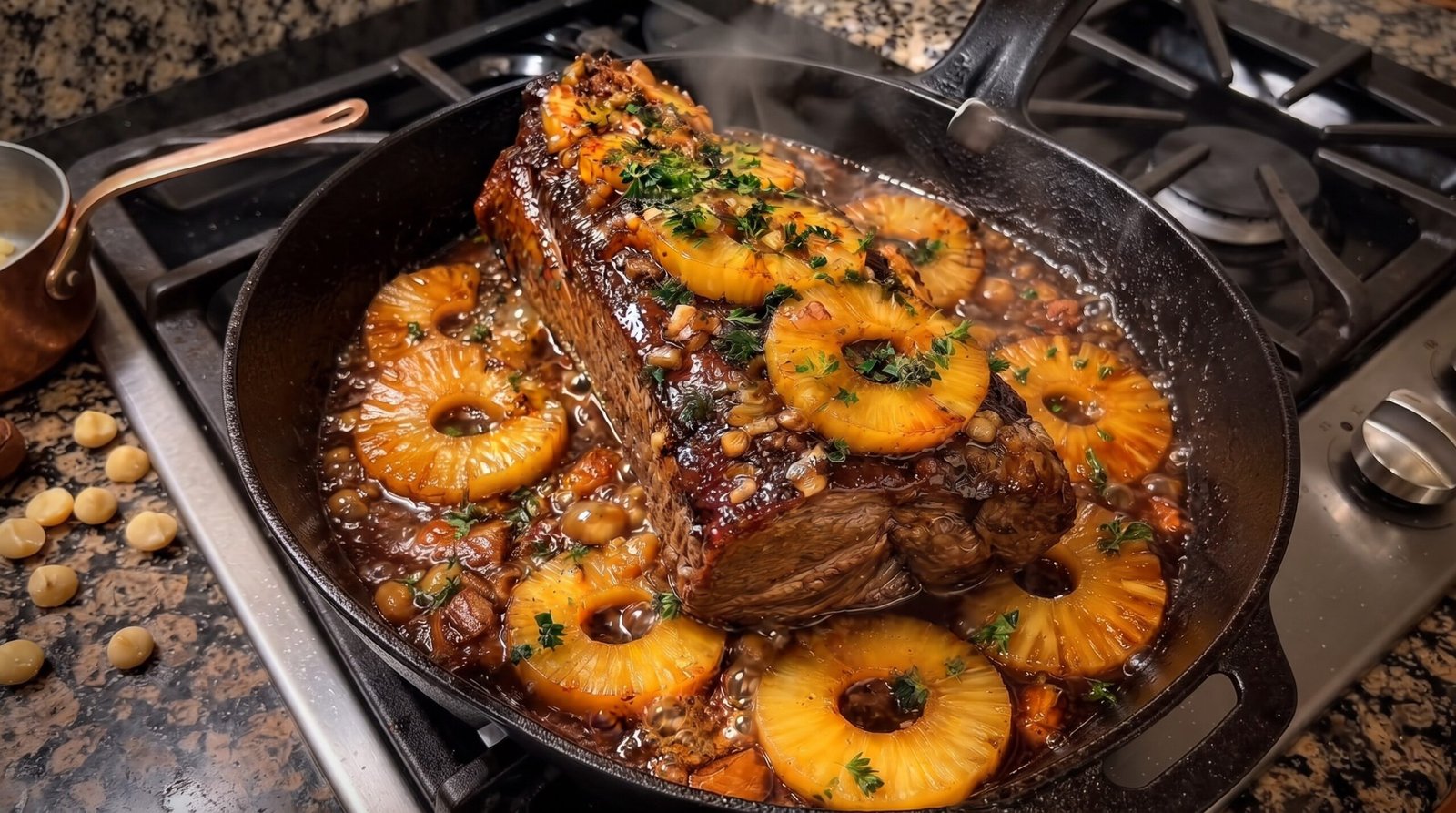
I remember the first time I tried to make a roast on the stovetop instead of hauling out the heavy roasting pan and heating up the entire kitchen. It was a rainy Tuesday, I had a decent cut of beef in the freezer, and I really wanted something that felt like a proper Sunday dinner without the three-hour wait. I pulled out my cast iron skillet, found a can of pineapple rings in the pantry, and decided to see if the two could play nice together. The result was a juicy, slightly sweet, and savory Pineapple Glazed Skillet Beef Roast that quickly became my go-to for busy weeks.
Making a centerpiece meal in a skillet might seem unconventional if you are used to the oven, but it creates a depth of flavor that is hard to replicate. The pineapple juice acts as a natural tenderizer and creates a sticky, dark glaze that clings to the beef as it cooks. If you are looking for a straightforward way to cook a hearty beef dinner that balances acidity and richness, this recipe is a reliable choice for your kitchen.
Why This Recipe Works
This recipe relies on the interaction between the natural enzymes in the pineapple and the protein fibers of the beef. When you sear the meat in a hot cast iron skillet, you create a foundational flavor base. Adding the pineapple rings allows the fruit to gently caramelize while the beef finishes cooking. The combination of the sugars from the pineapple and the fat from the beef creates a natural reduction that coats the roast.
One reason this works so well is the use of a cast iron skillet. Cast iron holds heat consistently, which is necessary when you are working with a larger piece of meat on the stovetop. It ensures that the bottom of the roast gets a consistent crust without burning, while the residual heat helps the interior reach the right temperature. The pineapple acts as a buffer, adding moisture back into the pan as it releases its juices. This keeps the meat from drying out, which is often a concern with stovetop roasting.
The flavor profile is balanced because of the savory nature of the beef and the bright acidity of the pineapple. You get a combination of textures, from the slightly charred edges of the beef to the softened, jammy slices of pineapple. It is a dish that feels upscale but uses accessible ingredients you likely already have. Because the cooking process is concentrated in one pan, the clean-up is minimal, which is a major benefit for those of us who prefer spending time eating rather than scrubbing pots. It is a satisfying, honest approach to a beef dinner that does not require fancy equipment or complex culinary techniques.
Ingredient Notes
The Beef
The star of this dish is the beef itself. I typically reach for a bottom round or eye of round roast, as these cuts are lean and hold their shape well during the simmering process. You want a piece of meat that is about 2 to 3 pounds. If you go much larger, it becomes difficult to cook evenly on the stovetop. Look for a roast that has a little bit of fat marbling, as this will help keep the meat moist. If you are picking your meat out at the grocery store, try to find a piece that is relatively uniform in shape. This consistency is important because it means the ends will not overcook while you wait for the center to reach the desired doneness.
The Pineapple
Canned pineapple rings are essential here. While fresh pineapple is great, the syrup in the canned version provides a base for the glaze that is difficult to recreate from scratch without adding extra sugar. You want the rings in juice rather than heavy syrup if you can find it. The juice adds acidity that helps break down the connective tissue in the roast, making it more tender as it cooks. Reserve the liquid from the can, as it becomes part of the braising base that thickens as the roast finishes.
The Aromatics and Seasoning
You will need a base of aromatics to build the savory foundation. Finely diced garlic is a must, as it pairs beautifully with the sweetness of the pineapple. I also add a splash of soy sauce or tamari for saltiness and a touch of Worcestershire sauce for depth. If you want a little heat, a pinch of red pepper flakes works well, but keep it subtle. For herbs, fresh parsley or thyme sprinkled at the very end provides a pop of color and a fresh finish that cuts through the richness of the glaze.
| Ingredient | Amount | Notes |
|---|---|---|
| Beef roast | 2.5 pounds | Bottom round or eye of round |
| Pineapple rings | 1 can (20 oz) | Reserve the juice |
| Garlic | 4 cloves | Minced finely |
| Soy sauce | 2 tablespoons | Adds savory depth |
| Olive oil | 2 tablespoons | For the initial sear |
| Fresh parsley | 2 tablespoons | Chopped for garnish |
| Black pepper | 1 teaspoon | Freshly cracked |
| Salt | 1 teaspoon | Adjust to taste |
The Recipe
- Prep time: 10 minutes
- Cook time: 50 minutes
- Total time: 1 hour
- Servings: 4 to 6
- Difficulty: Intermediate
Equipment needed:
– Large cast iron skillet
– Meat thermometer
– Tongs
– Sharp chef knife
– Cutting board
Step-by-Step Instructions
Step 1: Prep the Beef
Take your roast out of the refrigerator about 20 minutes before you plan to start. This helps the meat cook more evenly. Pat the beef dry with paper towels on all sides. Moisture is the enemy of a good sear, so make sure it is quite dry. Season the entire roast generously with salt and pepper. Do not be shy with the seasoning, as this will be the main crust on the exterior of the beef.
Step 2: The Initial Sear
Heat the olive oil in your cast iron skillet over medium-high heat. Once the oil begins to shimmer, carefully place the beef in the center of the pan. Let it sear for about 4 to 5 minutes on each side without moving it. You want to achieve a dark brown crust on all sides. Use your tongs to turn the meat, making sure to sear the edges as well. This process takes about 15 minutes total to cover all surfaces.
Step 3: Add Aromatics and Pineapple
Lower the heat to medium. Add the minced garlic to the skillet, taking care not to burn it. If it starts to brown too quickly, push it to the side. Lay the pineapple rings on top of and around the beef. Pour the reserved pineapple juice into the skillet, along with the soy sauce. The liquid will bubble up immediately. This is exactly what you want to start the glaze formation.
Step 4: Simmer and Glaze
Cover the skillet with a lid or a piece of heavy-duty foil. Let the roast simmer for 30 to 35 minutes. Every 10 minutes, use a spoon to baste the top of the roast with the pan juices and the pineapple liquid. The goal is to keep the surface of the meat moist as the glaze thickens. If the liquid evaporates too quickly, add a splash of water or beef broth to prevent the pan from drying out.
Step 5: Check Doneness
Insert your meat thermometer into the thickest part of the roast. For medium-rare, look for an internal temperature of 135 degrees Fahrenheit. For medium, you want 145 degrees Fahrenheit. Once it reaches your preferred temperature, remove the skillet from the heat. Let the roast rest in the pan for at least 10 minutes before slicing. This resting period is critical for keeping the juices inside the meat.
Step 6: Serve
Slice the roast against the grain into thin pieces. Place the slices on a warm platter and spoon the thick, syrupy juices from the skillet over the top. Arrange the softened pineapple rings around the beef. Garnish with a generous handful of fresh, chopped parsley. Serve immediately while everything is hot and fragrant.
Mistakes I Made (So You Don't Have To)
Using a Pan That Is Too Small
Early on, I tried to shove a large roast into a small skillet. The beef touched the edges, which caused it to steam rather than sear. If you do not have a large enough skillet, the meat will never get that nice dark crust, and the juices will overflow. Always use a 12-inch cast iron skillet for a 2.5-pound roast. If your skillet is smaller, cut the roast in half to create two smaller pieces that can sear properly.
Adding the Pineapple Too Early
I once thought that adding the pineapple at the very beginning would help it infuse the meat more. Instead, the pineapple disintegrated into a mushy, unrecognizable mess. Wait until the searing step is completely done before adding the pineapple. You want the rings to soften and absorb the meat juices, not turn into pineapple sauce. By adding them in the middle of the process, they retain their shape and provide that classic ring appearance.
Skipping the Resting Time
I was hungry and impatient, so I sliced the roast immediately after taking it off the stove. All the juices ran out onto the cutting board, and the meat ended up feeling dry and chewy. Resting is not just for oven roasts. Giving the meat 10 minutes to sit allows the fibers to relax and reabsorb the juices. It makes a significant difference in the final texture, especially with leaner cuts like eye of round.
Turning the Heat Too High
I once cranked the heat to high to speed up the simmering, thinking it would make the glaze stickier. All it did was burn the sugars in the pineapple juice, leaving me with a bitter, charred bottom that tasted like charcoal. Keep the simmer at a low, steady bubble. The glaze should darken and thicken slowly. If you see the liquid turning black or smelling acrid, turn your burner down immediately and move the skillet to a cooler part of the stove.
Variations and Tips
Adding a Touch of Ginger
For a brighter, slightly spicy flavor, grate about one teaspoon of fresh ginger into the skillet when you add the garlic. It bridges the gap between the sweet pineapple and the savory beef. It adds a fresh aroma that makes the kitchen smell fantastic while the roast is simmering.
The Time-Saving Trick
If you are worried about the cooking time, you can cut the roast into smaller portions before searing. This reduces the total cooking time significantly, often cutting it down to about 25 to 30 minutes. It is a great trick for a weeknight when you need dinner on the table quickly but still want something substantial.
Thicken the Glaze
If the sauce in the pan looks too thin after the beef is done resting, remove the meat and increase the heat for a minute or two to reduce the liquid. You can also whisk in a tiny teaspoon of cornstarch mixed with a splash of cold water to turn the juices into a proper, glossy sauce that clings to the beef slices.
Make Ahead Tip
This dish reheats surprisingly well. If you are prepping for a busy week, you can sear and partially cook the beef, then finish it the next day. Just be sure to cool it down quickly and keep it in the refrigerator in an airtight container. When you are ready to serve, warm it in a skillet with a little extra broth to keep it moist.
Storage and Reheating
If you have leftovers, allow the beef and the pineapple to cool completely before transferring them to an airtight container. You can store this in the refrigerator for up to three days. Do not try to freeze the leftovers, as the texture of the beef and the pineapple changes significantly when thawed, and it often becomes quite mushy.
When you are ready to eat the leftovers, the best method is to reheat them on the stovetop. Place the beef slices in a skillet over low heat. Add a tablespoon or two of water or beef stock to the pan to create a little bit of steam. Cover the pan and let it warm through gently until the center of the meat reaches 165 degrees Fahrenheit. This prevents the edges from drying out and keeps the glaze nice and loose. Avoid the microwave if possible, as it tends to make the beef tough and rubbery.
Frequently Asked Questions
Can I use a different cut of beef for this?
You can use a chuck roast if you prefer a fattier cut, though it will need a bit more simmering time to become tender. Avoid delicate steaks like sirloin or ribeye, as they are meant to be cooked quickly and will become overcooked and tough if you try to simmer them in the skillet for the duration required by this recipe. Stick to cuts meant for roasting or braising for the best results.
What should I serve with this roast?
Because the roast has a savory and sweet glaze, it pairs well with simple sides that balance the flavor. Steamed jasmine rice is a great choice to soak up the leftover pineapple juice. Alternatively, roasted root vegetables like carrots or potatoes provide a nice earthy contrast to the sweetness of the pineapple. A crisp, green salad with a sharp vinaigrette is also a good way to balance the richness of the dish.
Do I need to use cast iron?
Cast iron is the best tool for this because of its ability to hold heat, but if you do not have a cast iron skillet, any heavy-bottomed, stainless-steel skillet will work. Avoid thin aluminum pans, as they will not distribute the heat evenly and are likely to burn the pineapple sugars very quickly. A heavy pan ensures the beef sears evenly and the simmer remains consistent throughout the cooking process.
Is the alcohol in the recipe safe for everyone?
This recipe does not call for any alcohol. If you ever decide to add a splash of sherry or soy sauce with mirin, keep in mind that most of it cooks off during the simmering process. However, if you are strictly avoiding alcohol, there is no need to include it here. The combination of pineapple juice and soy sauce provides plenty of complexity without needing any additional liquids.
Why did my pineapple turn brown?
Pineapple contains natural sugars that will brown and caramelize when exposed to heat. This is a good thing as it creates a deeper flavor, but if it turns dark too fast, it means your heat is too high. You want the pineapple to have a golden, jammy look. If it looks like it is going to burn, just add a splash of water to the pan to lower the temperature and stop the sugar from scorching.
Final Thoughts
Cooking this Pineapple Glazed Skillet Beef Roast is a reminder that you do not need an oven to achieve a substantial, flavorful meal. The simplicity of using one pan and letting the ingredients work together is what makes this a staple in my house. It is a forgiving recipe, provided you keep an eye on the heat and give the meat the time it needs to rest.
Whenever I make this, I am always impressed by how the sweet pineapple and the savory beef become something more than the sum of their parts. It is perfect for those nights when you want something that feels like a real meal but you do not want to spend hours fussing over a multi-course dinner. I hope you enjoy making this as much as I do.