
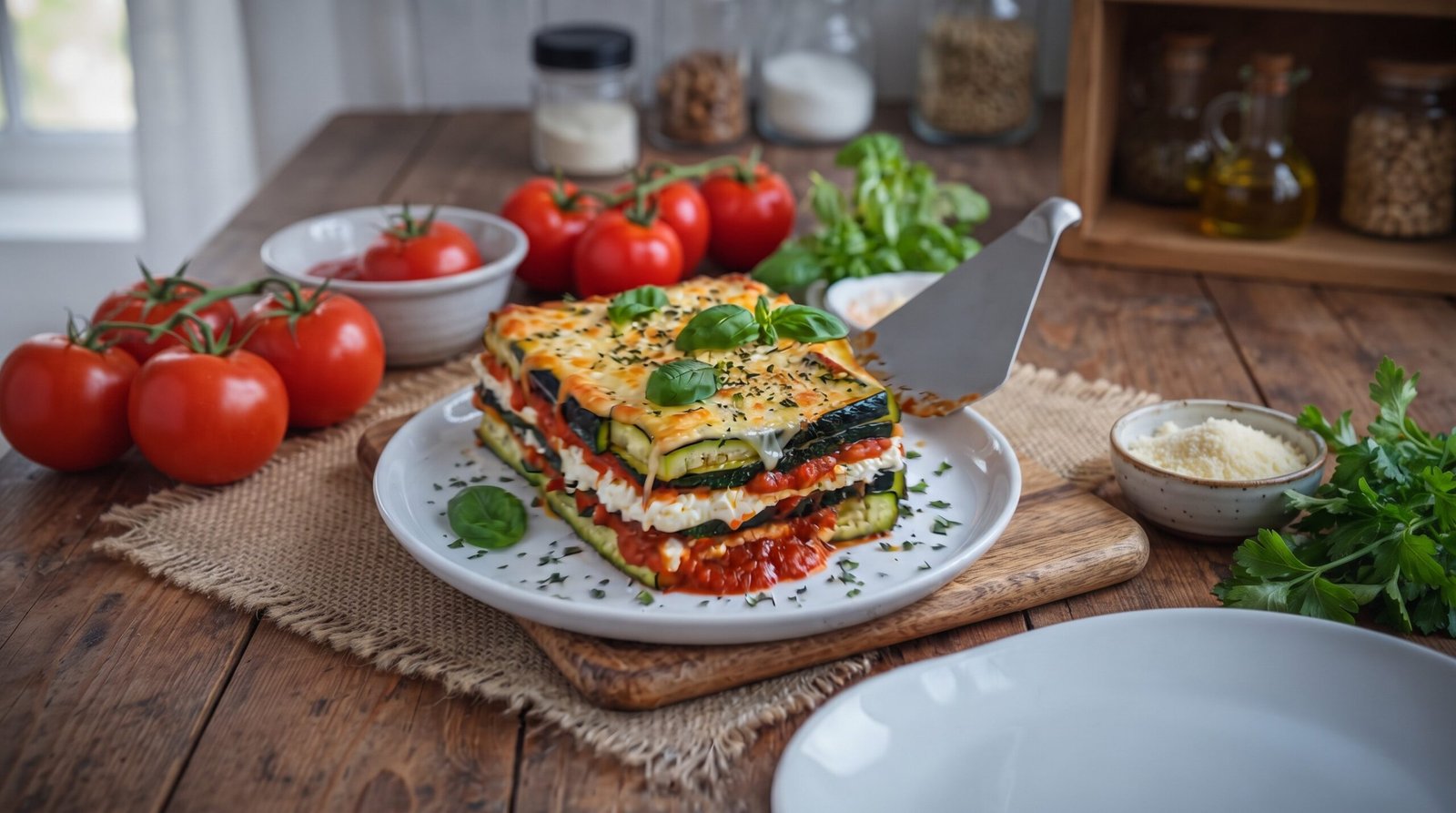
I often find myself staring at my counter on a Tuesday evening, wondering how to make something that feels special without spending three hours in the kitchen. Most nights, I just want something satisfying that doesn't leave me feeling weighed down like traditional pasta dishes often do. A few years ago, I started experimenting with using thinly sliced vegetables as a replacement for pasta sheets. I realized that zucchini works remarkably well because it provides a fresh texture that holds up under a layer of hearty tomato sauce and creamy cheese. This zucchini lasagna has become a reliable staple in my home. It is simple to assemble and relies on ingredients that I usually already have in my pantry or vegetable drawer. The beauty of this recipe is that it feels like a comforting meal while still being quite light. It is one of those dishes that I look forward to making when the zucchini season hits, but honestly, I make it throughout the year whenever I need a reliable dinner that everyone seems to enjoy.
Why This Recipe Works
This dish works because it balances moisture and flavor. One of the main challenges with using zucchini in a lasagna is that it contains a lot of water. If you do not handle the slices correctly, you end up with a watery mess on your plate. My method focuses on drawing out that excess moisture before you even start the assembly process. By layering the zucchini with a rich tomato sauce and a thick ricotta mixture, the final result is substantial and satisfying.
The flavor profile is classic Italian. I use a simple, robust tomato sauce that clings to the zucchini, providing a nice contrast to the mild, creamy ricotta. The melted cheese on top adds a nice savory element that ties everything together. Because the zucchini cooks relatively quickly compared to dried pasta, you do not have to wait a long time for the casserole to bake in the oven. It is a straightforward process that yields consistent results.
Ease of preparation is another reason I reach for this recipe often. You do not need to boil any noodles or prep complicated fillings. The assembly is similar to a traditional meat-based lasagna, but the components are much lighter. It is a great way to incorporate more vegetables into a meal without it feeling like a compromise on taste. When you cut into the finished dish, the layers stay intact, making for a neat presentation on the plate.
Ingredient Notes
The Main Vegetables and Base
The core of this dish is fresh, firm zucchini. I look for medium-sized ones because they are easier to slice evenly and have fewer large seeds than the giant ones. You need about four to five medium zucchinis for a standard baking dish. For the sauce, I prefer a classic marinara. You can make it from scratch with crushed tomatoes, a little garlic, and some dried herbs, or grab your favorite jarred version from the store. If you use a jarred sauce, just make sure it is on the thicker side. A watery sauce will make the final lasagna difficult to serve.
The Creamy Filling
Ricotta cheese is the heart of the filling. I find that using whole-milk ricotta provides a much richer texture, but part-skim works fine if that is what you have. I always mix the ricotta with an egg to help it set during baking. Adding a bit of shredded parmesan cheese and some fresh basil or parsley into the ricotta mixture boosts the flavor significantly. I also keep a small container of dried oregano and a pinch of salt on hand to season this layer properly.
The Cheese Topping
For the top of the lasagna, I use a combination of low-moisture mozzarella and a bit more parmesan. The low-moisture mozzarella melts better and does not release as much liquid as the fresh mozzarella packed in water. This is crucial for getting that nicely melted, slightly golden top that you want. I try to grate the mozzarella myself from a block because the pre-shredded bags often contain anti-caking agents that prevent the cheese from melting into that smooth, gooey texture that makes lasagna so satisfying.
| Ingredient | Amount | Notes |
|---|---|---|
| Zucchini | 5 medium | Thinly sliced lengthwise |
| Marinara sauce | 24 ounces | Pick a thick variety |
| Ricotta cheese | 15 ounces | Whole milk is best |
| Egg | 1 large | To bind the filling |
| Mozzarella cheese | 2 cups | Shredded from a block |
| Parmesan cheese | 1/2 cup | Freshly grated |
| Dried oregano | 1 teaspoon | For flavor |
| Salt | 1/2 teaspoon | Adjust to taste |
| Fresh basil | 1/4 cup | For garnish |
The Recipe
- Prep Time: 25 minutes
- Cook Time: 40 minutes
- Total Time: 65 minutes
- Servings: 6
- Difficulty: Easy
Equipment:
– Mandoline or sharp chef's knife
– 9×13 baking dish
– Large mixing bowl
– Paper towels
– Spatula
Step-by-Step Instructions
Step 1: Prep the Zucchini
The most important part of this entire process is dealing with the zucchini slices. Using a mandoline, slice the zucchini into strips that are about an eighth of an inch thick. You want them uniform so they cook at the same rate. Lay the slices out on a clean kitchen towel or paper towels and sprinkle them lightly with salt. Let them sit for about 15 minutes.
You will see beads of water starting to form on the surface of the zucchini. This is exactly what you want to remove. After the 15 minutes are up, take another paper towel and gently pat the slices dry. Do not skip this step, or your lasagna will turn into a puddle in the oven. The drier your zucchini slices are before you start layering, the better the structure of your dish will be.
Step 2: Prepare the Ricotta Mixture
While the zucchini is resting, grab a large mixing bowl. Combine the ricotta cheese, the egg, half of the parmesan cheese, the oregano, and a pinch of salt. Mix everything together with a fork until it is smooth and well combined. I like to add a handful of chopped fresh basil at this stage for a bright, herby flavor.
This filling acts as the glue for the lasagna. The egg is necessary because it ensures the ricotta firms up when baked, preventing it from sliding out from between the zucchini layers. If you prefer, you can add a little cracked black pepper to the mixture as well, depending on your personal taste. Once mixed, set this bowl aside while you prepare your workspace for assembly.
Step 3: Layering the Lasagna
Preheat your oven to 375 degrees Fahrenheit. Take your 9×13 baking dish and spread a very thin layer of the marinara sauce on the bottom. This prevents the bottom layer of zucchini from sticking to the dish. Now, arrange a single layer of the zucchini slices on top of the sauce. It is okay if they overlap slightly, but try to keep the layer as even as possible.
Spread about half of the ricotta mixture over the zucchini slices. Use a spatula to spread it out into an even layer. Pour about a third of the remaining marinara sauce over the ricotta, then sprinkle a bit of the mozzarella cheese on top. Repeat this process one more time, layering zucchini, the rest of the ricotta, more sauce, and more cheese.
Step 4: Finishing the Top
For the final layer, place the remaining zucchini strips on top, cover them with the rest of the marinara sauce, and top the entire dish with the remaining mozzarella and the rest of the parmesan. This ensures that the top layer is completely covered in cheese, which will create a nice golden crust while the lasagna is in the oven.
Check the edges of the dish to make sure the sauce is evenly distributed. You do not want any dry edges. Since the zucchini is already sliced thin, you do not need to cover the dish with foil unless you find that the cheese is browning too quickly during the later stages of cooking.
Step 5: Baking the Dish
Place the baking dish into the center of the preheated 375 degree oven. Bake for 35 to 40 minutes. You will know it is done when the sauce is bubbling around the edges and the cheese on top has melted and developed some light golden brown spots.
Avoid the temptation to cut into it right away. Take the dish out of the oven and let it stand for at least 10 to 15 minutes. This cooling time allows the layers to settle and firm up, which makes it much easier to cut into clean squares for serving. If you slice it too soon, the layers will lose their shape and slide apart on the plate.
Mistakes I Made (So You Don't Have To)
Too Much Moisture
The biggest mistake I made when I first started making this was skipping the salt-and-drain step for the zucchini. I thought the oven would dry it out, but instead, the water just released into the sauce, creating a soup rather than a lasagna. The fix is simple: always salt your zucchini slices and let them sit for 15 minutes before patting them thoroughly dry with paper towels.
Over-crowding the Layers
Early on, I tried to pack too many layers of thick zucchini into the dish. This resulted in the center of the lasagna staying raw while the top burned. I learned to use thinner slices and keep the number of layers to three or four at most. If your zucchini is very thick, try to use more, but make sure each slice is consistently thin so the heat can penetrate evenly.
Not Using Enough Sauce
I once used too little sauce because I was worried about the dish becoming watery. However, the zucchini needs moisture to soften properly during the baking process. If the dish is too dry, the zucchini stays tough. Using a medium amount of flavorful marinara sauce is the key. You want enough to coat everything but not so much that it swamps the dish.
Cutting Too Early
I once sliced into the lasagna immediately after pulling it from the oven, and the entire thing just collapsed into a pile on my serving spoon. It tasted great, but it did not look like lasagna. Always let the dish rest on the counter for at least 15 minutes. This resting period is just as important as the baking time itself because it allows the proteins in the cheese and egg to set.
Variations and Tips
Add Some Protein
If you want a more substantial meal, you can add a layer of cooked ground turkey or Italian sausage between the ricotta and zucchini layers. Make sure the meat is fully cooked and drained of excess fat before you add it to the assembly. Adding protein makes the dish feel more like a traditional meat lasagna and adds a nice depth of flavor.
Vegetable Medley
You can easily swap out some of the zucchini for thinly sliced eggplant. Just remember that eggplant also needs to be salted and drained just like the zucchini. You could also add a layer of sautéed spinach between the ricotta and the sauce to get some extra greens in there. Just be sure to squeeze the water out of the spinach after cooking it so it does not add extra moisture.
Fresh Herb Garnish
Right before serving, I like to top the dish with fresh basil leaves. The smell and the burst of fresh, peppery flavor really lift the heavy, cheesy profile of the lasagna. You could also sprinkle some fresh parsley or even a bit of red pepper flakes if you enjoy a little bit of heat.
Make Ahead Tip
This dish is great for prepping ahead of time. You can assemble the whole lasagna in your baking dish, cover it tightly with plastic wrap, and keep it in the refrigerator for up to 24 hours before baking. Just make sure to remove the plastic wrap before putting it in the oven. This is a perfect way to get dinner ready for a busy weeknight when you have a bit of extra time in the morning.
Storage and Reheating
If you have leftovers, they keep quite well. I store mine in an airtight container in the refrigerator within two hours of cooking. It will stay good for up to three days. I do not recommend freezing this dish. Because zucchini has such a high water content, the texture changes significantly once it has been frozen and thawed. It tends to become mushy and loses its structural integrity.
To reheat, the best method is to use your oven or a toaster oven. Preheat it to 350 degrees Fahrenheit and place a slice in an oven-safe dish. Heat it for about 15 to 20 minutes, or until it is heated all the way through and the cheese is soft again. You can use the microwave if you are in a rush, but the texture will be softer and the dish will likely release more water as it warms up. Always ensure the center is steaming hot before eating.
Frequently Asked Questions
Can I use a different type of cheese?
While ricotta is classic, you can use cottage cheese if you want a slightly different texture and a bit more tang. If you use cottage cheese, make sure to blend it in a food processor first so it is smooth, or the texture might be a bit chunky. You can also experiment with different melting cheeses on top, such as fontina or provolone, which melt beautifully and add a nice complex flavor compared to just mozzarella.
Why does my lasagna always have liquid at the bottom?
This usually happens because the zucchini was not salted and dried properly before assembly. Zucchini is mostly water, and if you do not remove that liquid, it has nowhere to go but into your sauce. Also, ensure you are not using a very thin, watery pasta sauce. If you find your sauce is thin, you can simmer it on the stovetop for a few minutes to thicken it up before you start layering your lasagna.
Can I skip the egg in the ricotta?
The egg is there to help the ricotta set so it has a firm, stable texture when you cut it. If you skip the egg, the ricotta will likely remain very soft and might slide around when you try to serve the lasagna. If you cannot use eggs, you can mix the ricotta with a small amount of cornstarch or flour to help thicken it, but the result will be slightly different in consistency.
How do I know when the zucchini is cooked?
The zucchini is fully cooked when you can easily pierce a piece with a fork without any resistance. Because it is sliced thin and baked, it should be tender and mild, not mushy. It should hold its shape even when you cut through it with a knife. If you find it is still firm after 40 minutes, you can cover the dish with foil and bake for another 5 to 10 minutes, but be careful not to overdo it.
Is this dish healthy?
This recipe is a lightened-up version of traditional pasta lasagna, as it swaps out flour-based noodles for nutrient-dense vegetables. It contains plenty of calcium from the cheese and vitamins from the zucchini and tomato sauce. However, since the term healthy is subjective and depends on your own dietary needs, I recommend checking the nutrition labels on your specific ingredients, especially the sauces and cheeses, if you are tracking specific dietary goals.
Final Thoughts
This zucchini lasagna has earned a permanent spot in my rotation because it provides that familiar comfort of a baked pasta dish without the heaviness. It is one of those meals that proves you do not need complicated ingredients or long cooking times to get a satisfying dinner on the table.
Once you get comfortable with the trick of salting and drying the zucchini, the assembly becomes second nature. I hope you enjoy making this as much as I do, and that it becomes a favorite in your kitchen during your own busy weeknights.