
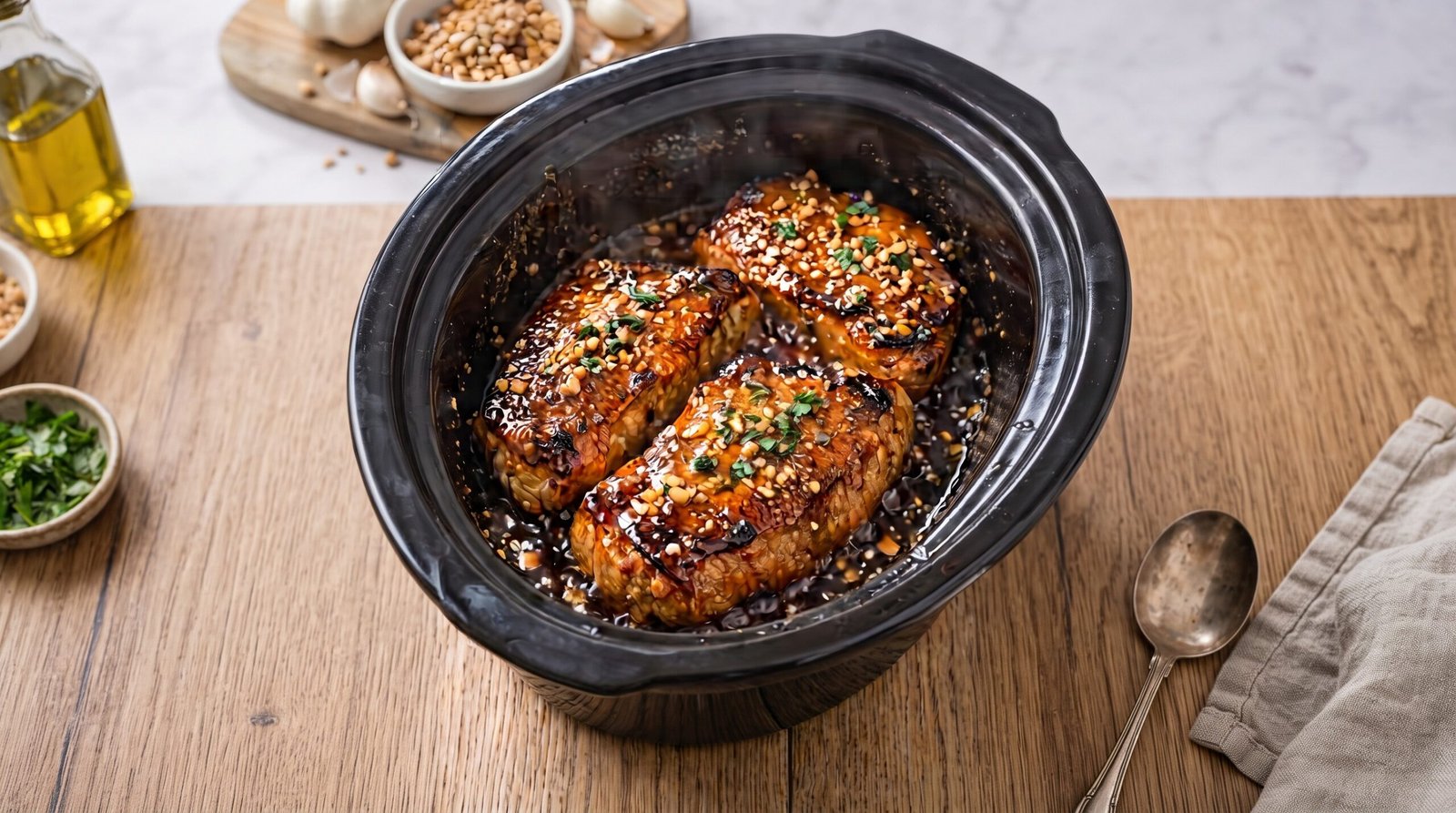
There are those evenings when I walk through the door feeling like I have absolutely nothing planned for dinner. My stomach is grumbling, the kids are asking what is on the menu, and the thought of standing over a stove for an hour just feels like too much. That is when I turn to my slow cooker. These slow cooker glazed pork chops with peanuts have become a regular in my rotation because they require very little effort but deliver a savory, slightly sweet result that feels like a proper home-cooked meal. It is one of those set-it-and-forget-it recipes that fills the kitchen with a comforting aroma while I handle other tasks around the house.
If you have ever worried about pork becoming dry in a slow cooker, you are not alone. It is a common concern because pork chops can lose their moisture quickly if they are cooked for too long at high heat. However, with the right timing and a bit of liquid in the base, you can keep them moist and tender. This recipe relies on a simple glaze that thickens as it cooks, coating the meat in a rich, salty-sweet layer that balances the natural flavor of the pork perfectly. Whether you are prepping this before a busy workday or just need a stress-free dinner, this dish is a reliable choice that provides a satisfying, hearty meal without the need for constant monitoring or complex culinary techniques.
Why This Recipe Works
This recipe works because it relies on the low, steady heat of a slow cooker to gently break down the connective tissues in the pork chops, which helps maintain tenderness. Unlike high-heat methods that can quickly toughen lean cuts, the slow cooker environment keeps the meat surrounded by moist air and a flavorful liquid base. The pork chops are arranged in a single layer so that the heat circulates evenly around each piece. This prevents any cold spots or uneven cooking, ensuring that the meat reaches a safe internal temperature of 145 degrees Fahrenheit consistently across the entire batch.
The flavor profile is another reason this is a staple in my home. By combining soy sauce, brown sugar, and a hint of ginger and garlic, we create a glaze that mimics a classic stir-fry sauce but with a deeper, more mellow character from the long, slow cook time. The addition of chopped peanuts at the end adds a necessary contrast to the soft texture of the braised meat. You get the crunch of the nut alongside the savory, tender pork, which elevates the eating experience without needing extra side dishes or complicated garnishes.
Ease of preparation is perhaps the biggest factor. There is no searing required before adding the chops to the cooker. While some people swear by browning meat first, I have found that with this specific glaze, it is entirely optional and actually creates more cleanup. By skipping the stove entirely, you save time and keep the kitchen cool. The glaze ingredients are simple staples that most people already have in their pantry, so you can decide to make this at the last minute without a special trip to the store. It is efficient, flavorful, and incredibly reliable for any night of the week.
Ingredient Notes
Pork and Base
For the meat, you want to choose thick-cut bone-in pork chops if possible. They hold up much better to the long cook time than thin, boneless ones, which can become stringy or dry. If you only have boneless, try to pick ones that are at least one inch thick so they do not fall apart. The bone-in variety adds a little more flavor to the juices in the bottom of the pot.
The Glaze Components
The liquid base of the glaze is a mix of soy sauce, brown sugar, and apple cider vinegar. The soy sauce provides the saltiness, while the brown sugar helps create that dark, sticky coating. The vinegar is crucial because the acidity cuts through the richness of the pork and balances the sugar. I often add a splash of sesame oil, but be careful not to use too much, as it is very potent.
Texture and Aromatics
Fresh ginger and minced garlic are essential for the flavor. I prefer grating the ginger finely so it dissolves into the sauce rather than leaving large, chewy chunks. The peanuts should be dry-roasted and unsalted. If you only have salted peanuts, just reduce the amount of soy sauce you add to the pot by about a tablespoon to ensure the dish does not become too salty. Fresh parsley is used at the very end to add a touch of brightness and color.
| Ingredient | Amount | Notes |
|---|---|---|
| Pork chops | 4 pieces | Bone-in, 1-inch thick |
| Soy sauce | 1/2 cup | Low sodium works well |
| Brown sugar | 1/3 cup | Packed firmly |
| Apple cider vinegar | 2 tablespoons | Adds necessary acidity |
| Garlic | 3 cloves | Minced finely |
| Fresh ginger | 1 tablespoon | Grated or zested |
| Sesame oil | 1 teaspoon | Adds depth of flavor |
| Dry roasted peanuts | 1/2 cup | Roughly chopped |
| Fresh parsley | 2 tablespoons | Chopped for garnish |
The Recipe
- Prep Time: 10 minutes
- Cook Time: 3.5 to 4 hours on low
- Total Time: 4 hours and 10 minutes
- Servings: 4
- Difficulty: Easy
Equipment Needed:
– Slow cooker (6-quart size is ideal)
– Small mixing bowl
– Measuring cups and spoons
– Meat thermometer
– Whisk
Step-by-Step Instructions
Step 1: Prep the Ingredients
Start by gathering all your ingredients on the counter. Make sure your pork chops are patted dry with a paper towel. This helps them stay firmer during the initial stages of cooking. You do not need to trim excessive fat unless it is a very thick strip, as the fat will help keep the meat moist.
Take your minced garlic and grated ginger and place them into a small bowl. Prepare the peanuts by chopping them into rough pieces on a cutting board. If you leave them too large, they might not distribute well, but if they are too fine, they will lose their signature crunch.
Step 2: Create the Glaze
In your small bowl, combine the soy sauce, brown sugar, apple cider vinegar, and sesame oil. Whisk the mixture vigorously until the brown sugar is completely dissolved into the liquids. It should look like a dark, uniform syrup.
Taste the mixture if you like, but remember that it will taste much saltier before it is cooked with the meat. Add the minced garlic and half of the grated ginger into this liquid mix. Set the rest of the ginger aside to stir in during the final hour of cooking for a fresher flavor kick.
Step 3: Arrange the Pork Chops
Place your pork chops into the bottom of the slow cooker. Try to keep them in a single layer so that the heat can hit each piece equally. If your slow cooker is small, it is better to slightly overlap them than to stack them in a way that prevents the lid from closing securely.
Pour the soy-sugar glaze mixture over the top of the pork chops. Use a spoon to ensure that each chop is well-coated, especially the sides. The liquid will pool at the bottom, which is exactly what we want to create a braising environment.
Step 4: The Slow Cook
Put the lid on your slow cooker and set it to the low heat setting. Set your timer for 3.5 hours. It is tempting to open the lid and check on the progress, but try to avoid it. Every time you lift the lid, the temperature drops, and the slow cooker takes time to get back up to heat, which adds to the total cooking time.
After 3.5 hours, use your meat thermometer to check the thickest part of the pork chop. You are looking for an internal temperature of 145 degrees Fahrenheit. If they have not reached this temperature, give them another 30 minutes. The liquid in the bottom should be bubbling slightly and thickening into a syrup.
Step 5: Final Touches and Serving
Once the pork reaches the correct internal temperature, stir in the remaining ginger. Carefully remove the pork chops from the pot and set them on a serving platter. If the sauce in the slow cooker is too thin for your liking, you can leave the pot on high for 10 minutes with the lid off to let it reduce slightly.
Spoon the thickened glaze from the bottom of the pot over the top of the pork chops. Sprinkle the chopped peanuts generously over the meat. Finally, garnish with the chopped fresh parsley. Serve immediately while the pork is still warm and the peanuts retain their texture.
Mistakes I Made (So You Don't Have To)
Using Thin, Boneless Chops
The first time I made this, I used thin, boneless pork chops. They were completely dry and stringy after only three hours because they have less fat and density to protect them from the heat. I learned that you must use thick-cut, bone-in chops to withstand the cooking process. If you only have thinner ones, you have to drastically reduce the cooking time, which defeats the purpose of a slow cooker meal.
Forgetting the Vinegar
I once skipped the apple cider vinegar, thinking that soy sauce and sugar would be enough. The result was a cloying, overly sweet sauce that felt very one-dimensional. The acidity from the vinegar is essential to balance the sugar and brighten the overall flavor. Without it, the dish feels heavy. Always include the full amount of vinegar for that necessary tang.
Crowding the Pot
I once tried to double the recipe in a small slow cooker, stacking the chops on top of each other. The ones on the bottom became mushy, while the ones on the top remained cold for too long. Since then, I always ensure the chops are in a single layer. If you need to cook more than four, use a larger slow cooker or cook in two separate batches to ensure even results.
Skipping the Thermometer
I used to guess when the meat was done by how it felt to the touch. This led to overcooking more times than I can count. Because pork chops vary in thickness, you cannot rely on a set time alone. Using a reliable meat thermometer to ensure they reach 145 degrees Fahrenheit is the only way to get consistent, juicy results every single time you cook this.
Variations and Tips
Add Some Heat
If you enjoy a bit of spice, add a teaspoon of chili flakes or a tablespoon of chili garlic sauce to the glaze mixture. This gives the sauce a gentle warmth that pairs well with the sweetness of the sugar and the earthiness of the peanuts. You can also garnish with thin slices of fresh red chili if you want an extra kick at the table.
Swap the Peanuts
While peanuts are traditional for this style of dish, you can substitute them with toasted cashews or even chopped walnuts. Cashews provide a similar buttery crunch that holds up well in the sauce. Just make sure to toast them lightly in a dry pan before adding them to the dish to maximize their flavor, as store-bought nuts can sometimes taste a bit dull.
Make-Ahead Strategy
You can prepare the glaze mixture the night before and store it in an airtight container in the fridge. In the morning, you just need to place the pork in the slow cooker and pour the pre-mixed glaze over the top. This saves you several minutes of measuring and whisking during a chaotic morning. Do not add the peanuts until just before serving, as they will get soggy if added too early.
Side Dish Suggestions
This dish pairs well with something that can soak up the extra sauce, such as steamed white rice or rice noodles. If you want to keep it lighter, a side of stir-fried snap peas or charred broccoli with a little bit of lime juice works perfectly. The green vegetables add color and freshness that breaks up the deep, savory notes of the glazed pork.
Storage and Reheating
If you have leftovers, they should be moved to an airtight container and placed in the refrigerator within two hours of cooking. They will stay good for up to three days. I recommend storing the pork and the sauce together, as the meat will absorb more flavor while it sits. Do not store the peanuts with the leftovers, as they will soften and lose their crunch entirely.
To reheat, the best method is to put the pork chops in a skillet over medium-low heat with a small splash of water or broth. Cover the skillet to trap the steam and heat them gently until they are steaming hot throughout, aiming for an internal temperature of 165 degrees Fahrenheit for safety. Reheating in the microwave is possible, but be careful, as it can easily dry out the edges of the pork. If using a microwave, reheat on a lower power setting and check every 30 seconds. This dish does not freeze particularly well because the texture of the pork changes during the thaw and reheat cycle, so I suggest eating it fresh within the three-day window.
Frequently Asked Questions
Can I leave this on the warm setting for hours?
No, you should not leave the pork on the warm setting for extended periods. Once the cooking cycle is finished, the temperature of the meat should be maintained at a safe level for serving, but leaving it for too long will dry out the meat and degrade the quality of the glaze. It is best to turn off the slow cooker once the pork reaches 145 degrees Fahrenheit and serve it within a reasonable timeframe.
Is it necessary to sear the pork first?
Searing is not required for this recipe. While some people believe searing locks in moisture, it actually does not, and the slow cooker environment provides enough liquid to keep the meat tender without the need for an initial sear. Skipping this step makes the process much faster and keeps the kitchen clean, which is one of the main advantages of this specific method.
Can I use chicken instead?
Yes, you can substitute chicken thighs for the pork chops. Chicken thighs hold up well to the slow cooker and stay moist throughout the process. The cooking time will be similar, but you should still use a meat thermometer to ensure the chicken reaches an internal temperature of 165 degrees Fahrenheit. Breast meat is not recommended as it will dry out very quickly in the slow cooker.
Why is my sauce too thin?
If the sauce is too thin, it is likely because the pork released a significant amount of moisture during the cooking process. You can easily fix this by removing the pork and setting the slow cooker to high with the lid off for about 10 to 15 minutes. The extra heat and airflow will help the liquid reduce into a thicker, stickier consistency that coats the back of a spoon.
Can I add vegetables to the slow cooker?
You can add hardy vegetables like chunks of carrots or sliced onions to the base of the slow cooker before adding the pork. They will cook in the sauce and absorb the flavors. However, avoid adding delicate vegetables like bell peppers or spinach, as they will turn into mush during the four-hour cooking time. If you want to add softer vegetables, stir them in during the final 30 minutes.
Final Thoughts
Making these glazed pork chops has really changed how I view weeknight cooking. It is a relief to know that I have a reliable meal waiting for me that does not require me to hover over a hot pan. The combination of the savory soy glaze and the crunch of the peanuts gives it a restaurant-quality feel that always hits the spot after a long day.
I hope this becomes a go-to meal in your own kitchen as well. Once you get the timing down, it is incredibly easy to adapt and make your own. Whether you serve it with rice or just a simple side of greens, the focus remains on the tender, flavorful meat that brings everyone to the table. Enjoy the process of cooking this simple, comforting meal.